Labuan Bajo and the Komodo Islands: Mantas, Dragons, and a Week with Graham
There was a reason we chose Indonesia for this trip beyond all the obvious ones — temples, volcanoes, food, culture. The real reason was Graham.
It had been over a year since I’d seen my son. He’d been in Australia, we’d been in Mexico. Indonesia was a place he could fly into easily from Perth, and the timing aligned for him to join us for the final week — the island portion, Flores and the Komodo region, which felt like exactly the right setting for a reunion. Joe and Graham had been to Bali before but never beyond it. For me it was all new.
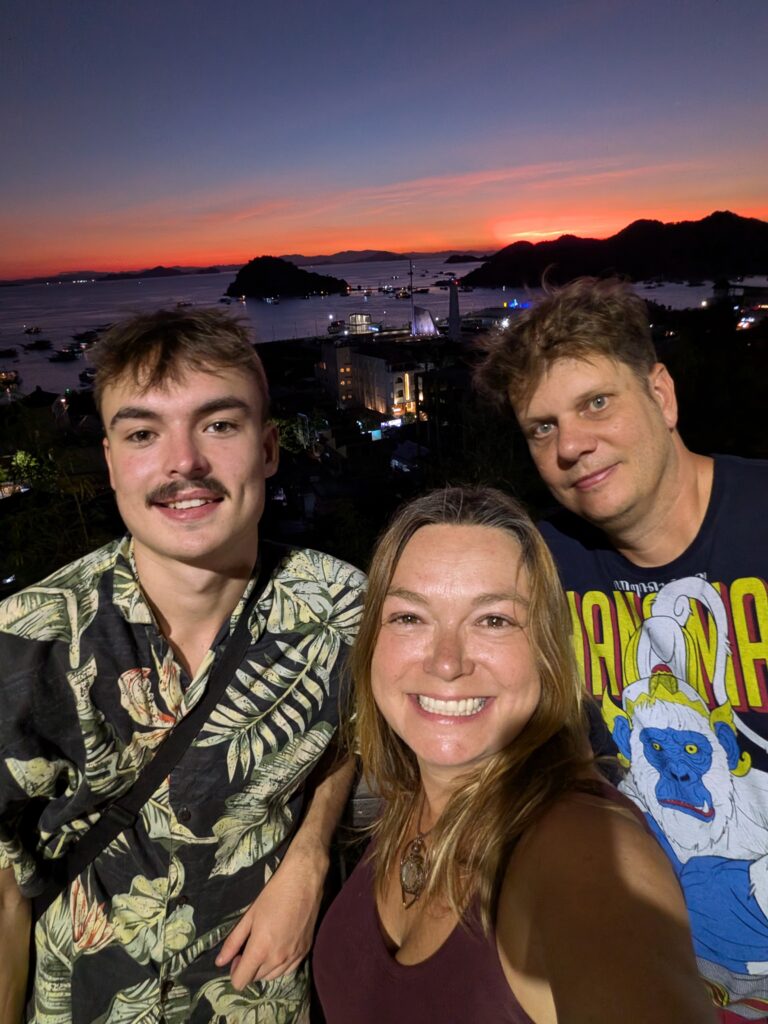
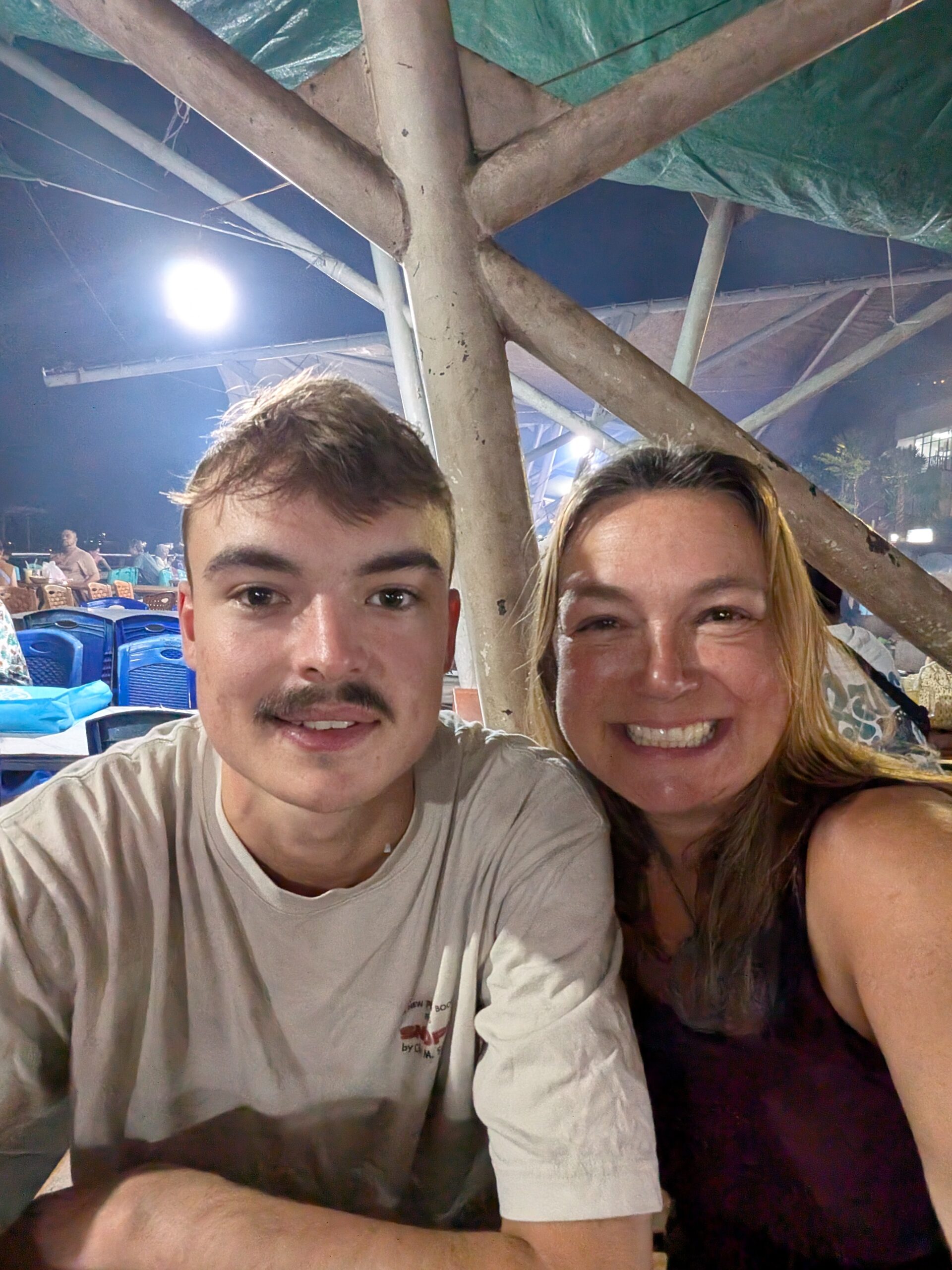
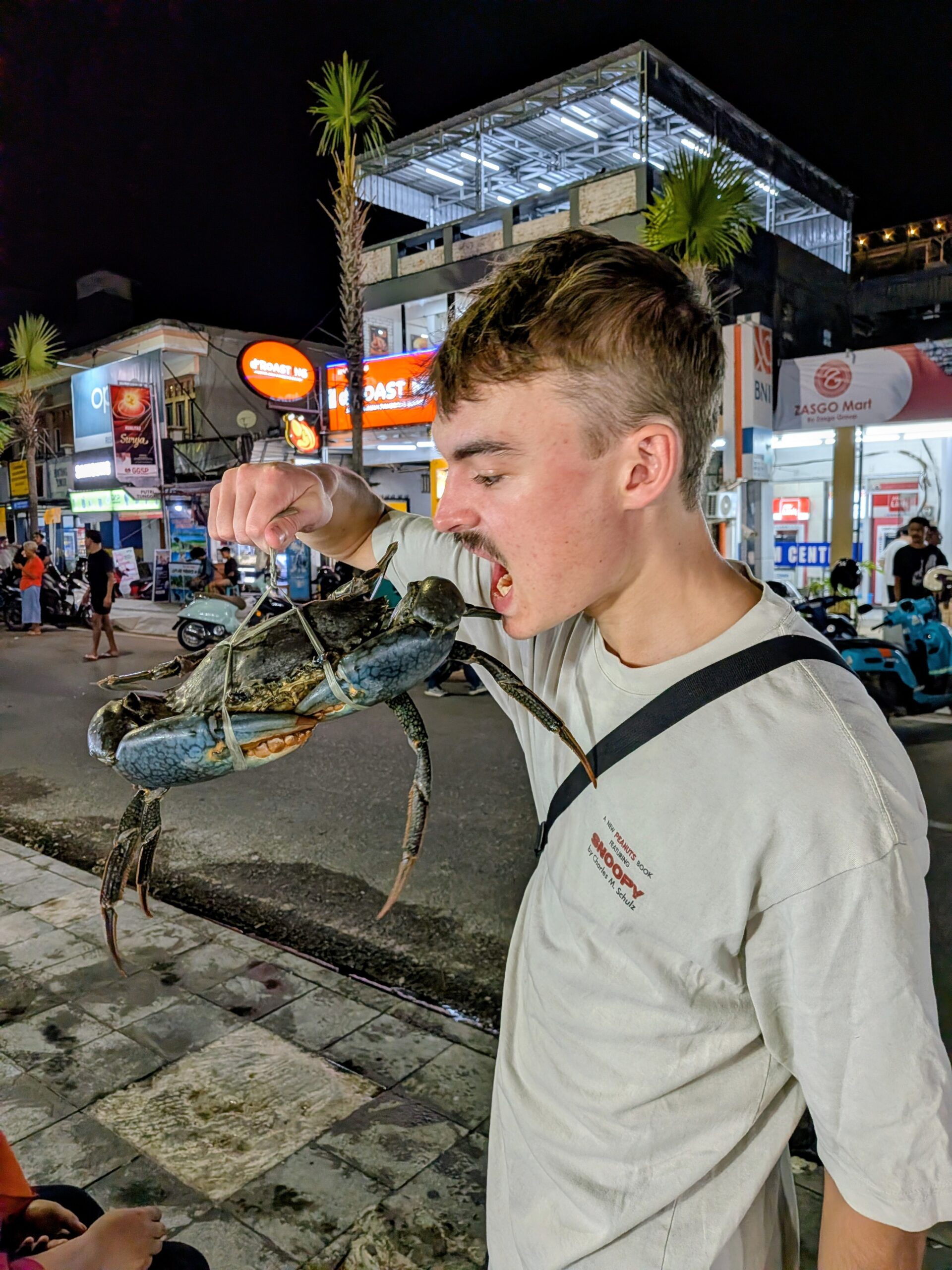
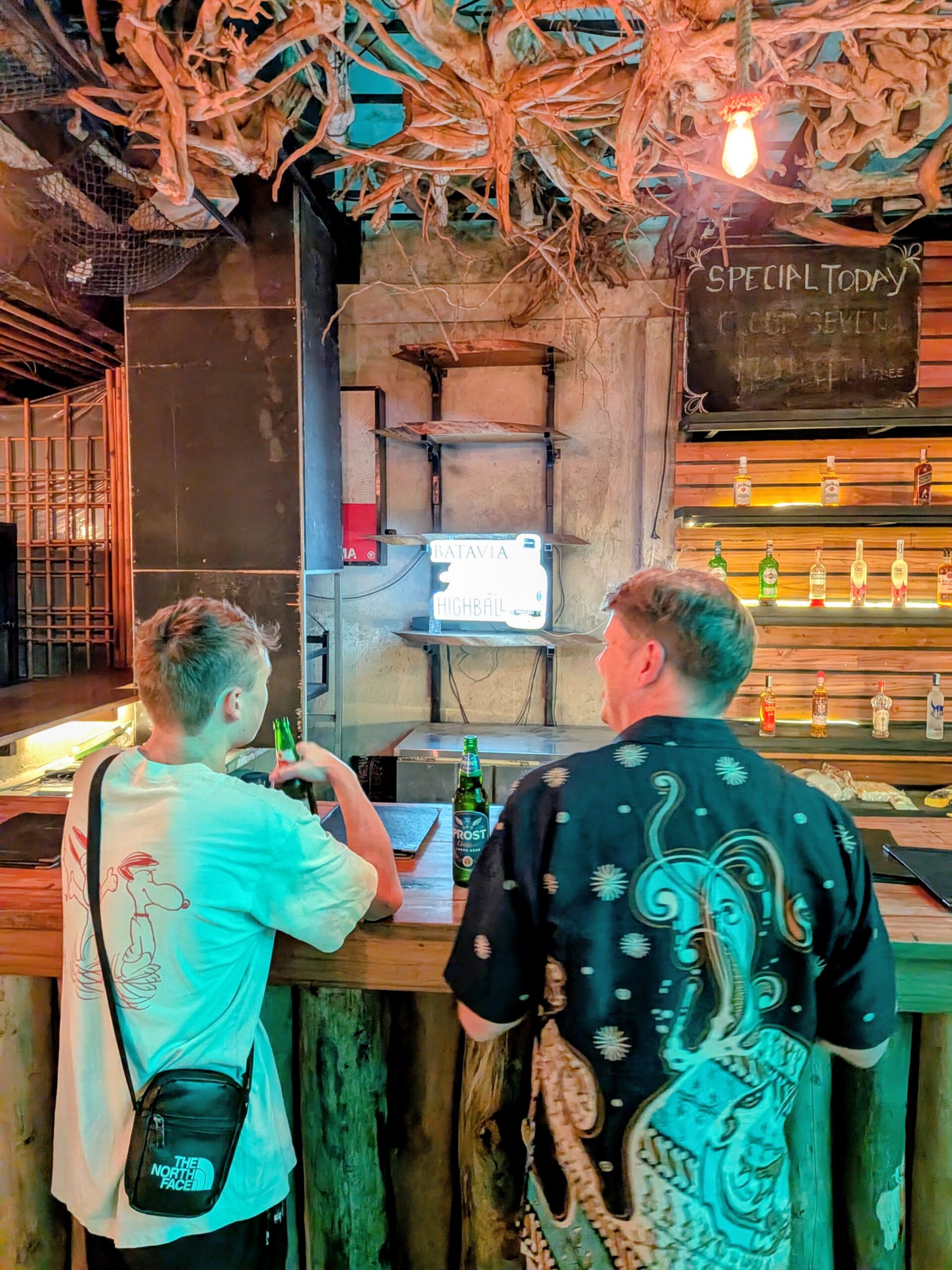
We met up in Labuan Bajo, and after hugs, we headed straight to the seafood market to find something fresh for dinner. The right way to start.
Flores Evergreen Tours, Waterfalls, and the Melo Traditional Village
For this portion of the trip we used Flores Evergreen Tour Organizer, with our guide Hans (Ankarius). He was everything you want in a guide — warm, knowledgeable, organized and genuinely invested in making sure we had the best possible experience. We trusted him immediately and he never gave us a reason not to.
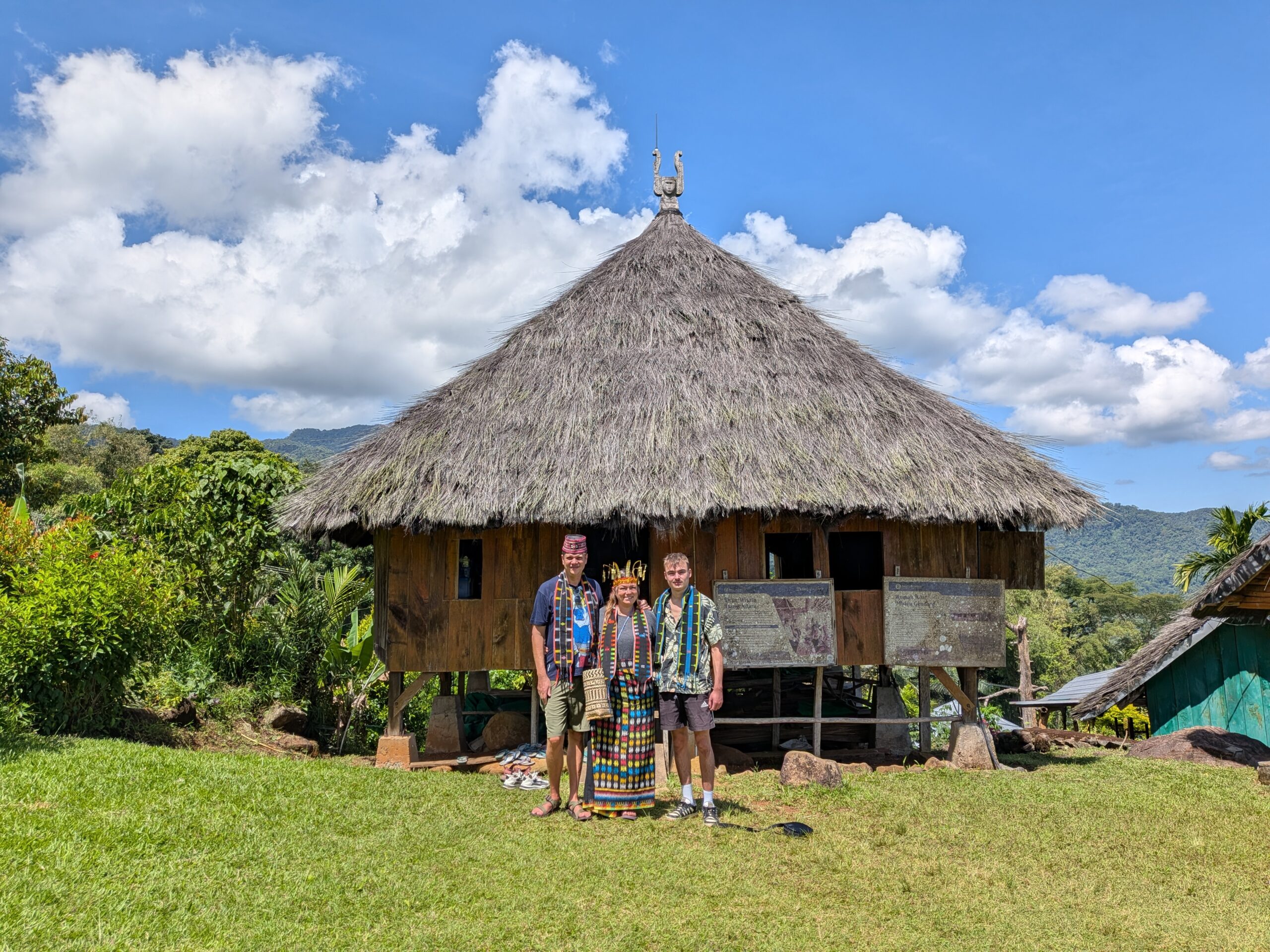
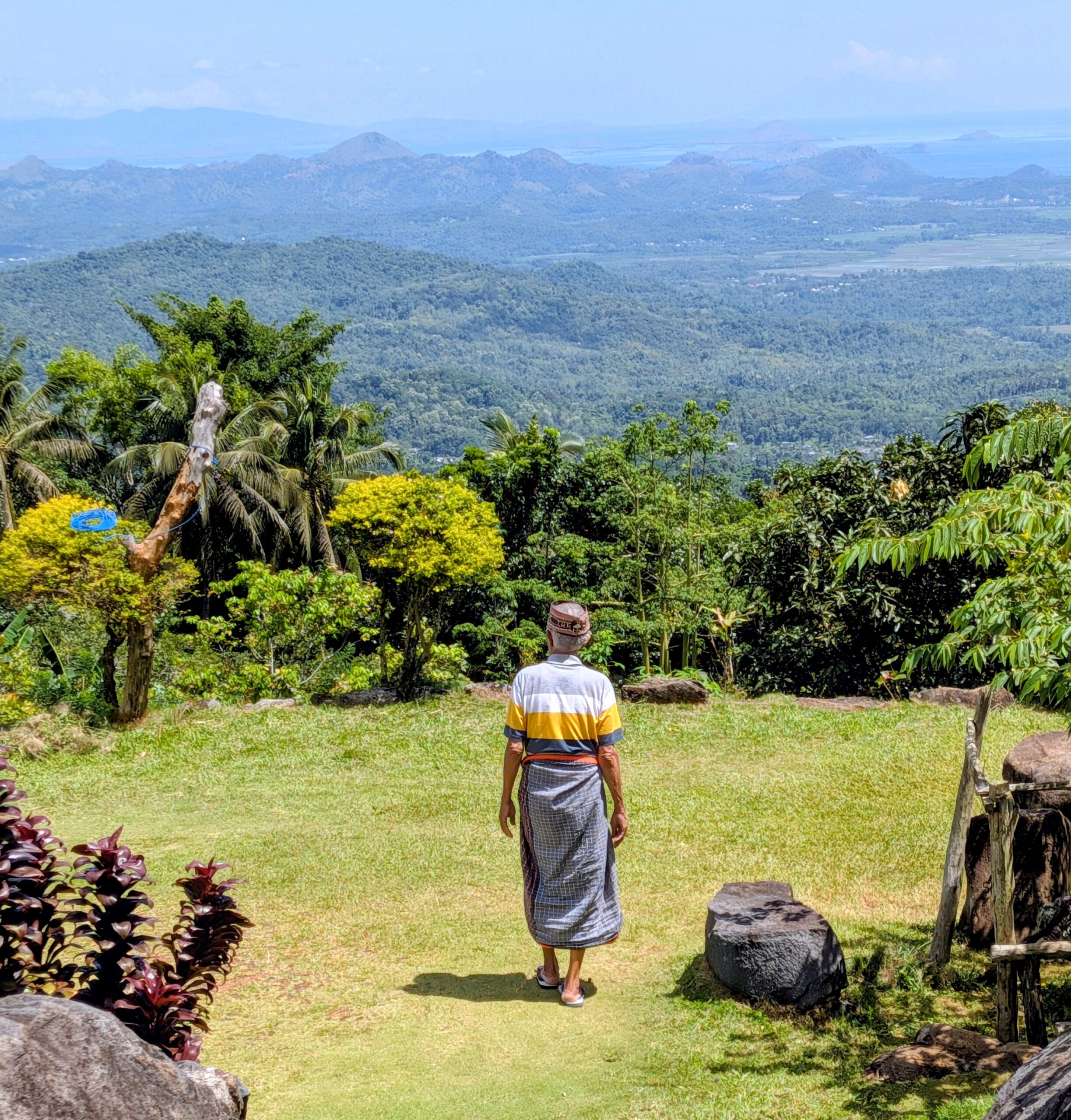
Our first day took us to Melo Traditional Village, perched in the mountains about 17 kilometers from Labuan Bajo at 624 meters above sea level, with views over the coastline and the islands of Komodo National Park.
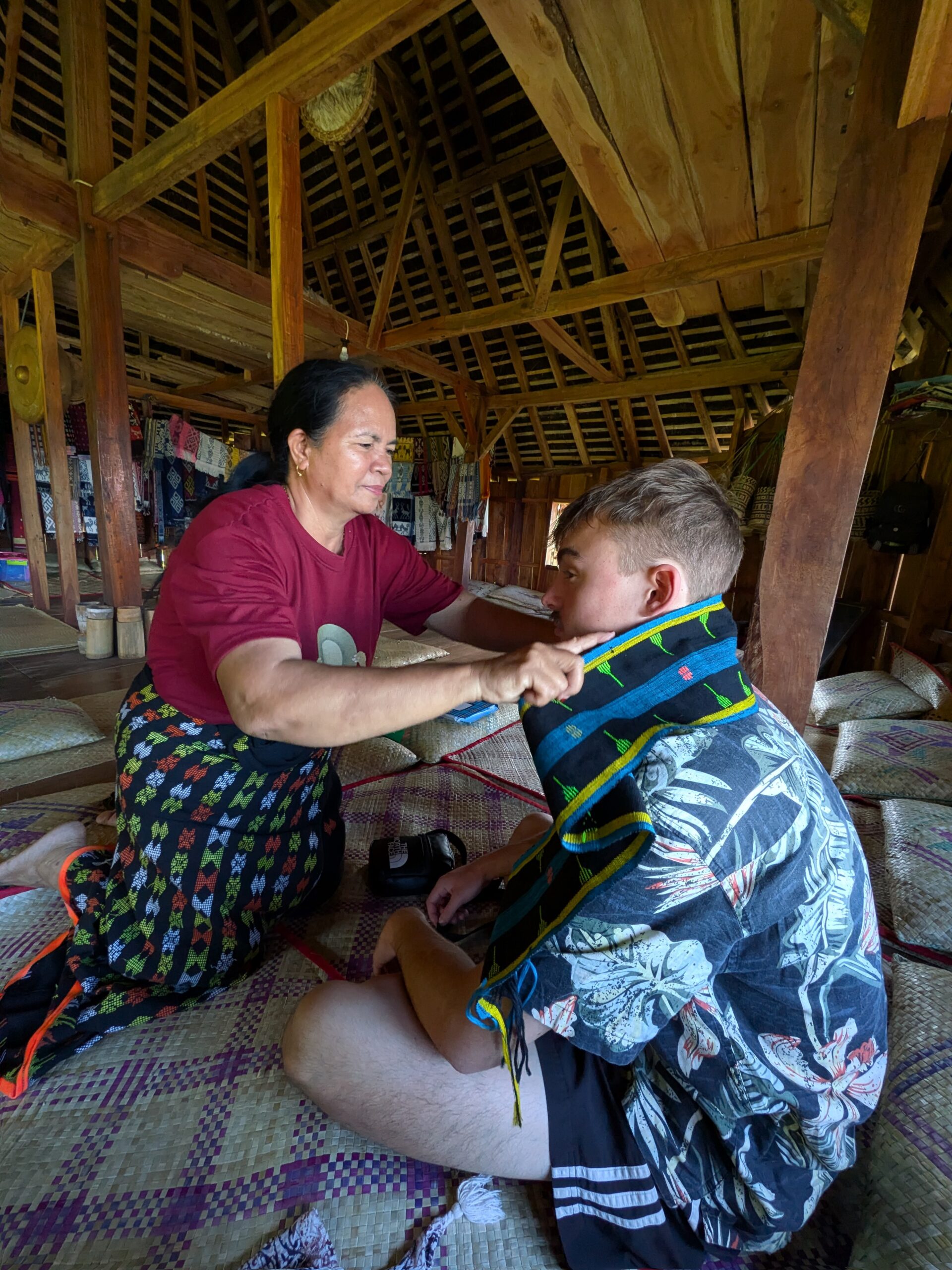
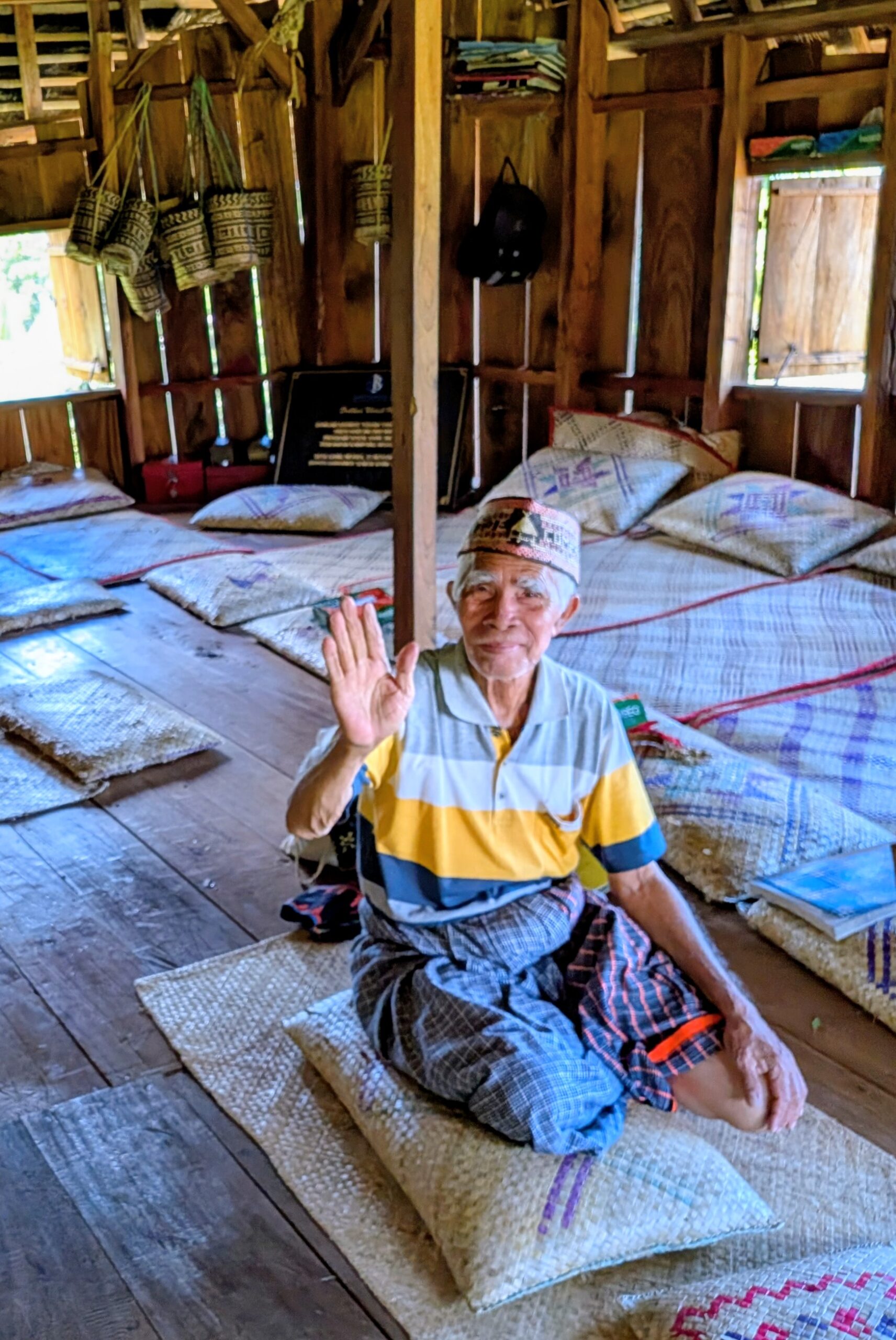
Melo is home to the Manggarai people, one of the major ethnic groups of western Flores, and the village operates as a cultural cooperative called Compang To’e, dedicated to preserving and sharing Manggarai traditions with visitors. We sat with the people, drank tea, and were welcomed into an atmosphere of genuine hospitality. The village leader held court over the grounds in a way that felt entirely unperformed — this was simply how things work here.
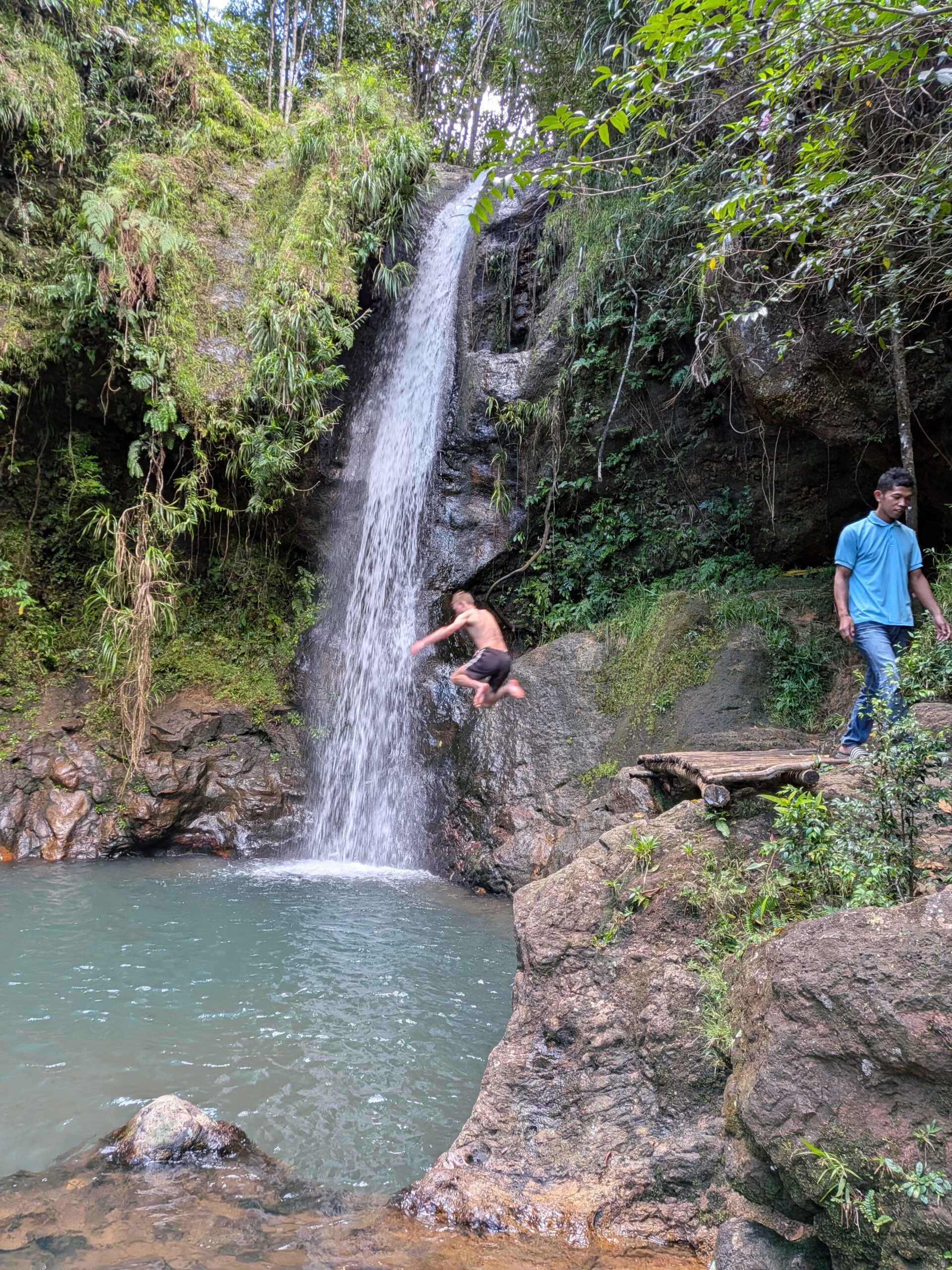
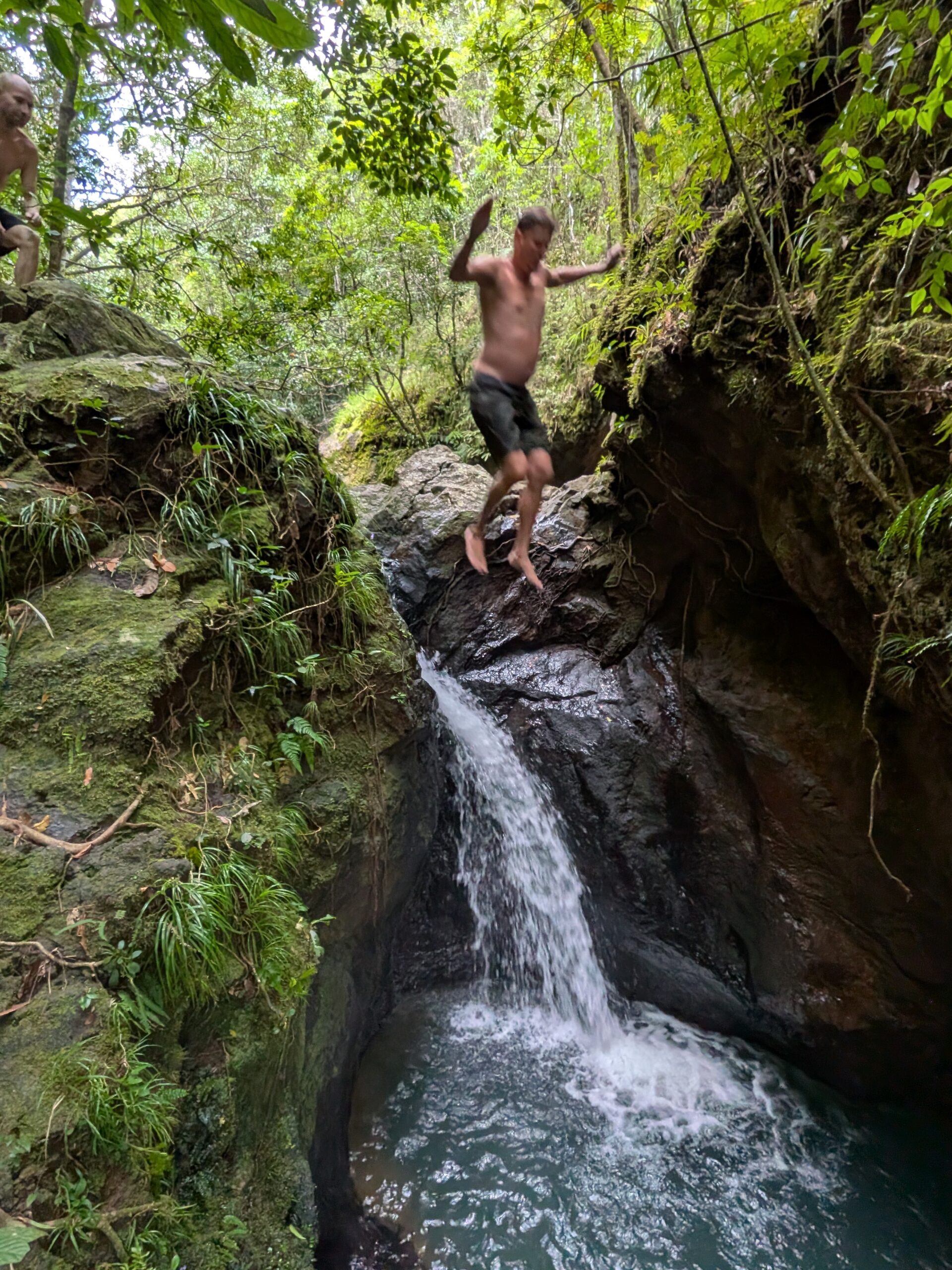
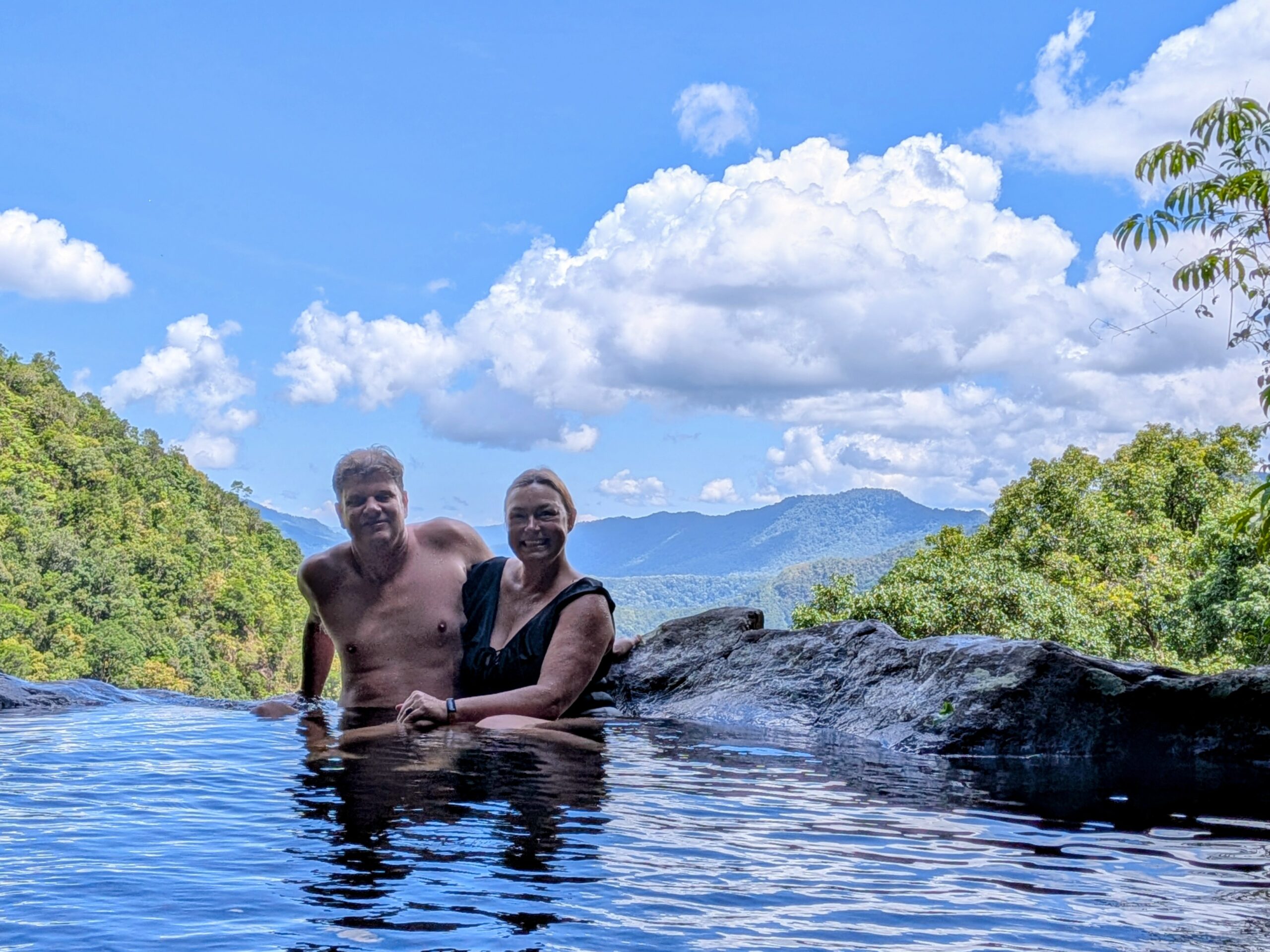
To cool off after, we visited Pilas Waterfalls — a series of cascades in the hills, many with natural jumping platforms that Joe and Graham made immediate and enthusiastic use of while I stayed sensibly on the ground with my camera. The paved path to the falls had only been built a year before our visit, and the area is clearly just beginning to discover its potential as a destination. The tourism infrastructure is still figuring itself out — coming out of the hike hot and hungry, the vendors were mostly selling trinkets rather than cold drinks and snacks, which was a small gap they’ll eventually fill. But that raw, just-being-discovered quality was also part of what made it special.
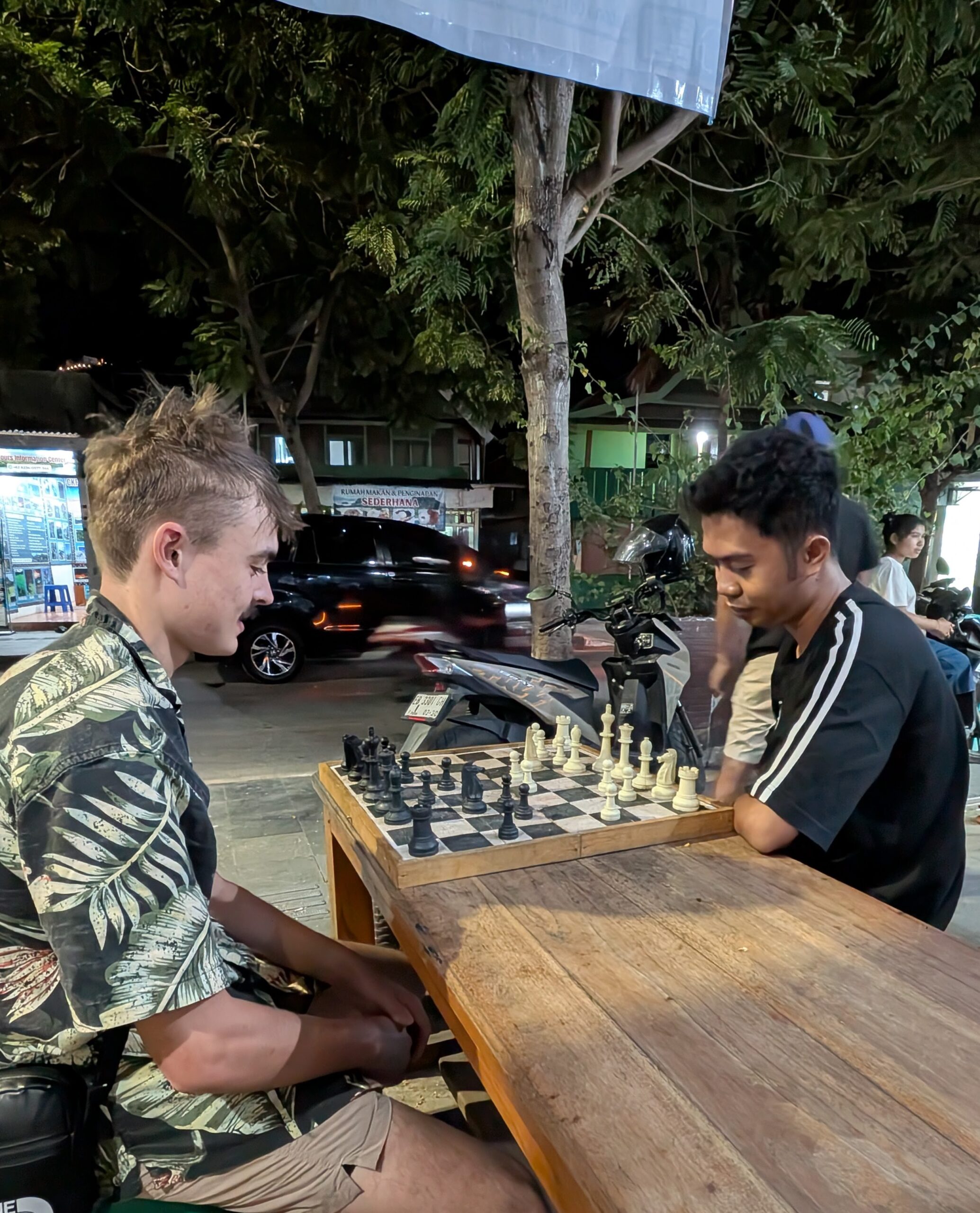
That evening we found a hilltop for sunset. Graham found locals to play chess with in town and defeated most of them handily. Some things translate across every culture.
Three Days on the Water: The Private Phinisi Charter
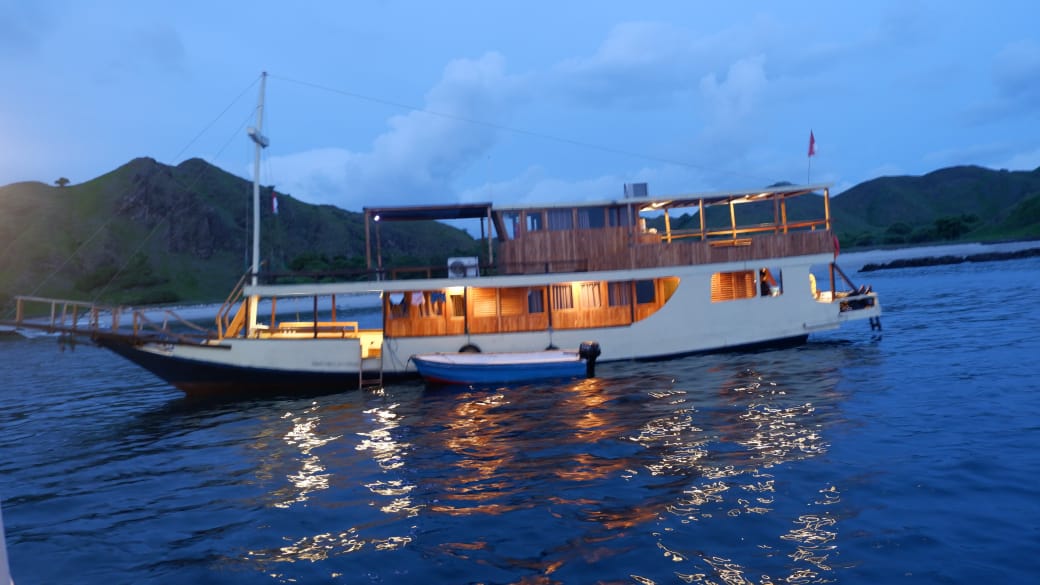
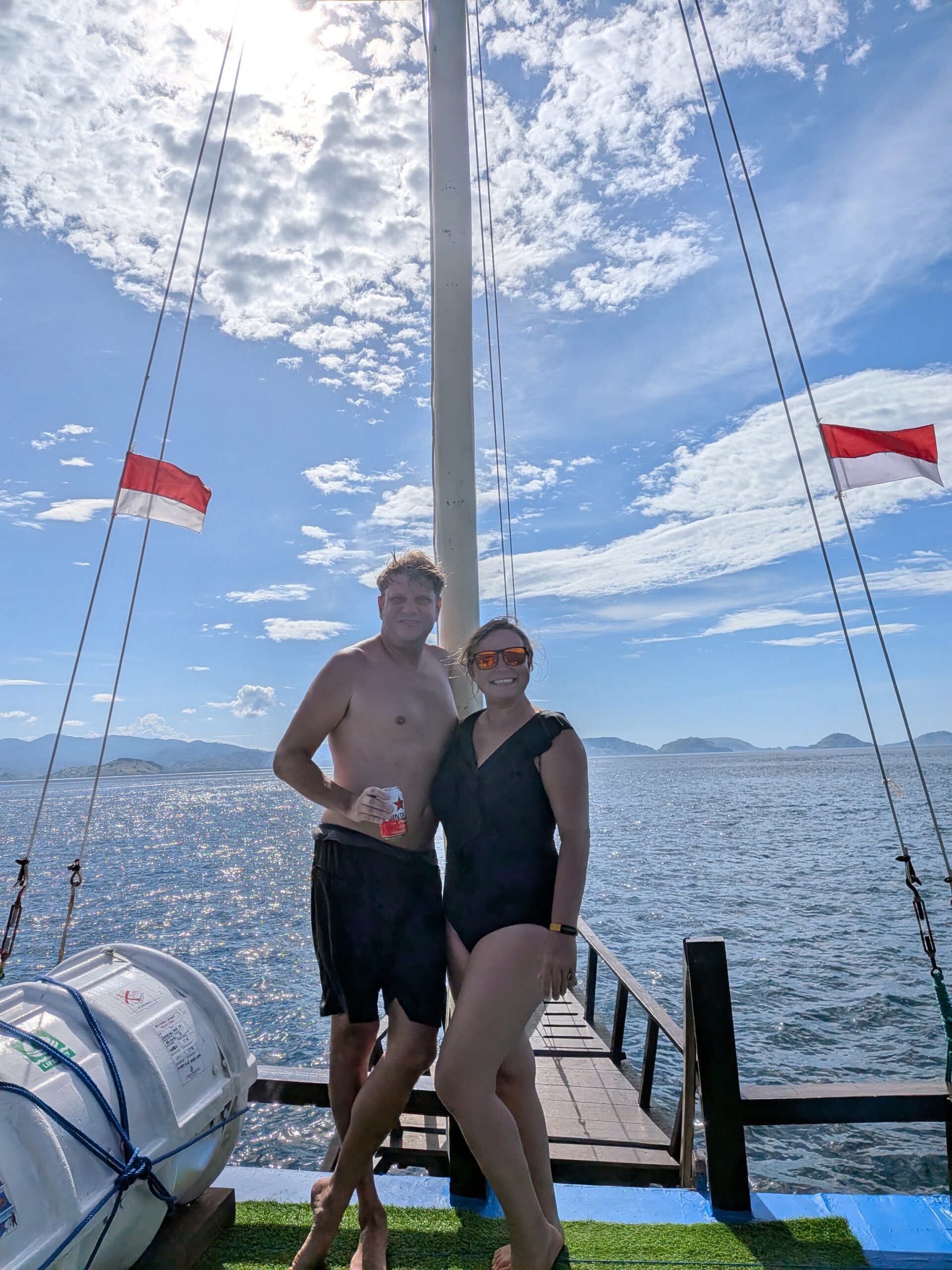
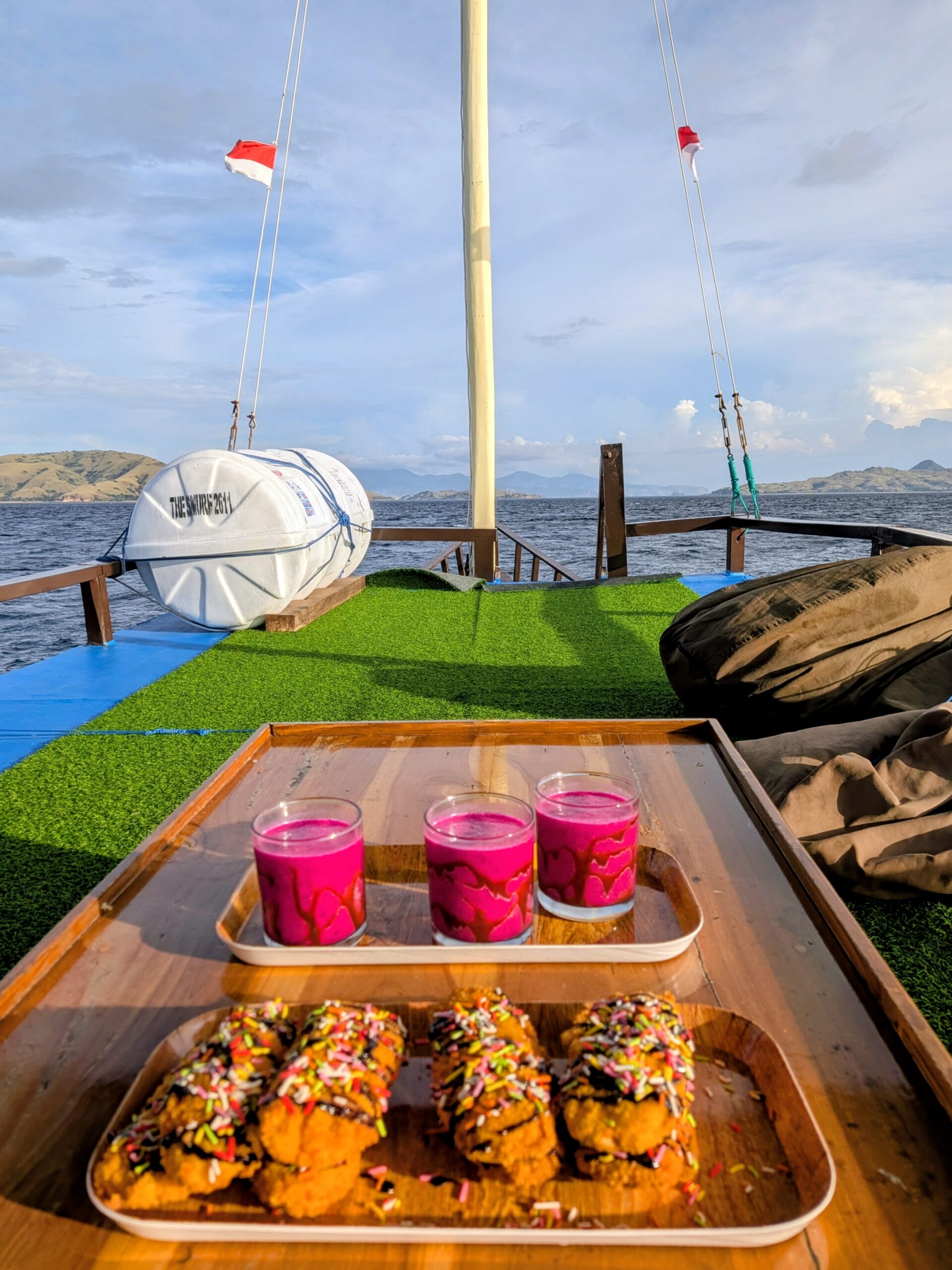
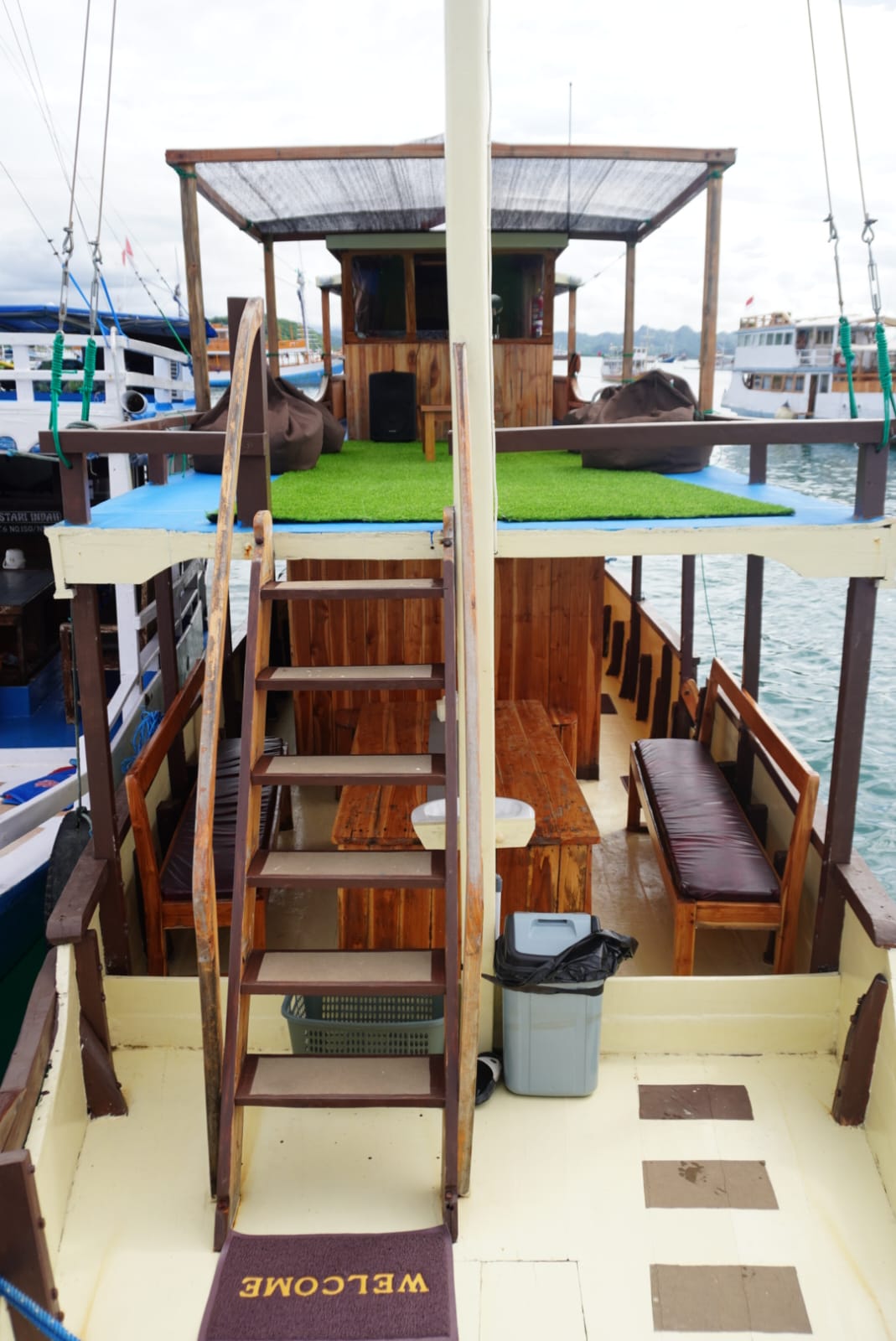
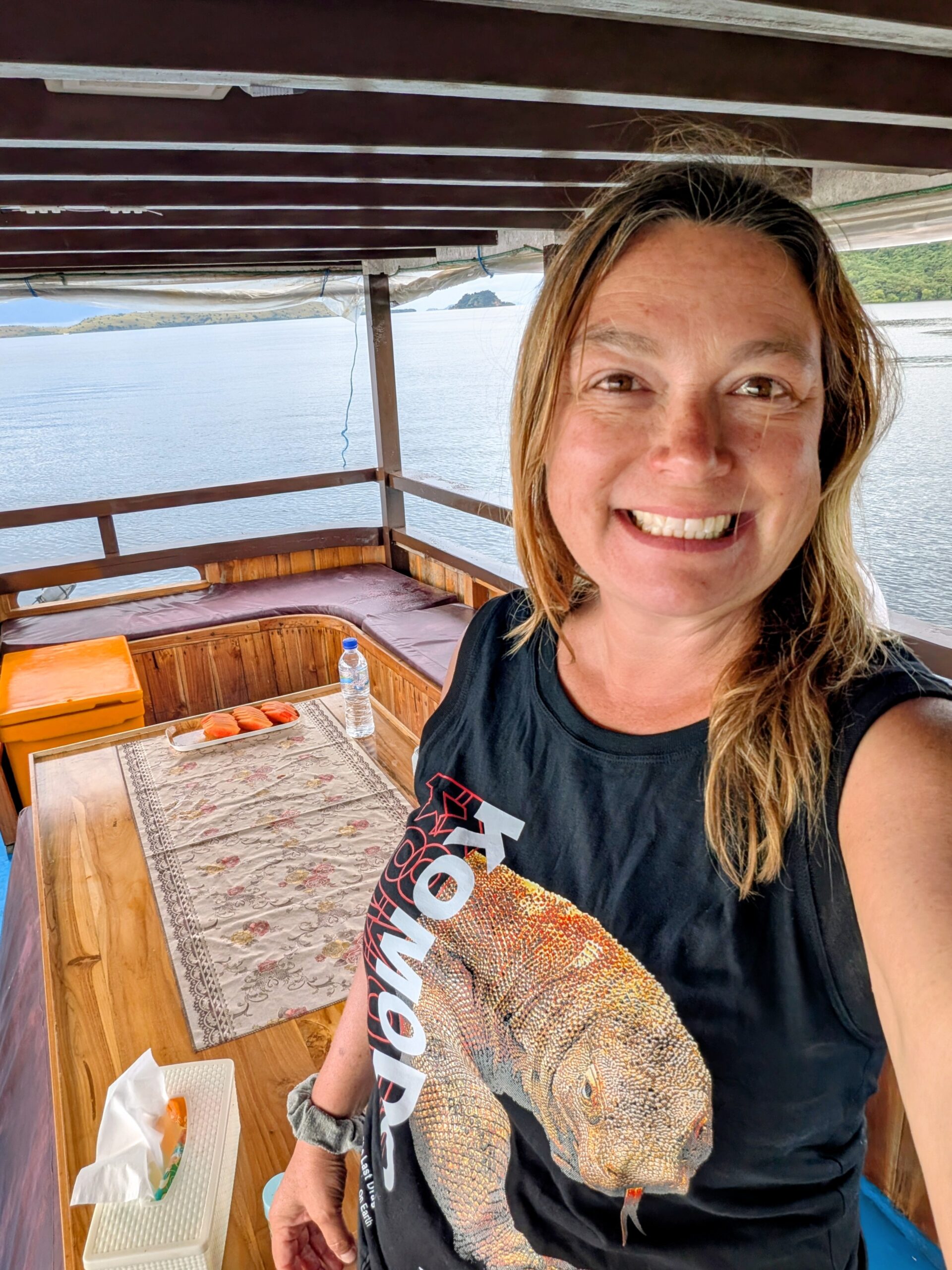
The next morning we gathered our gear and boarded our own private charter boat — a traditional Indonesian phinisi, the iconic wooden sailing vessel that has been the workhorse of the Indonesian archipelago for centuries. We had considered joining a shared boat, but the private option was reasonable for what it included — three days, two nights on the water, all meals prepared by the crew, and a more personal experience. We were also candid with ourselves that sharing a boat with ten or more people in their twenties was a chapter we had mostly moved past, though we acknowledge Graham probably would have preferred it.
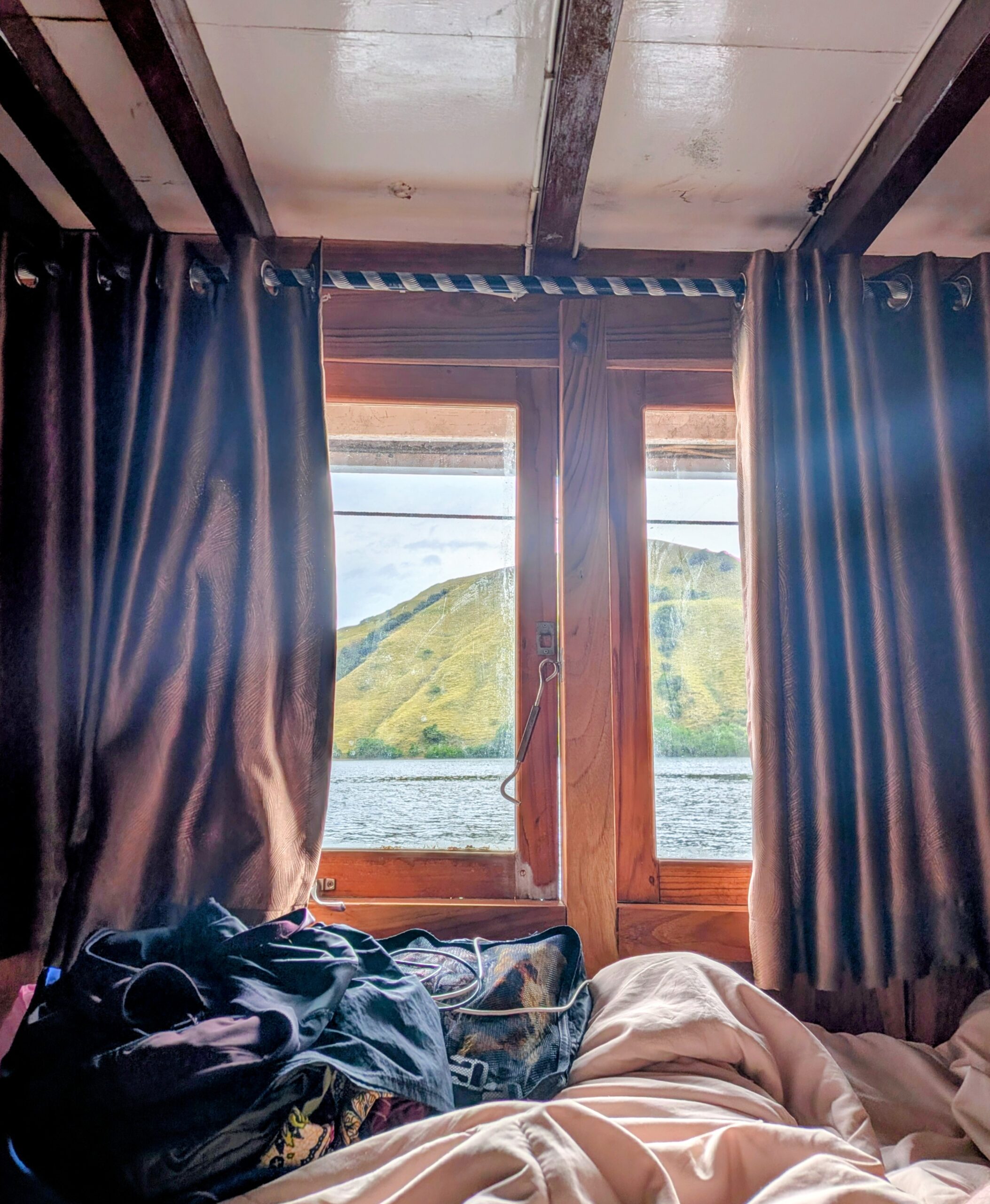
After choosing our rooms and meeting our boat guide, Eras and the rest of the crew, we set sail. As someone who has never been on a cruise ship and is prone to motion sickness, sleeping on the open water was genuinely new territory for me. The water was calm and I felt completely fine — and waking up each morning already anchored somewhere beautiful, with no airport, no bus, no logistics to navigate, turned out to be one of the more peaceful travel experiences I can remember.
Day One on the Water: Coral, Mantas, and a Sandbar
Our first snorkeling stop was Sebatur Island, where we found some of the most alive, vibrant coral reef I have ever seen. It is harder and harder to encounter healthy living coral — ocean warming and climate change have devastated reef systems across the world — and seeing this one teeming with color and life felt like both a gift and a reminder of how much we stand to lose. We counted sea turtles, watched clouds of colorful fish, and stayed in the water as long as we could.
The next stop was Mauan — manta point. Seeing mantas in this area is never guaranteed, and we were careful with our hopes. Then Graham spotted one. We swam toward it, and what emerged from the blue was enormous, moving through the water swiftly and with incredible grace. The water here was significantly colder and we didn’t last long. We climbed back into the small transport boat — and spotted another manta almost immediately. We went back in. This one was even larger than the first. Seeing these creatures in their own environment, under their own terms, is the kind of experience you carry for a long time.
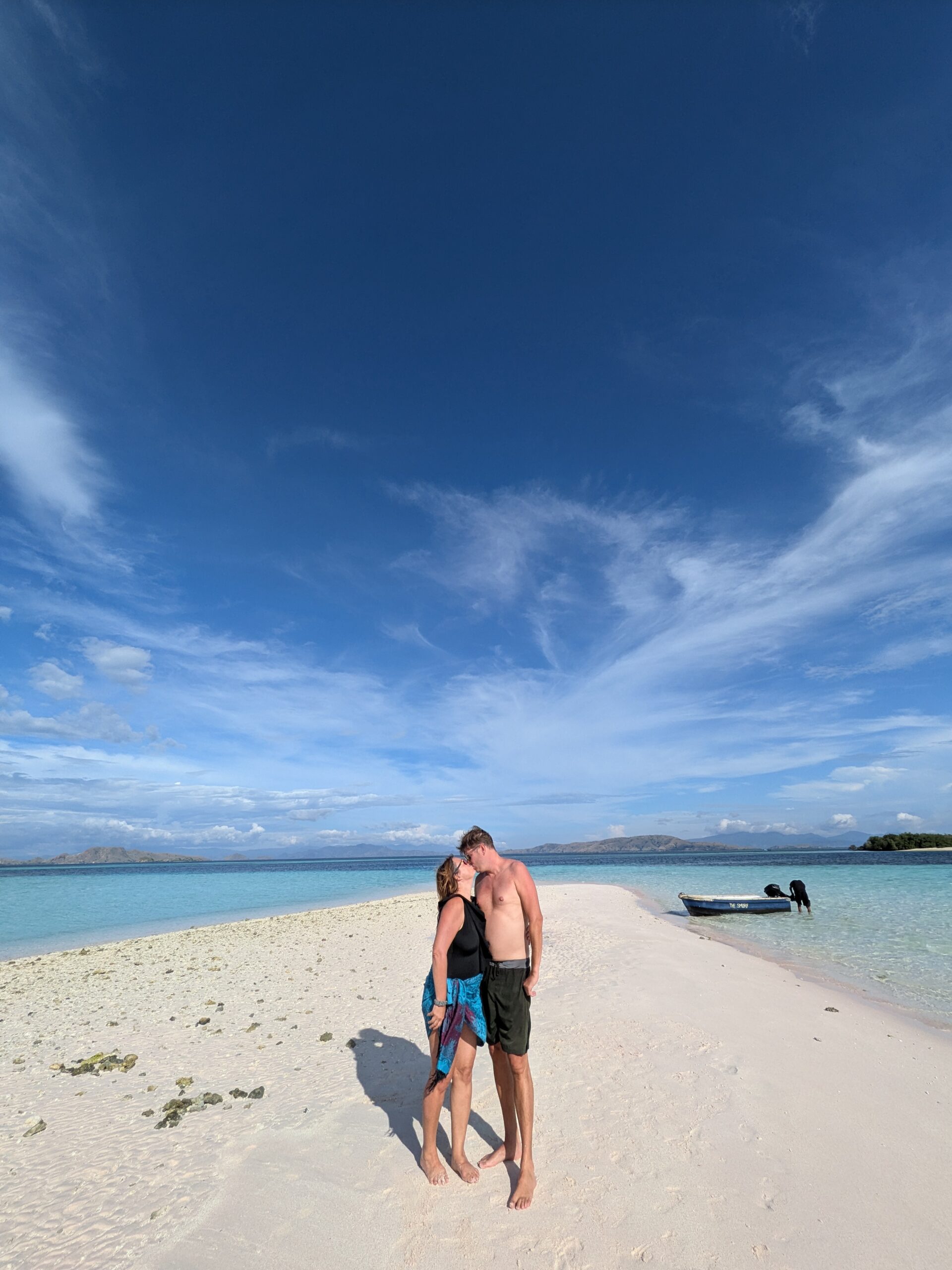
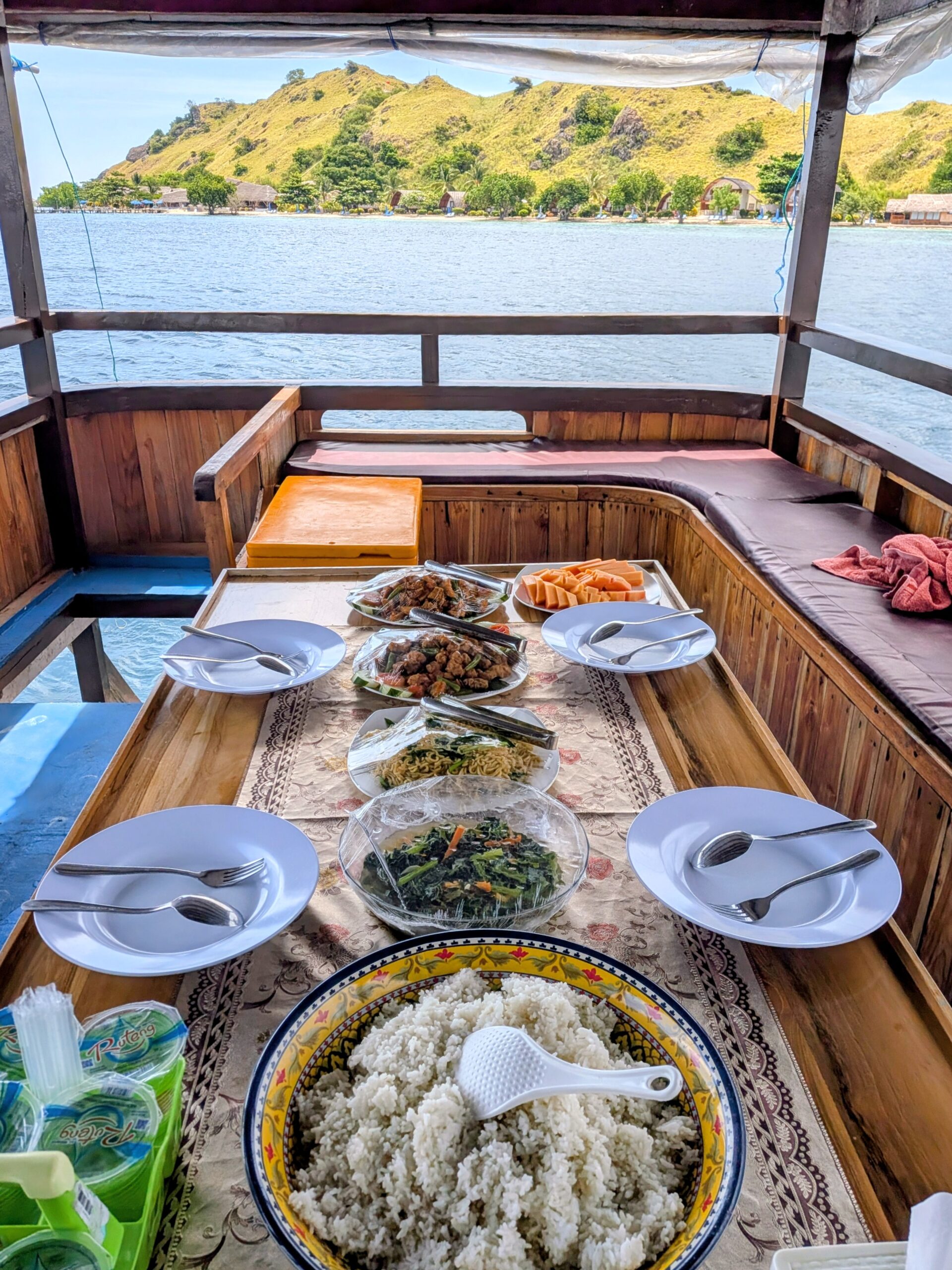
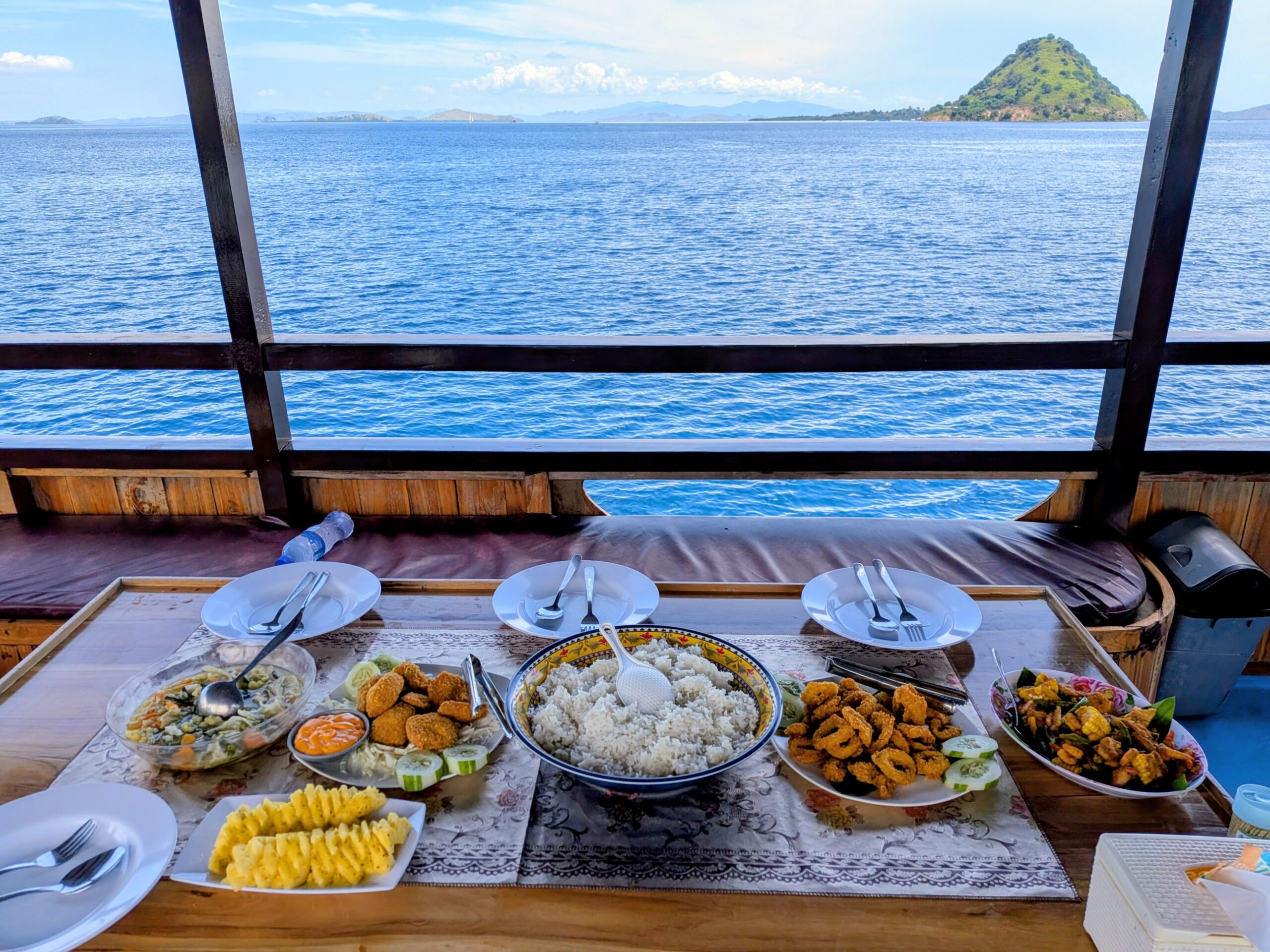
The day ended at Taka Makassar sandbar — a temporary island that appears above the waterline at low tide, stretching in a curve of white sand surrounded by turquoise water. We arrived to find it to ourselves, which lasted just long enough to feel magical before other tour boats arrived and the private island became a shared one. Still a beautiful sight. Back on the big boat, the crew served dinner — local Indonesian fish, noodles, fresh fruit — and we ate like people who had earned it.
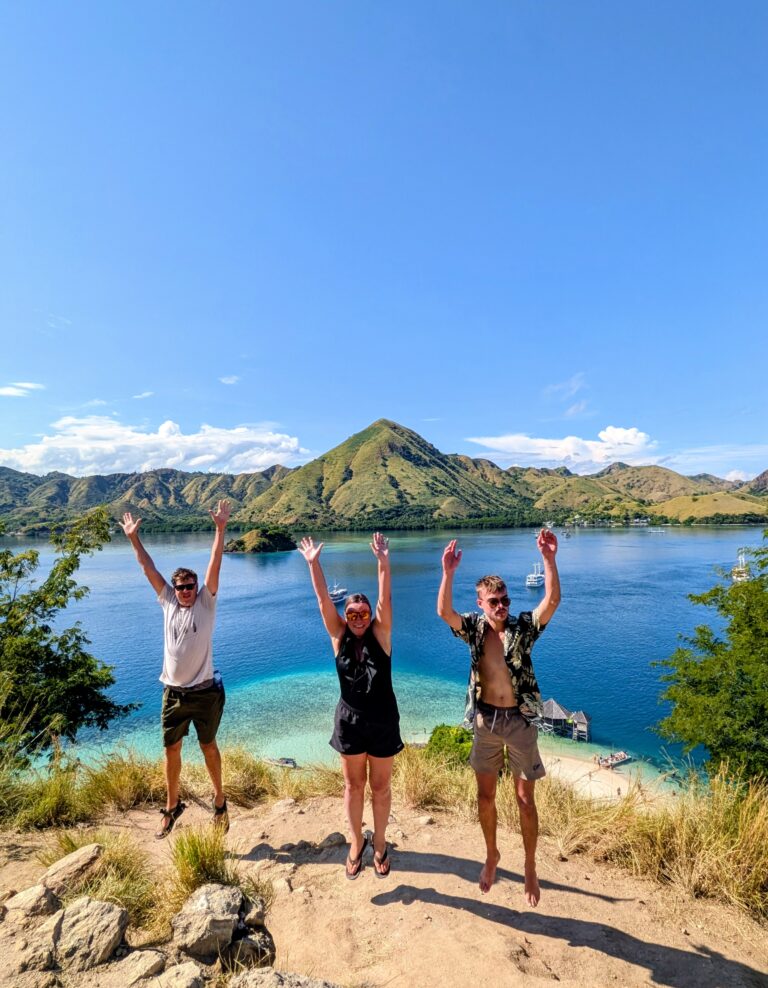
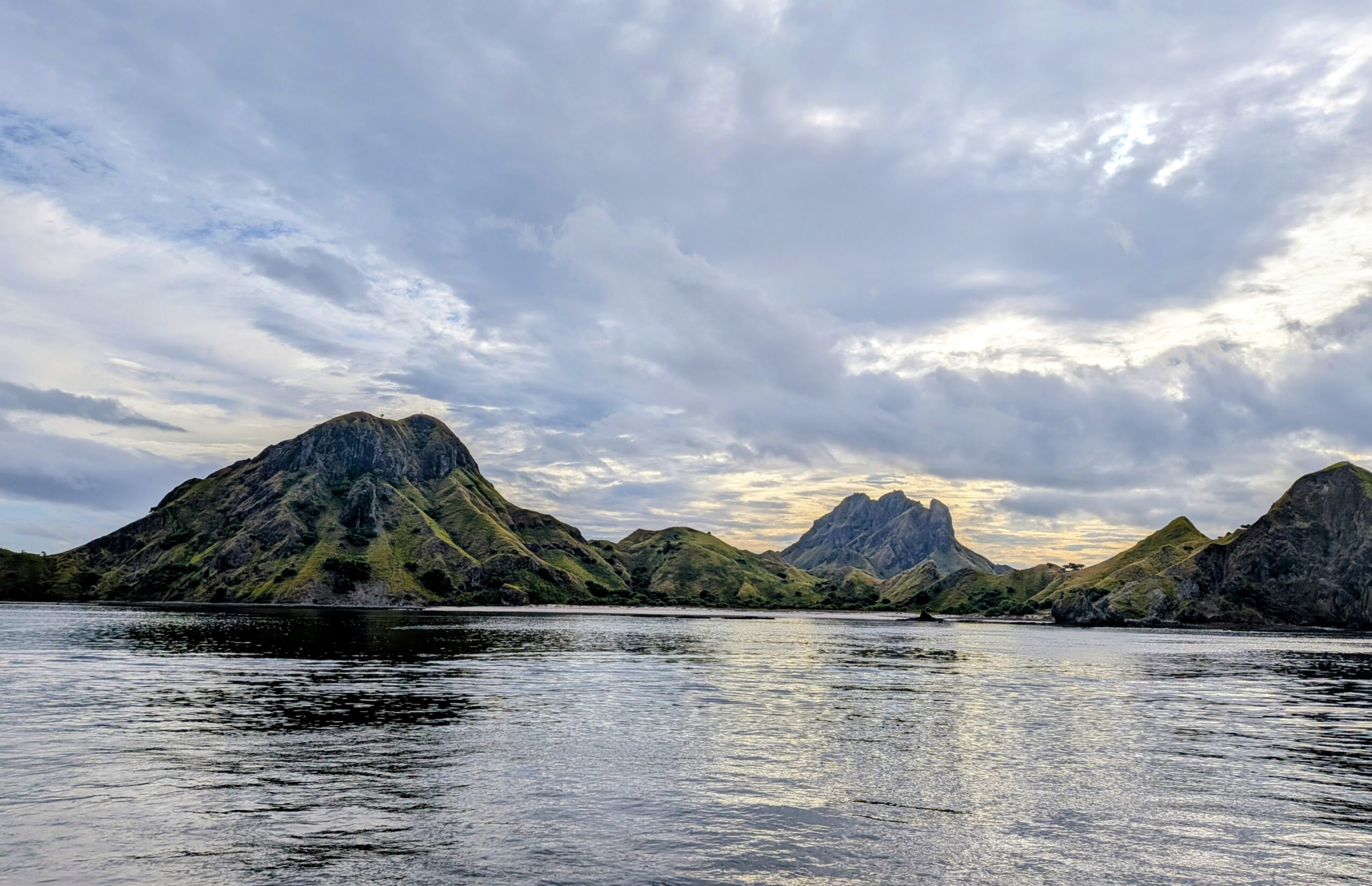
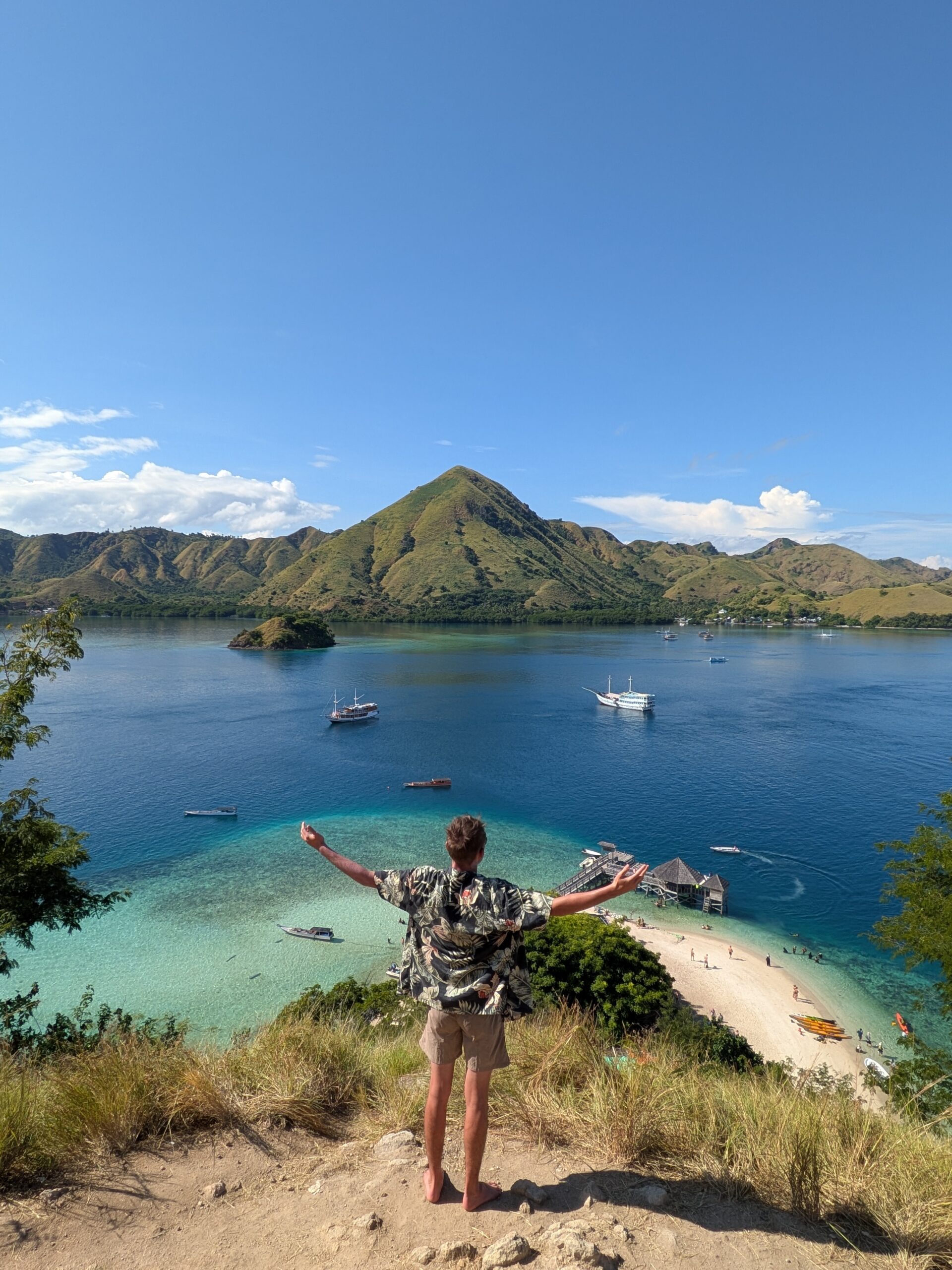
Riding between destinations, the landscape never stopped delivering. This is not the open ocean. The islands are everywhere — forested, volcanic, unexpected — always providing something to look at on the horizon.
Day Two: Padar Island, Pink Beach, and a Friendly Deer
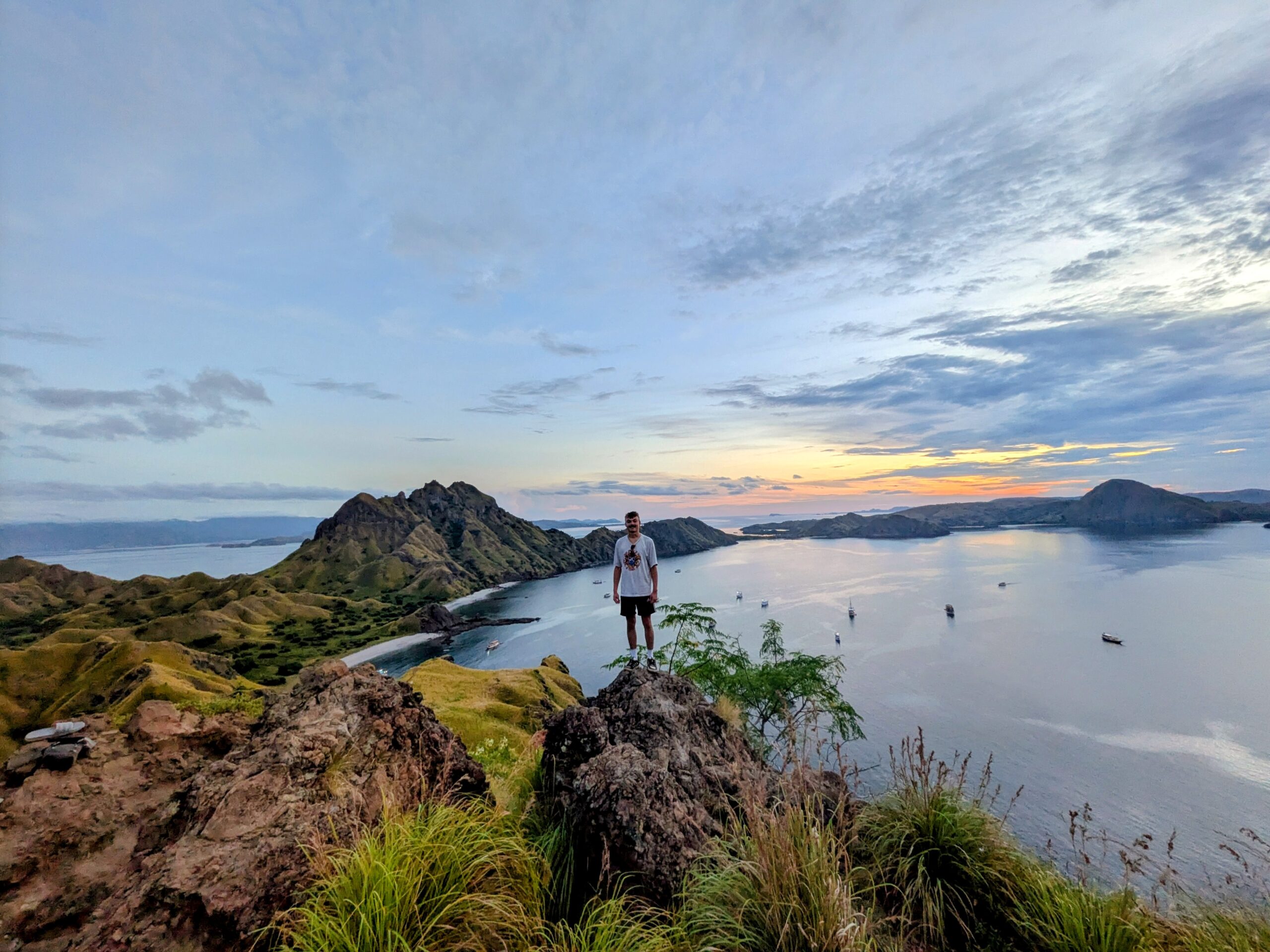
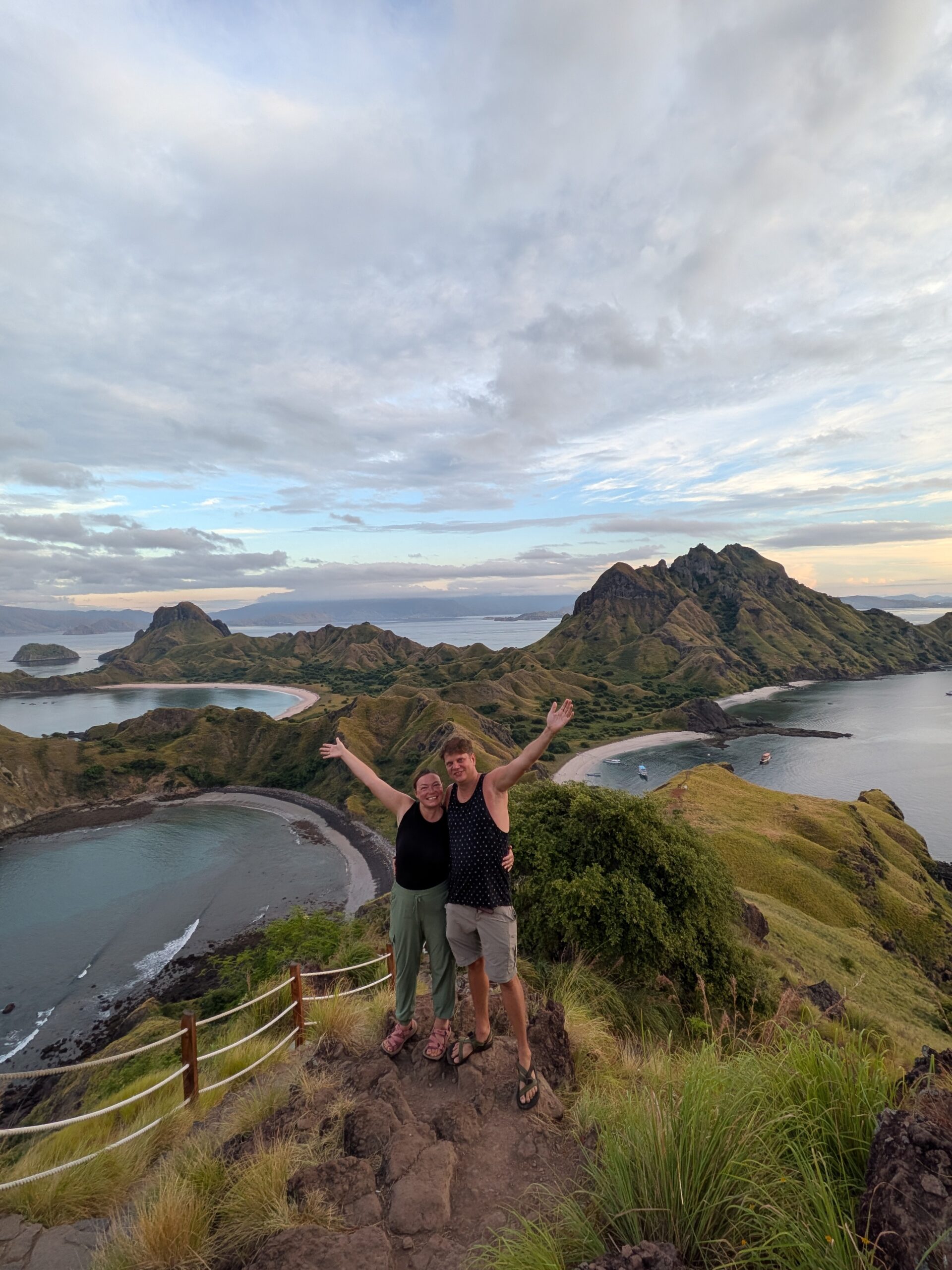
We woke before dawn to hike Padar Island to the summit before the heat made it brutal. The climb is steep but fairly short, and at the top you are rewarded with one of the most photographed views in Indonesia — three distinct bays visible at once, each a different shade of blue and green, with the island’s ridgeline cutting between them like a spine. It is as spectacular in person as it looks in pictures, and that is not always true.
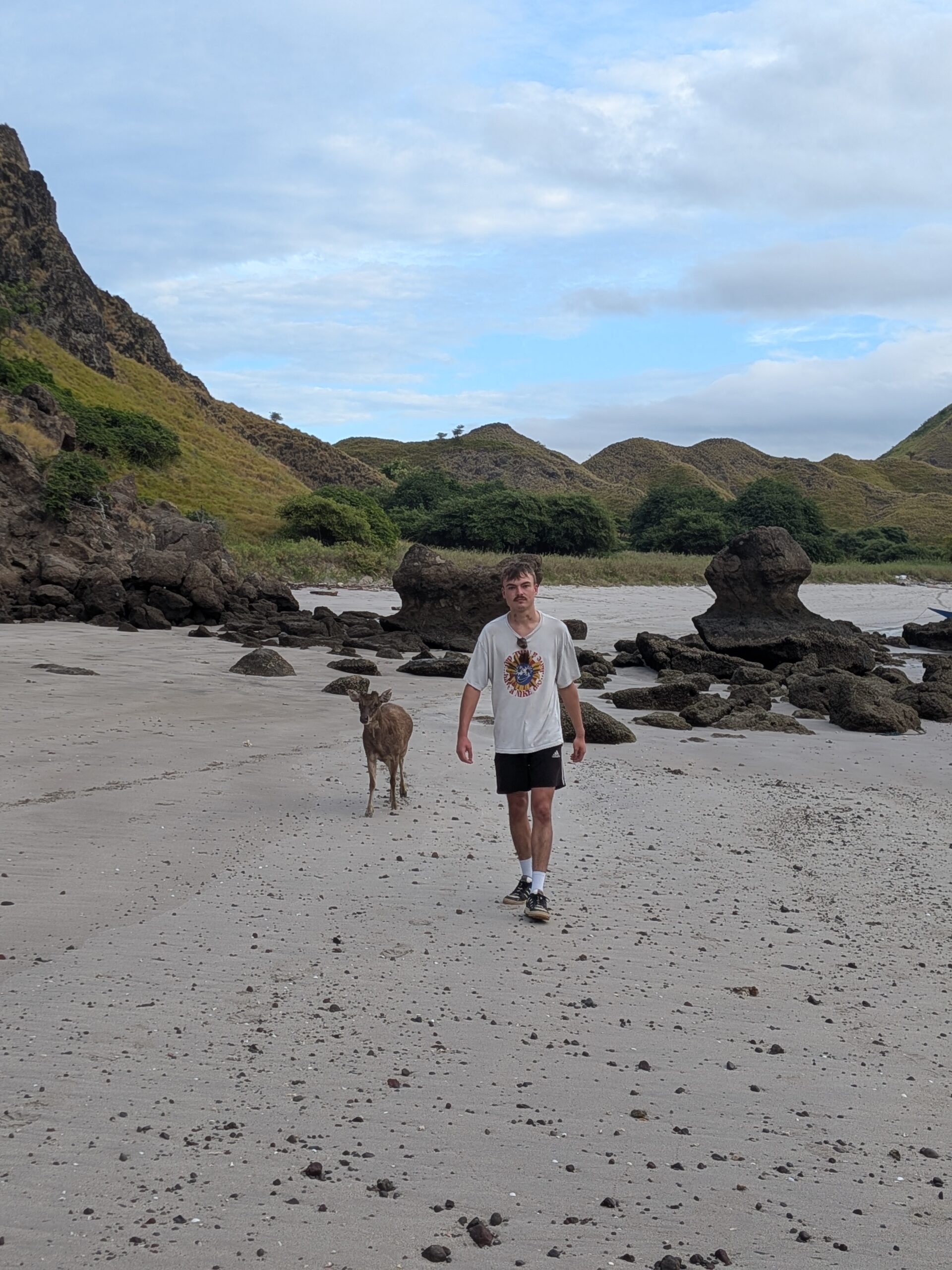
Coming back down we spotted deer on the hillside — and one of them, apparently unconcerned with the concept of personal space, decided Graham was her person. We chose to believe this was a better outcome than the alternative, given what else lives on the islands nearby.
On the way to Pink Beach we encountered the most dolphins I have ever seen at once — truly exhilerating!
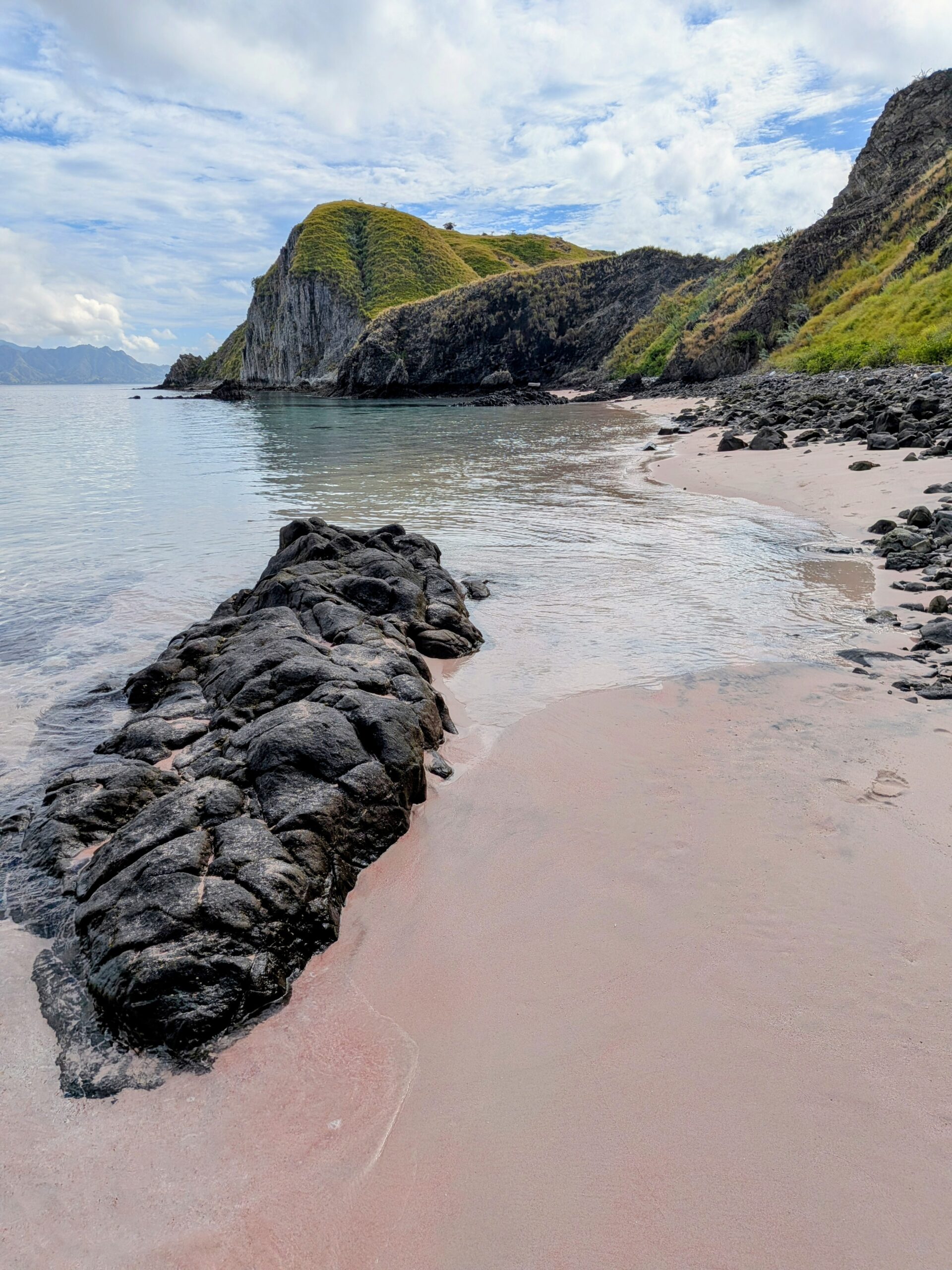
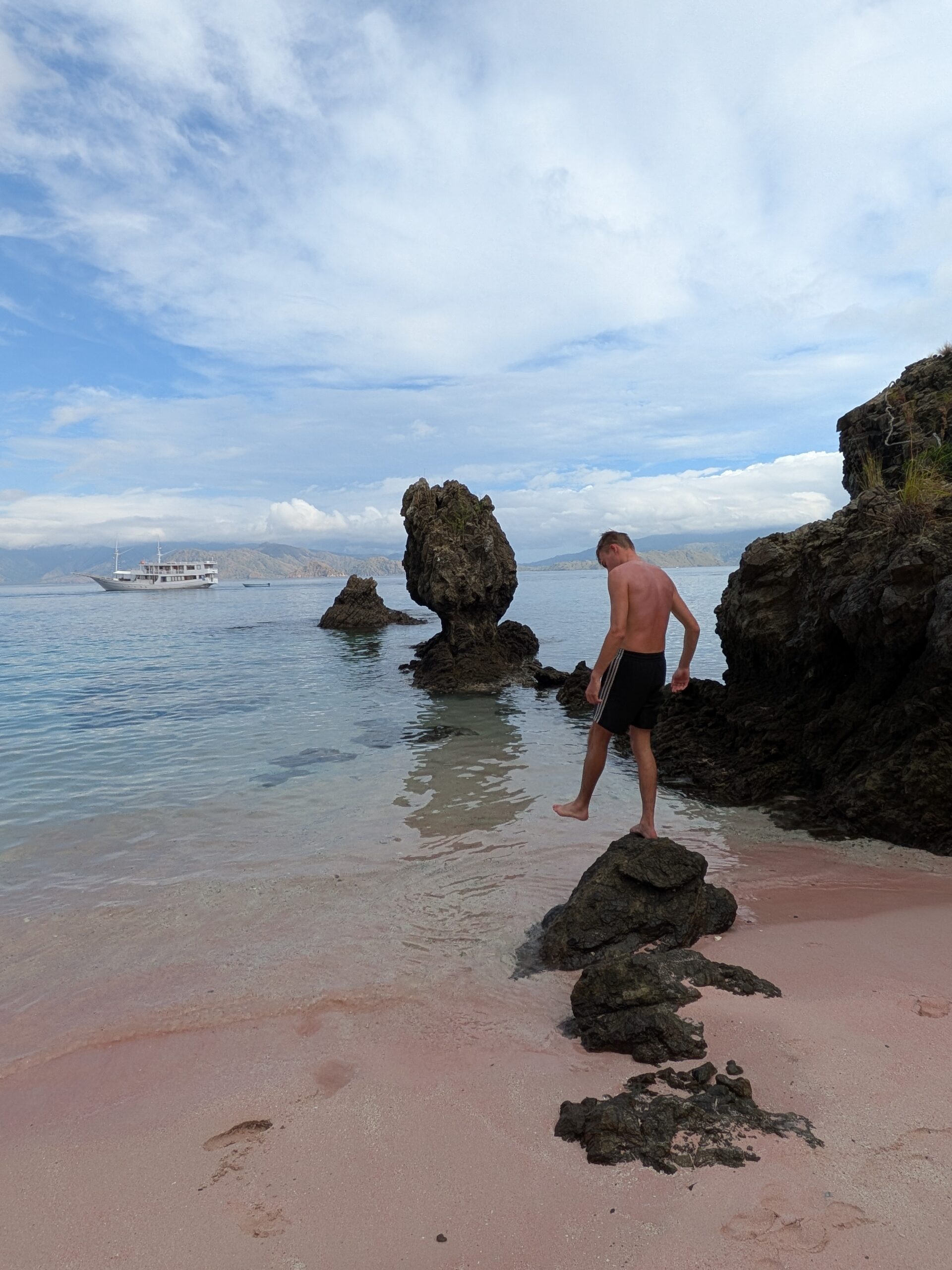
Pink Beach itself gets its color from red coral fragments mixed into the white sand — a blush that is subtle in some lights and vivid in others.
Komodo Island: The Dragons
We arrived at Komodo Island with calibrated optimism. It was already hot — genuinely, oppressively hot — and Komodo dragons are efficient animals who conserve energy when the sun is high. There was a real possibility they would all be resting somewhere we couldn’t reach them.
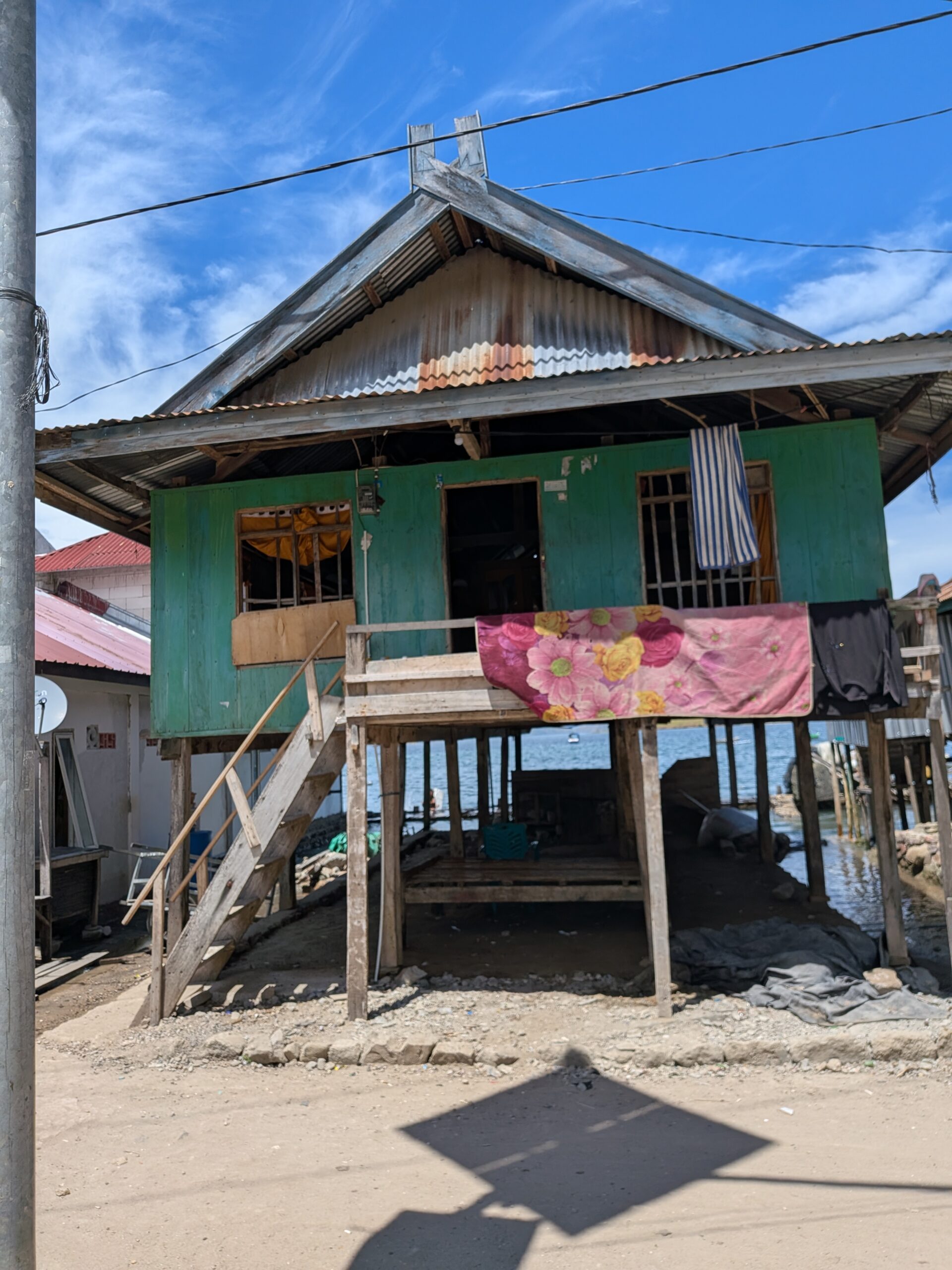
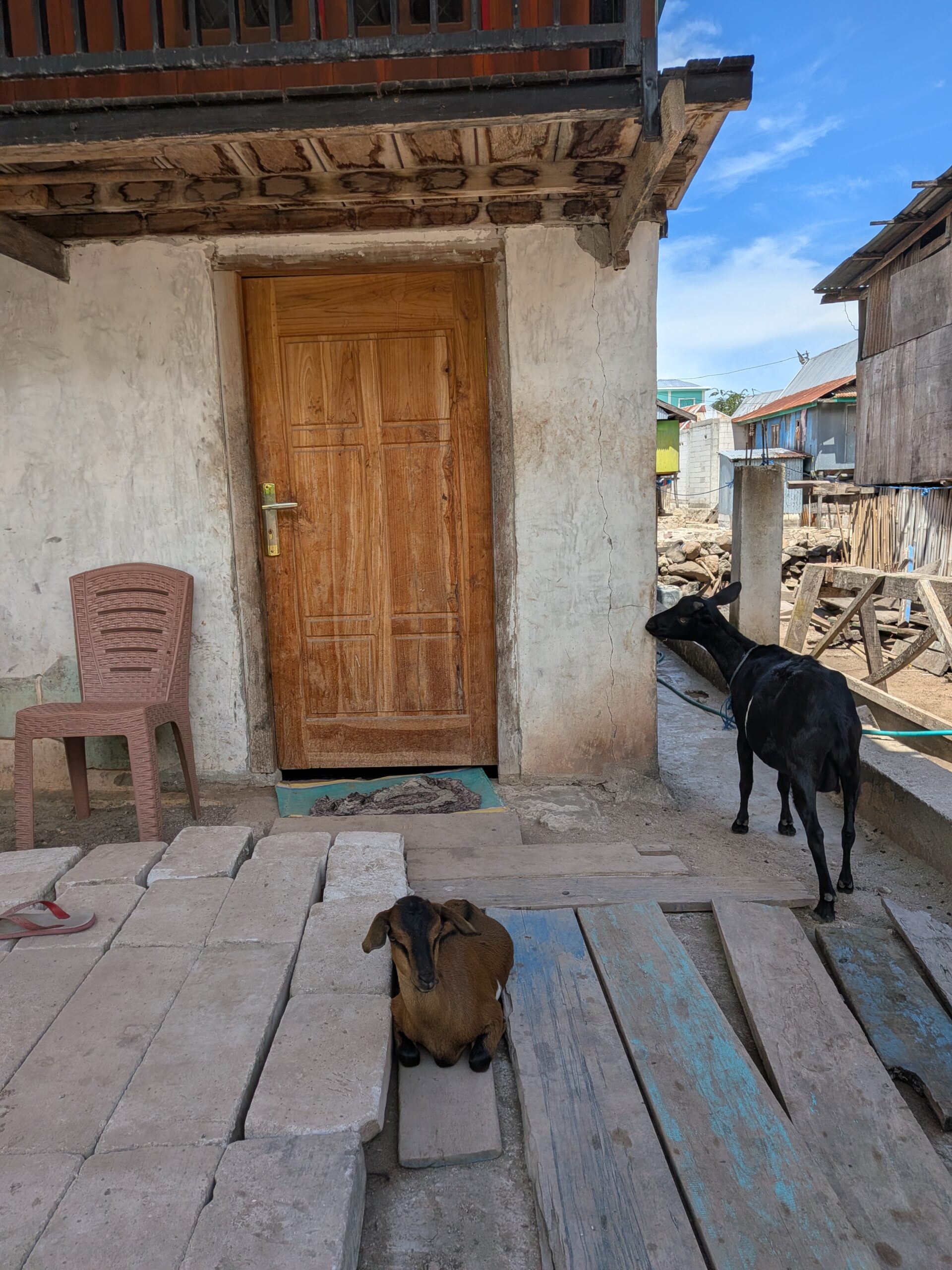
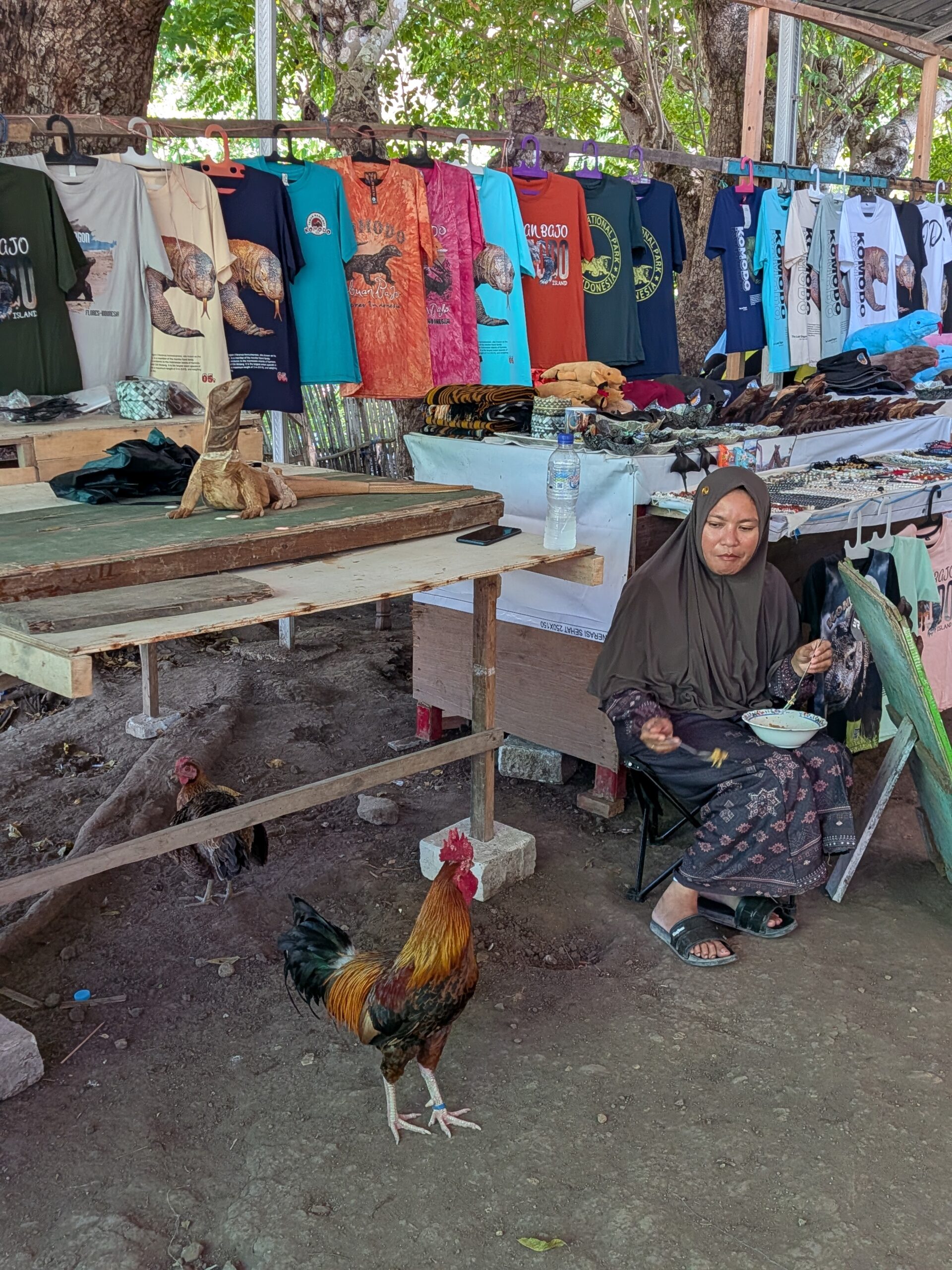
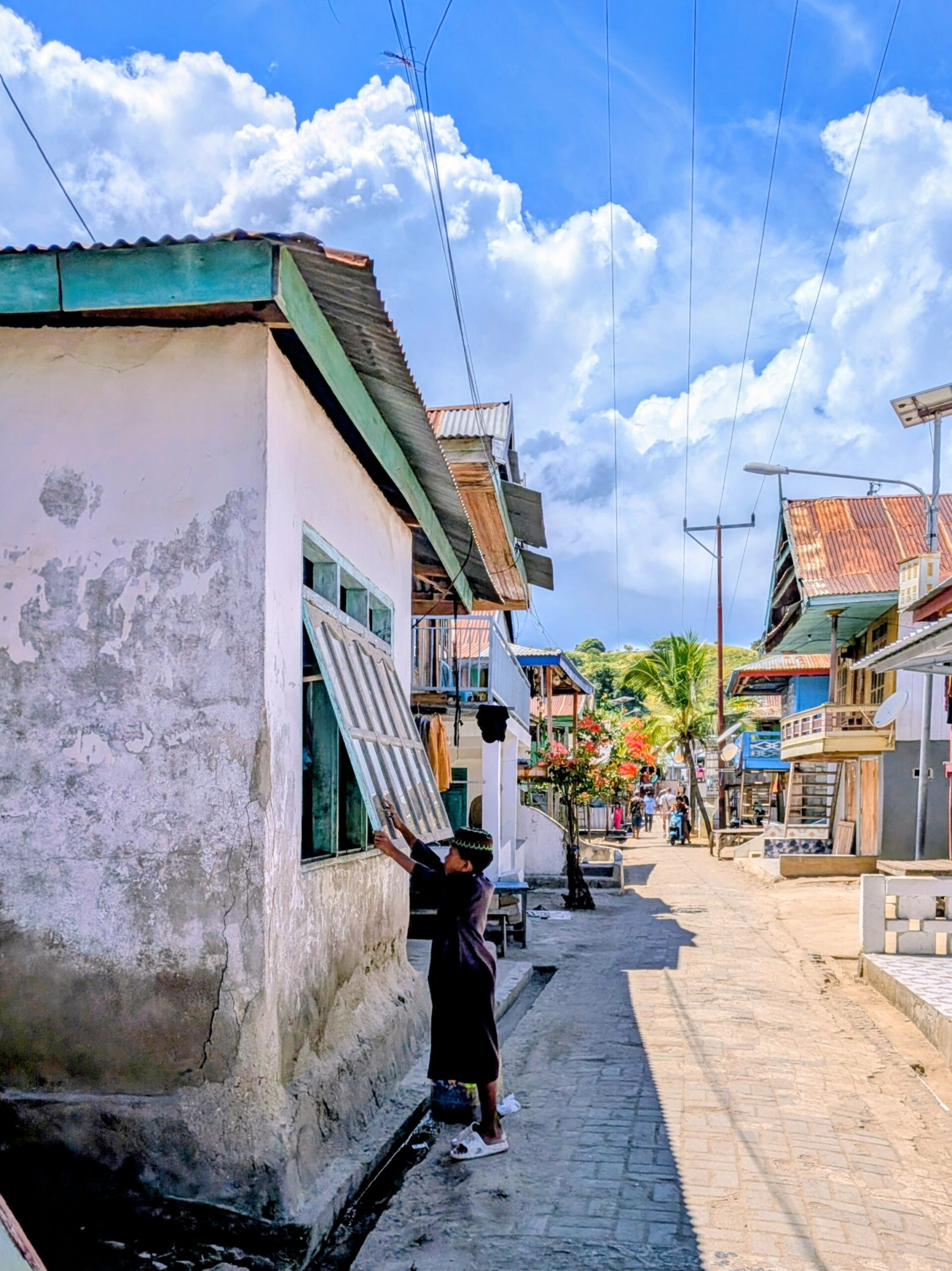
At the dock you are assigned a local guide who carries a forked staff and knows how to handle a situation if one of the 1,700 dragons on this island decides to assert itself. Walking through the village first is its own experience — seeing people, children, ordinary daily life being lived in the company of these modern dinosaurs. The homes are built on planks above the ground, for everyone’s safety. Goats roam freely, as they are the primary food source for the majority of the island’s dragon population.
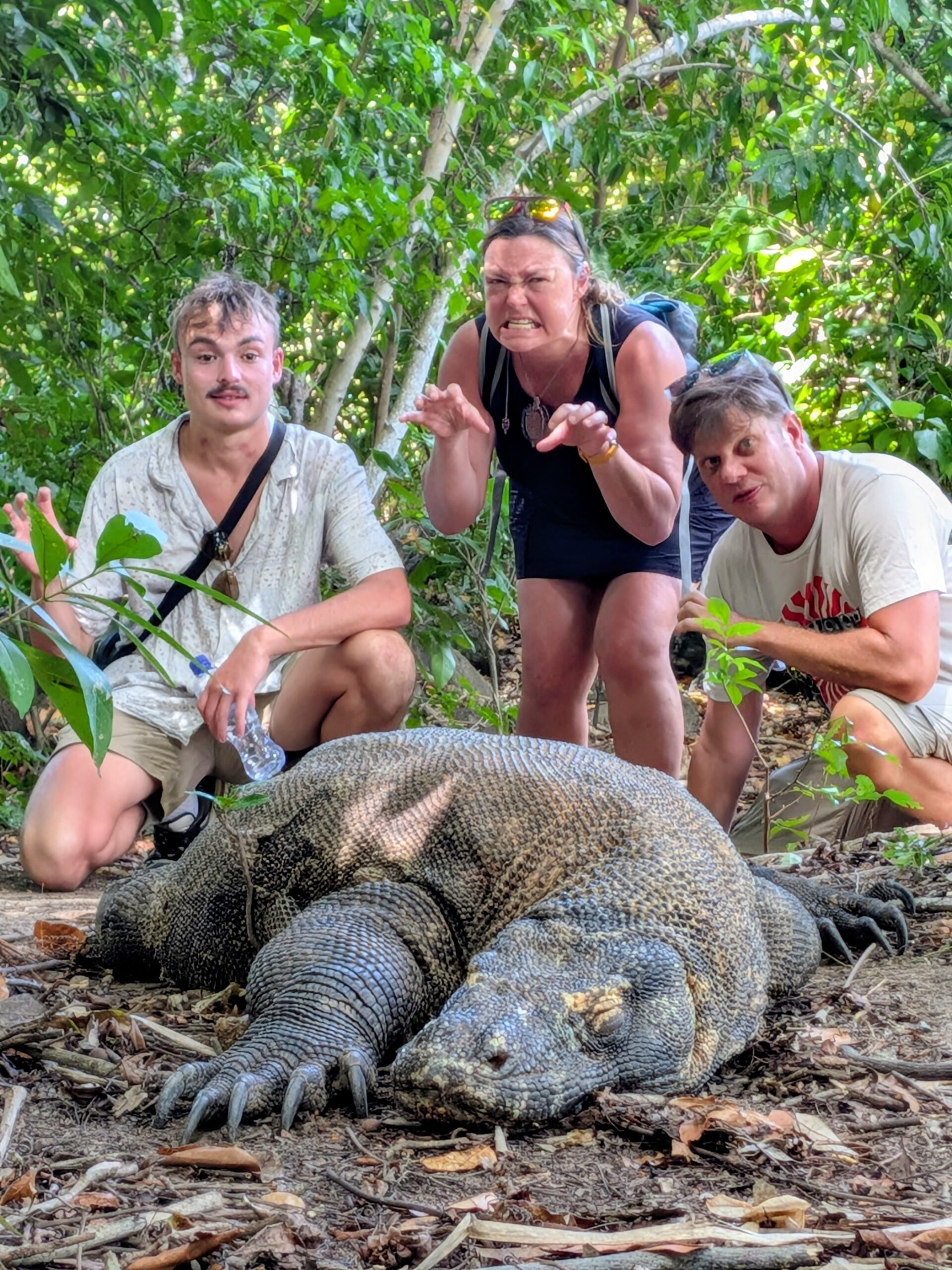
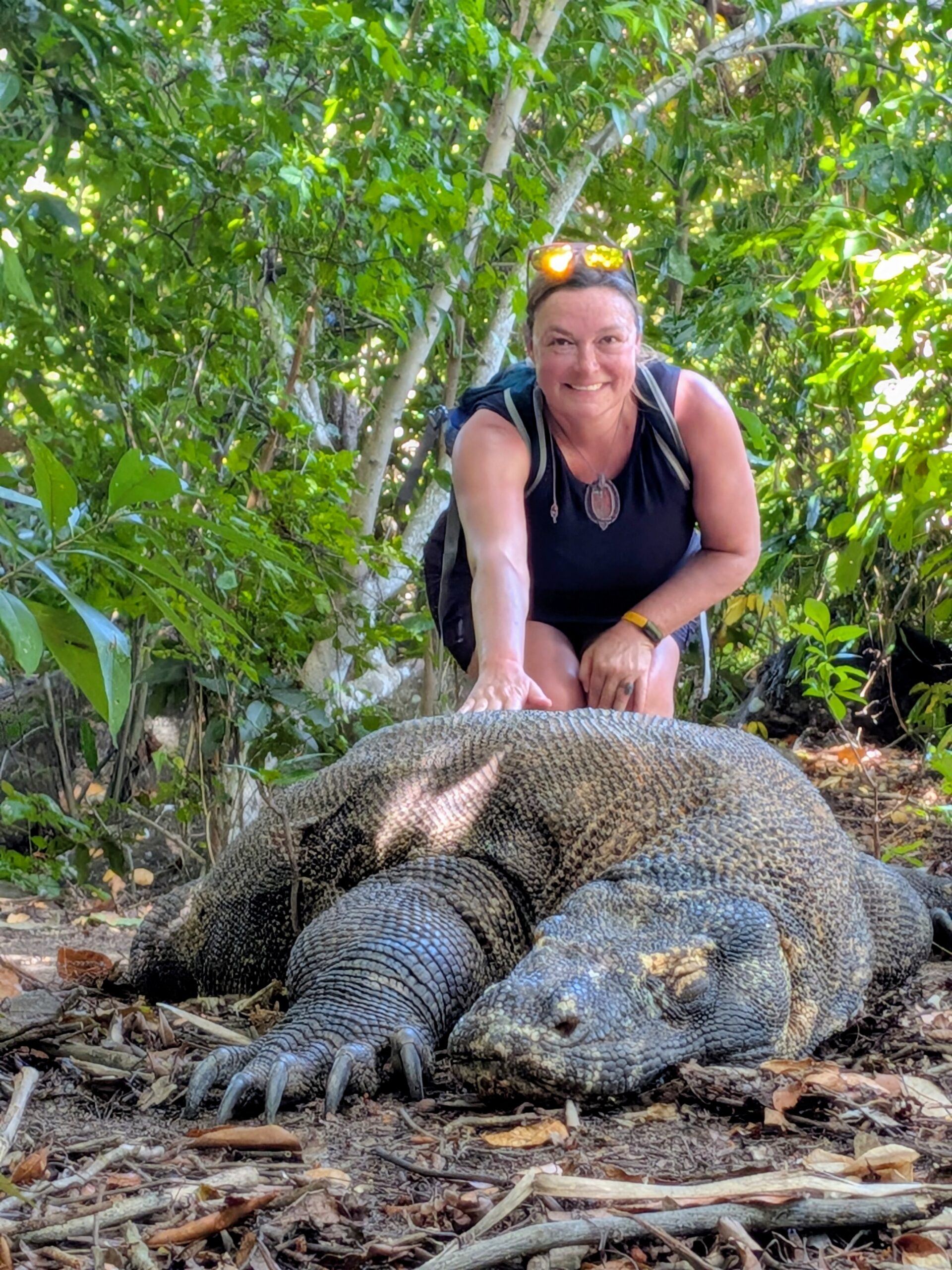
Halfway up the trail, the heat had me genuinely doubtful. Then the guide moved — that quick, purposeful shift that tells you something has been spotted. Ahead on the path, a Komodo dragon was lounging with the unhurried confidence of something that has no natural predators and knows it. Seeing one in person recalibrates everything you thought you understood about the word “lizard.” They are prehistoric in a way that is not metaphorical. They are simply from another time, still here.
Our guide positioned us behind the dragon at what he considered a safe distance — which still felt terrifying — and then, for photographs, arranged us to look considerably closer than we were, our hands extended toward the animal in a way that produced pictures that are equal parts impressive and completely ridiculous. Further along the trail we saw more dragons, a couple of them moving — that low, deliberate walk, the long forked tongue tasting the air — which was something else entirely to watch. Our guide borrowed my phone and captured video that was fascinating to see later. Truly a once in a lifetime experience!
The Kalong Bats and the Last Night
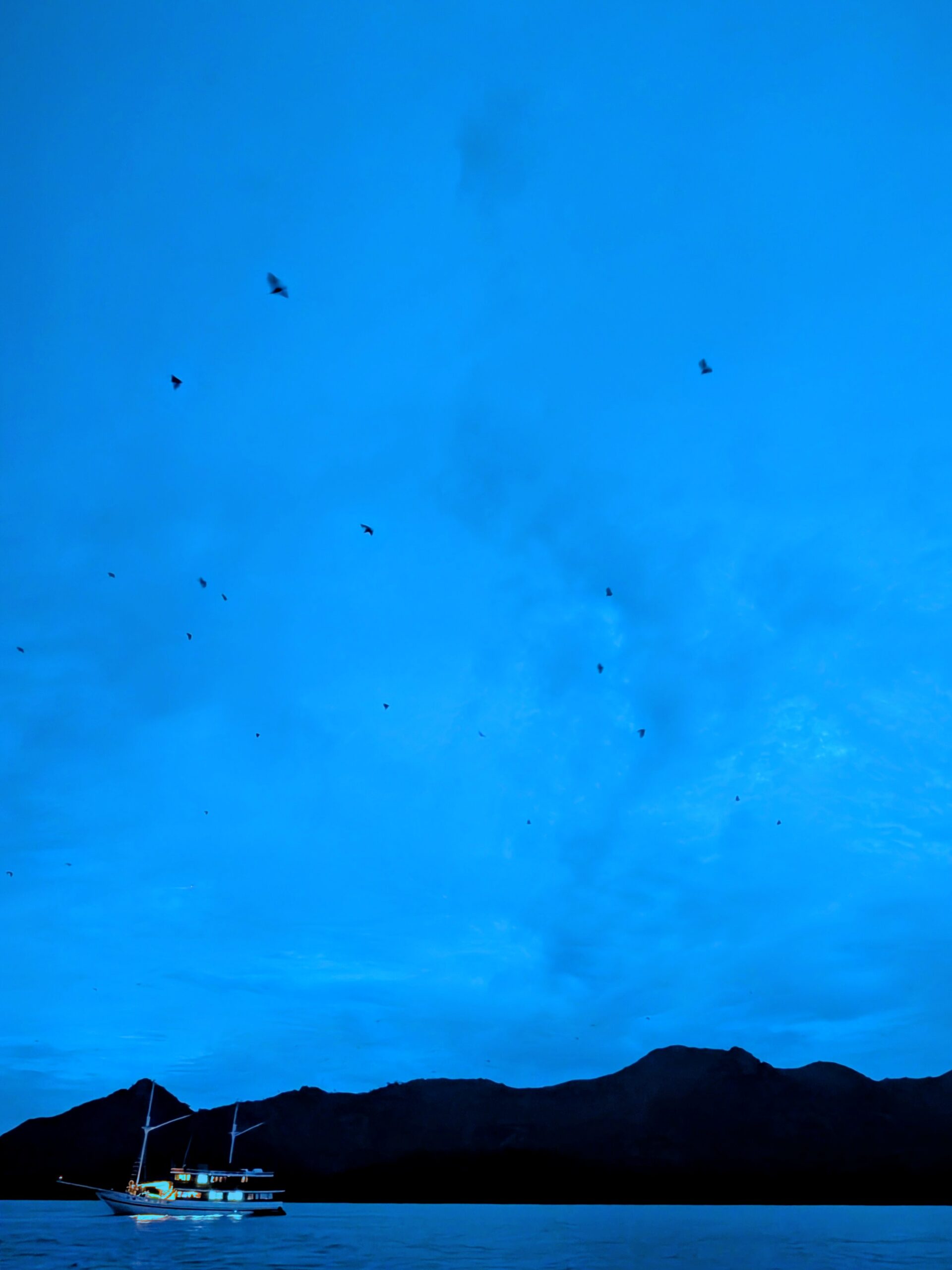
On our final evening we prepared to watch the kalong bats emerge from the mangroves at dusk — a spectacle of thousands of giant fruit bats taking flight in waves as the light faded. The afternoon had turned rainy and we were reluctant to believe it would happen. It happened. Thousands of them, silhouetted against the darkening sky, pouring out of the trees in a stream that went on far longer than seemed possible. We had genuinely been granted with luck on this trip — the manta rays, the dolphins, the dragons, the bats, Bromo’s clear sky — and we knew it.
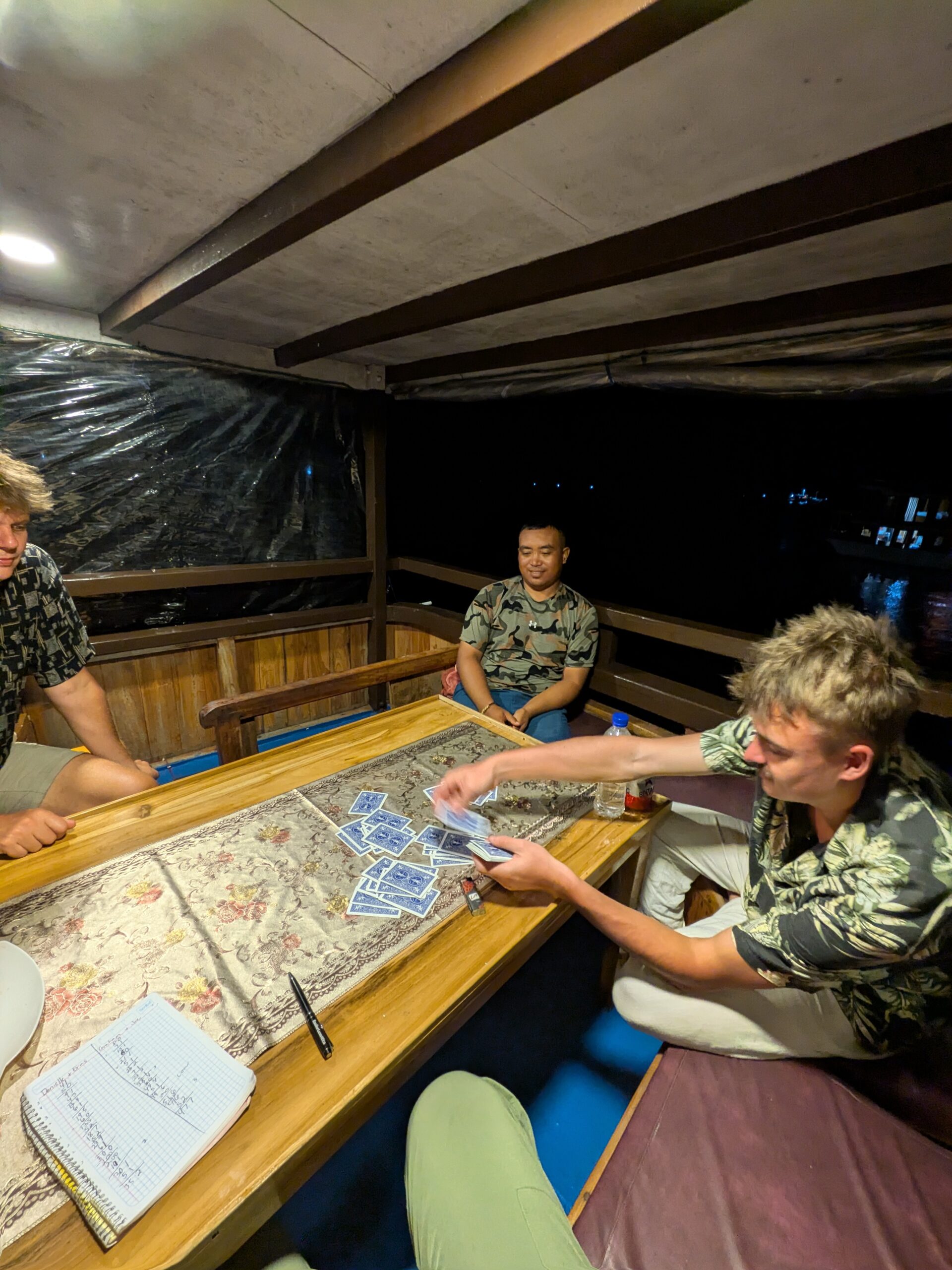
We put up the screens against the wind, and spent the last evening teaching our boat guide how to play spades. A fun night!
The Final Morning: Reef Sharks and Sea Turtles
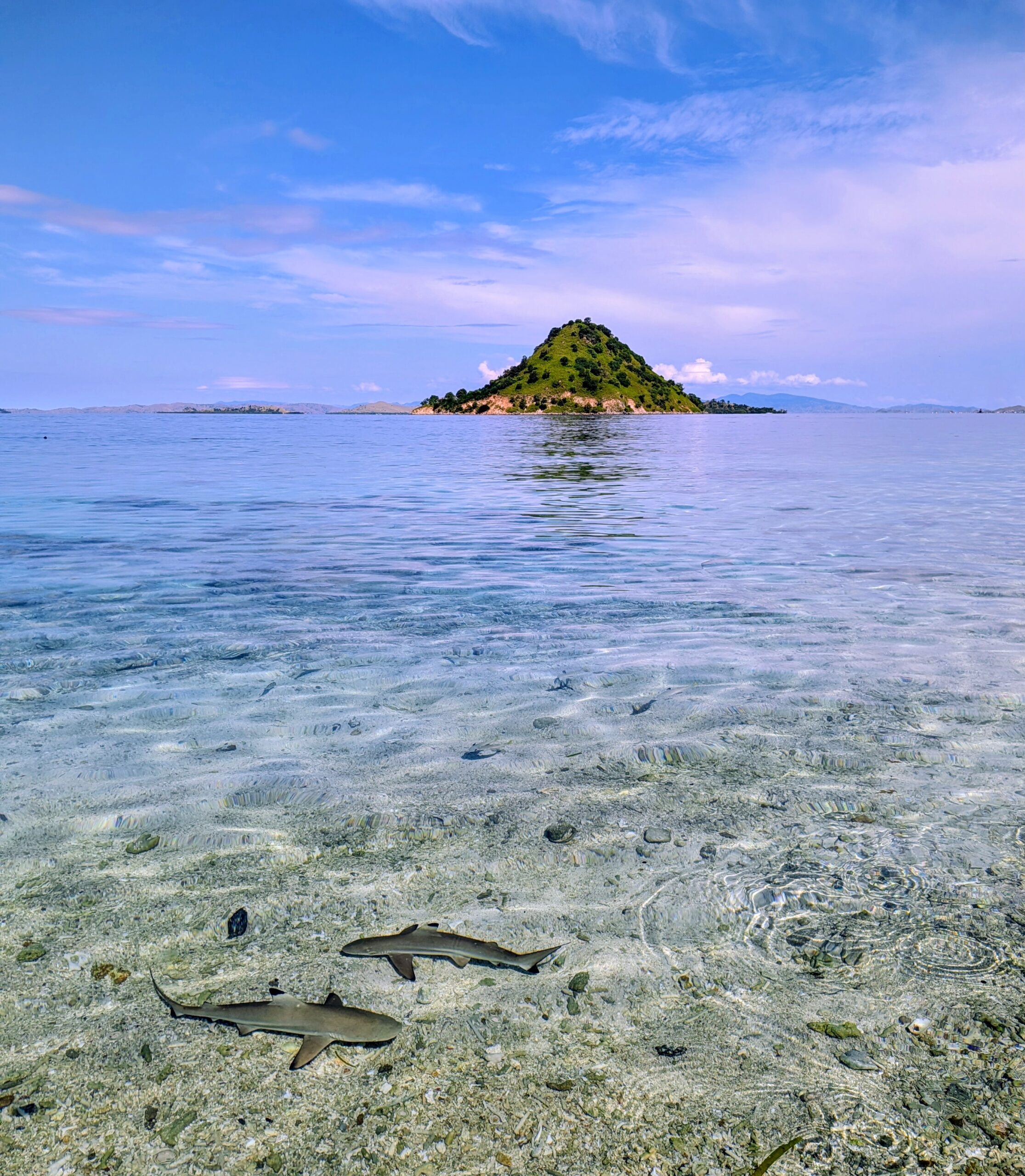
Our last snorkeling stop was Kelor Island, where reef sharks patrol the shallows in numbers that require a brief internal conversation before you get in the water. We got in. They were entirely indifferent to us, which is the correct and reassuring behavior for reef sharks, and snorkeling alongside them — watching them move through their environment with that particular efficiency — was extraordinary.
We told our guide, Eras, we wanted one more snorkel before the trip ended, and he took us somewhere near Manjarite Island that he himself hadn’t explored much. We found six sea turtles, moving slowly through the sea grass, feeding, entirely unbothered by our presence. Precious, slow, ancient. What a perfect ending for a sea turtle lover like me.
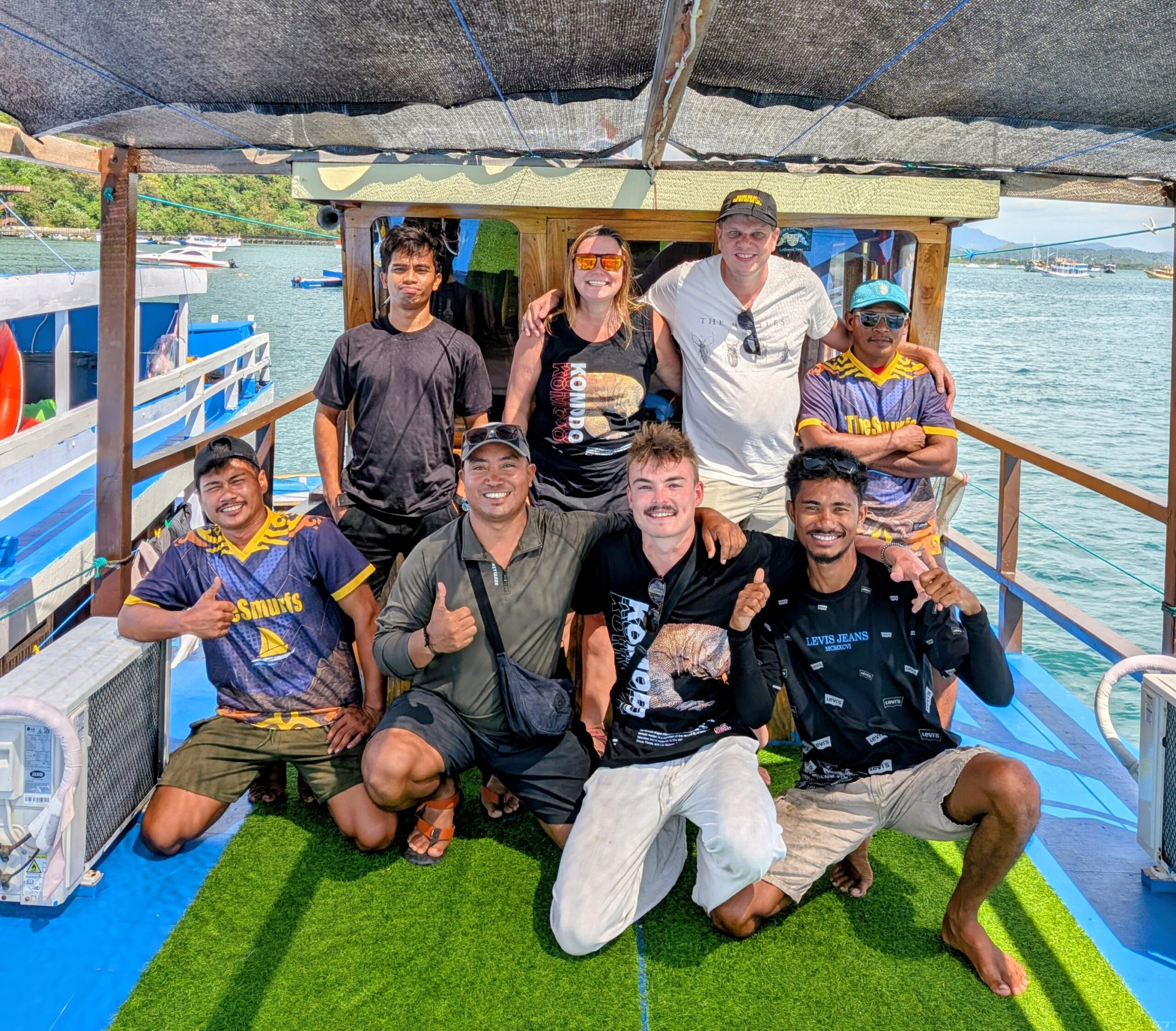
We had our last boat meal, took a group photo with our incredible crew, and headed back to shore.
What This Trip Was
I had a mental a list of everything I hoped the trip would contain — manta rays, sea turtles, coral reefs, an array of fish, giant fruit bats, Komodo dragons, a nice boat crew, food that satisfied after long days in the sun and water. And mostly, time with Graham, sharing some extraordinary memories.
The trip gave us all of it. Every single thing on the list, and then more.
Indonesia is an extraordinary country — ancient temples, smoking volcanoes, exotic animals, natural beauty that operates at a scale you don’t expect, world-class hotels, incredible food, a beautiful Muslim culture, and people who are among the warmest and most welcoming we have ever encountered. It is genuinely underrated as a destination, and genuinely unmissable as an experience.
And at the end, I got a week with my son. That was always the whole point.