The Small Town with the Biggest Party: Fiestas Patronales in Ixtlahuacan
If you’re living in or visiting the region as a Lake Chapala expat, experiencing Fiestas Patronales in Ixtlahuacan de los Membrillos should be right at the top of your list. Their Día de Muertos celebrations were the best we found in the entire Lake Chapala region. So when the Fiestas Patronales for Santiago Apóstol came around, we didn’t hesitate. We went three nights and were rewarded every single time.
📍 FAQ QUICK GUIDE: FIESTAS PATRONALES AT LAKE CHAPALA
Where: Ixtlahuacan de los Membrillos, Jalisco — about 20 minutes northeast of Ajijic headed towards Guadaljara.
When: Late July, centered around July 25th — the feast day of Santiago Apóstol. The full fiestas run for approximately 10 days.
Getting There: Easy drive from anywhere in the Lake Chapala region. Parking is available in the surrounding streets. You can also take the bus up.
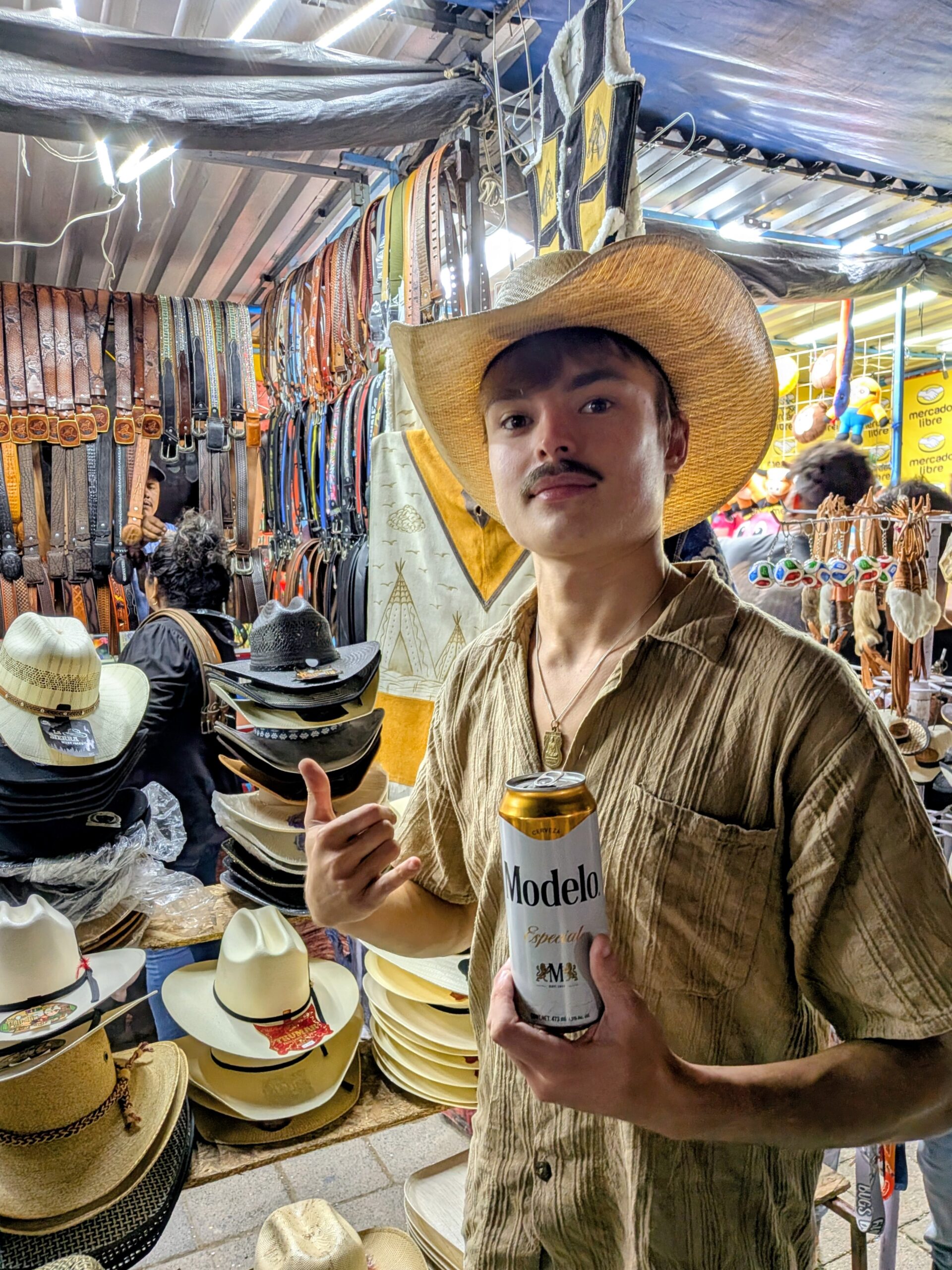
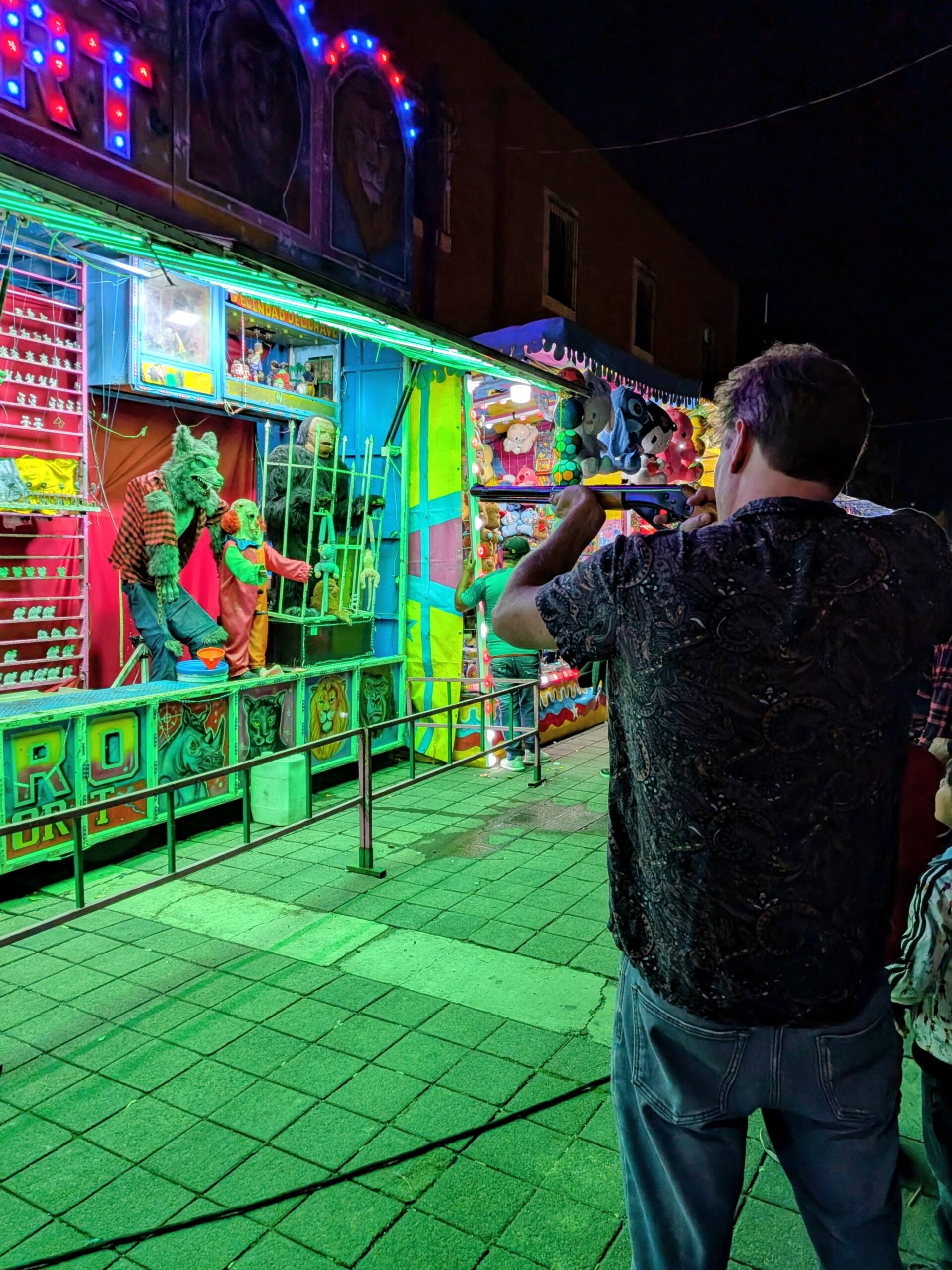
What to Expect: Rides, games, food stalls, live bands, castillo fireworks, religious processions, and a community that knows how to celebrate. Free entry to the plaza. Come after 9pm when the energy really builds.
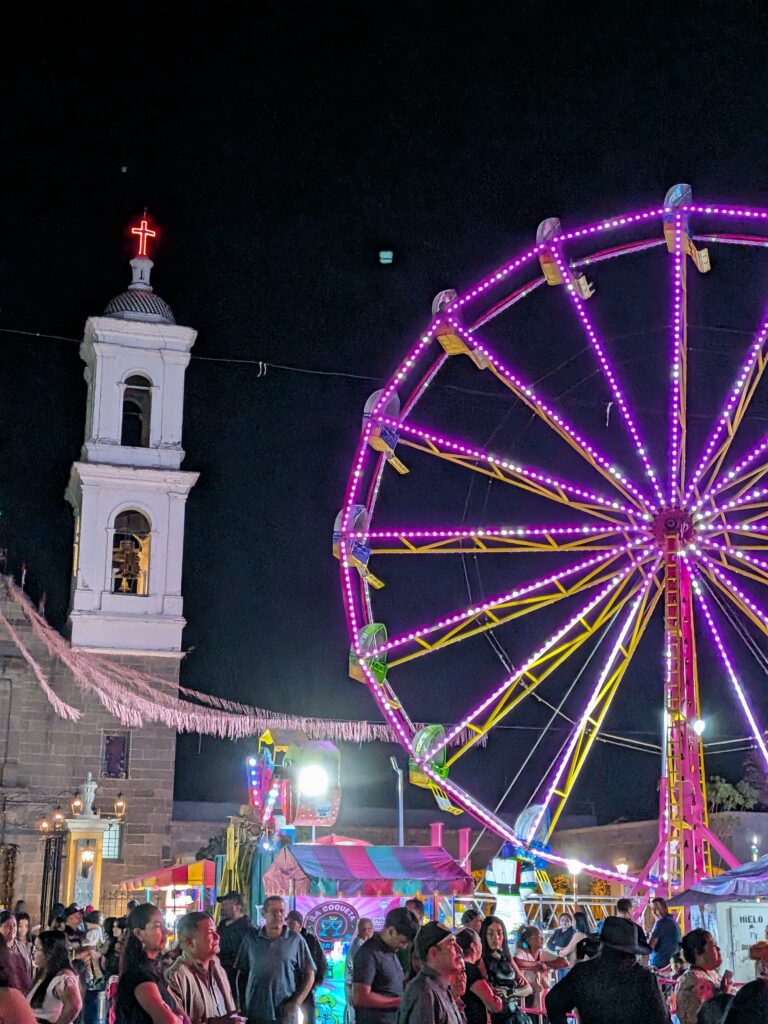
Why Ixtlahuacan Has the Best Patron Saint Festival in the Lake Chapala Region
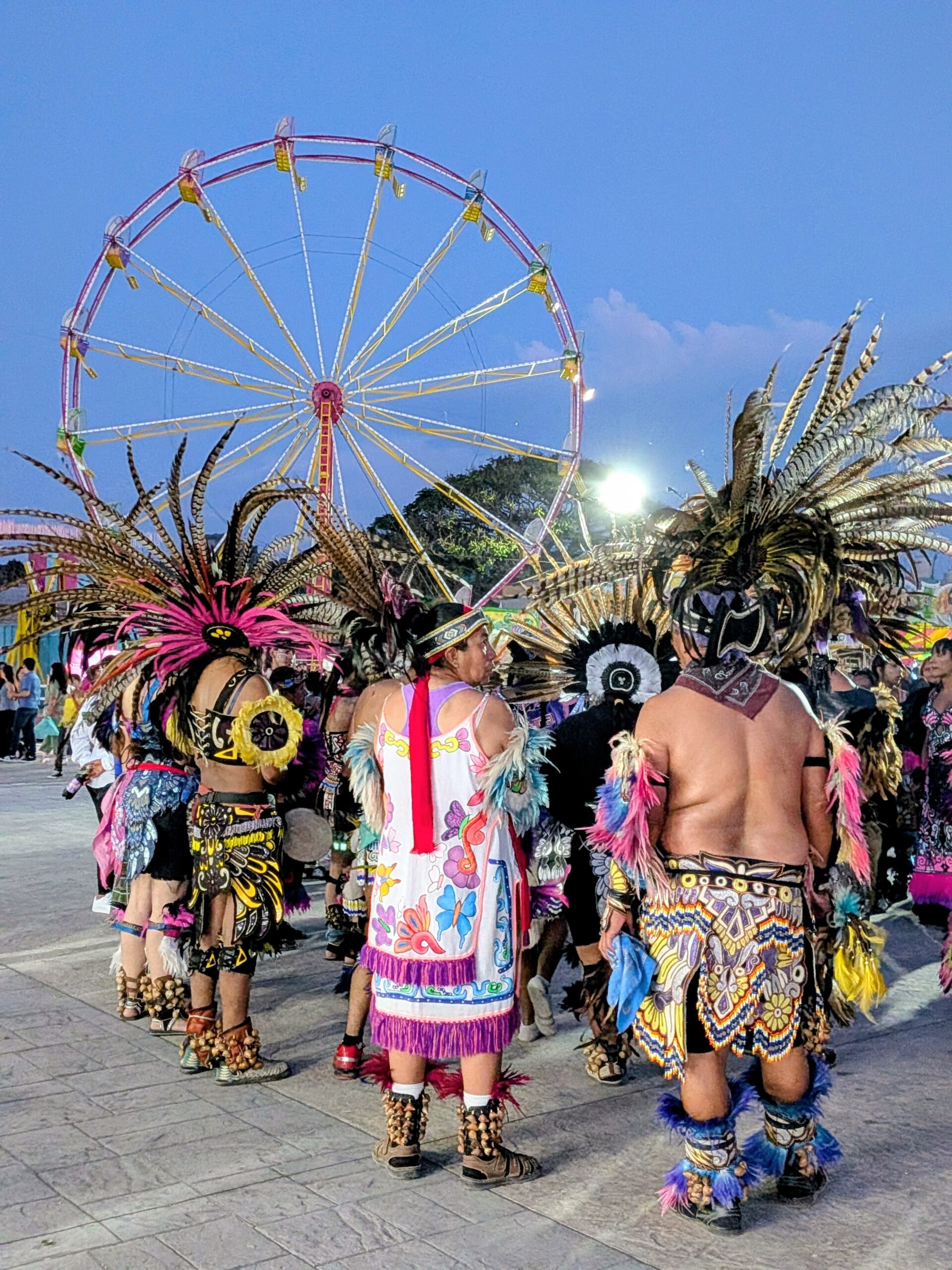
Most towns in Mexico tuck their fiestas patronales into whatever space they have — rides wedged into side streets, stages around corners, the whole celebration fragmented by the layout of the town. Ixtlahuacan has something most towns don’t: a large, beautiful, open plaza perfectly designed for exactly this kind of celebration. Standing in the center of it during the fiestas, you can see everything at once — the ferris wheel, the food stalls, the stage, the church, the castillos — all of it surrounding you in a 360-degree ring of light and noise and joy.
Who Is Santiago Apóstol? Understanding the Patron Saint Tradition in Mexico
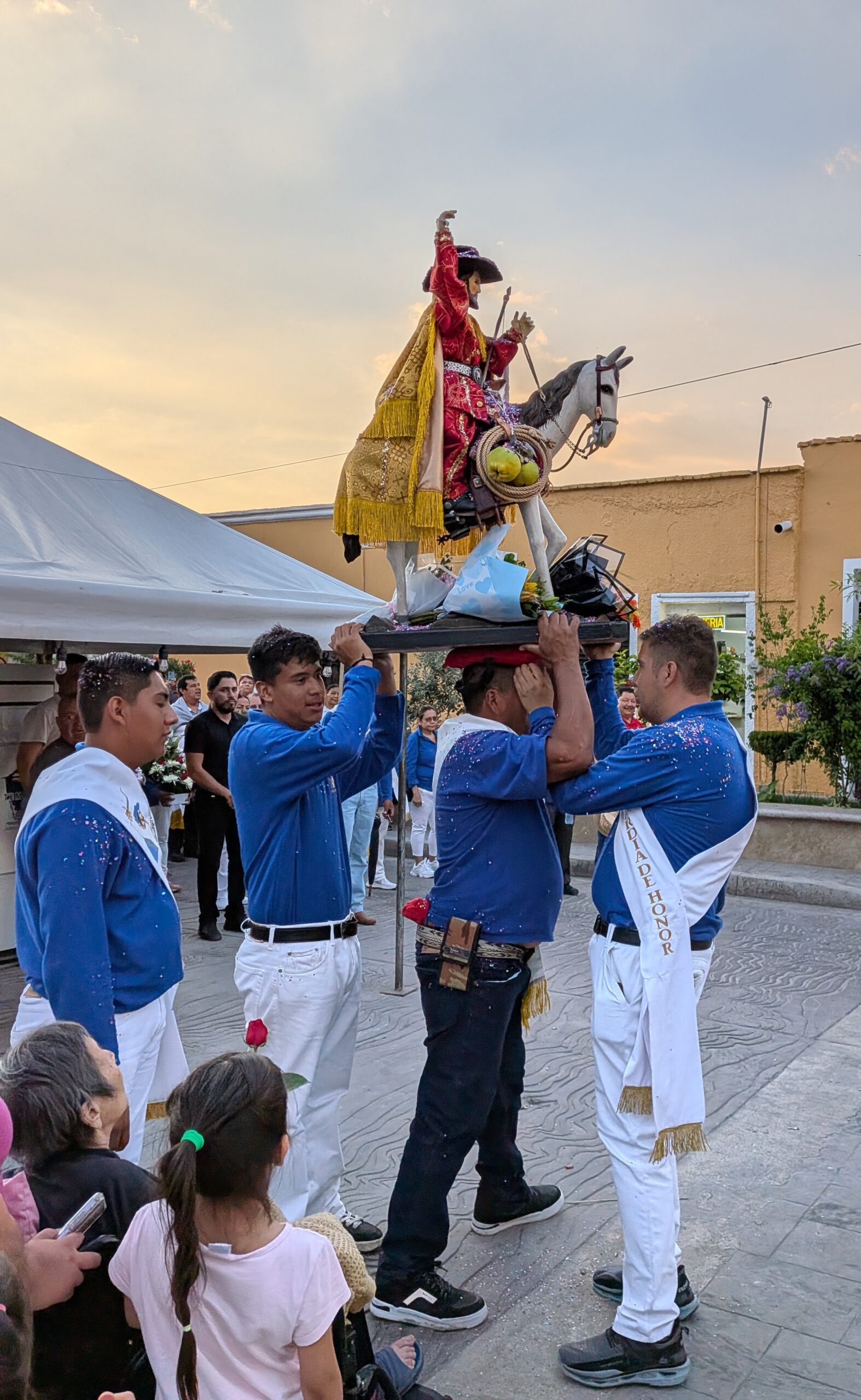
July 25th is the feast day of Saint James the Apostle — Santiago Apóstol — a crucial figure in Mexico venerated as a warrior saint and protector. His story travels far: the same saint is the patron of Spain, the destination of the famous Camino pilgrimage in Galicia, and the namesake of countless towns across Latin America — including Ixtlahuacan, which honors him as its patron every July.
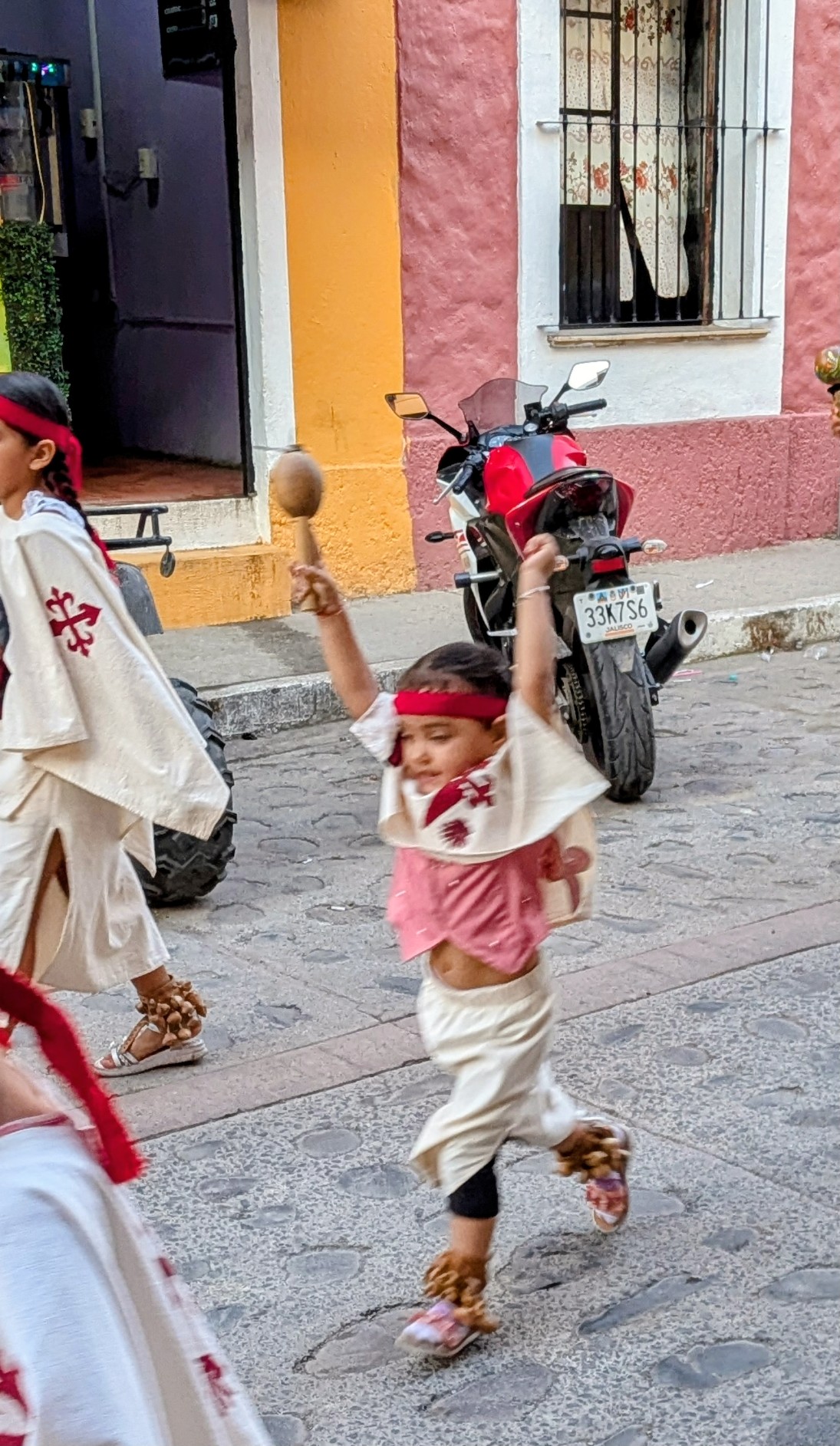
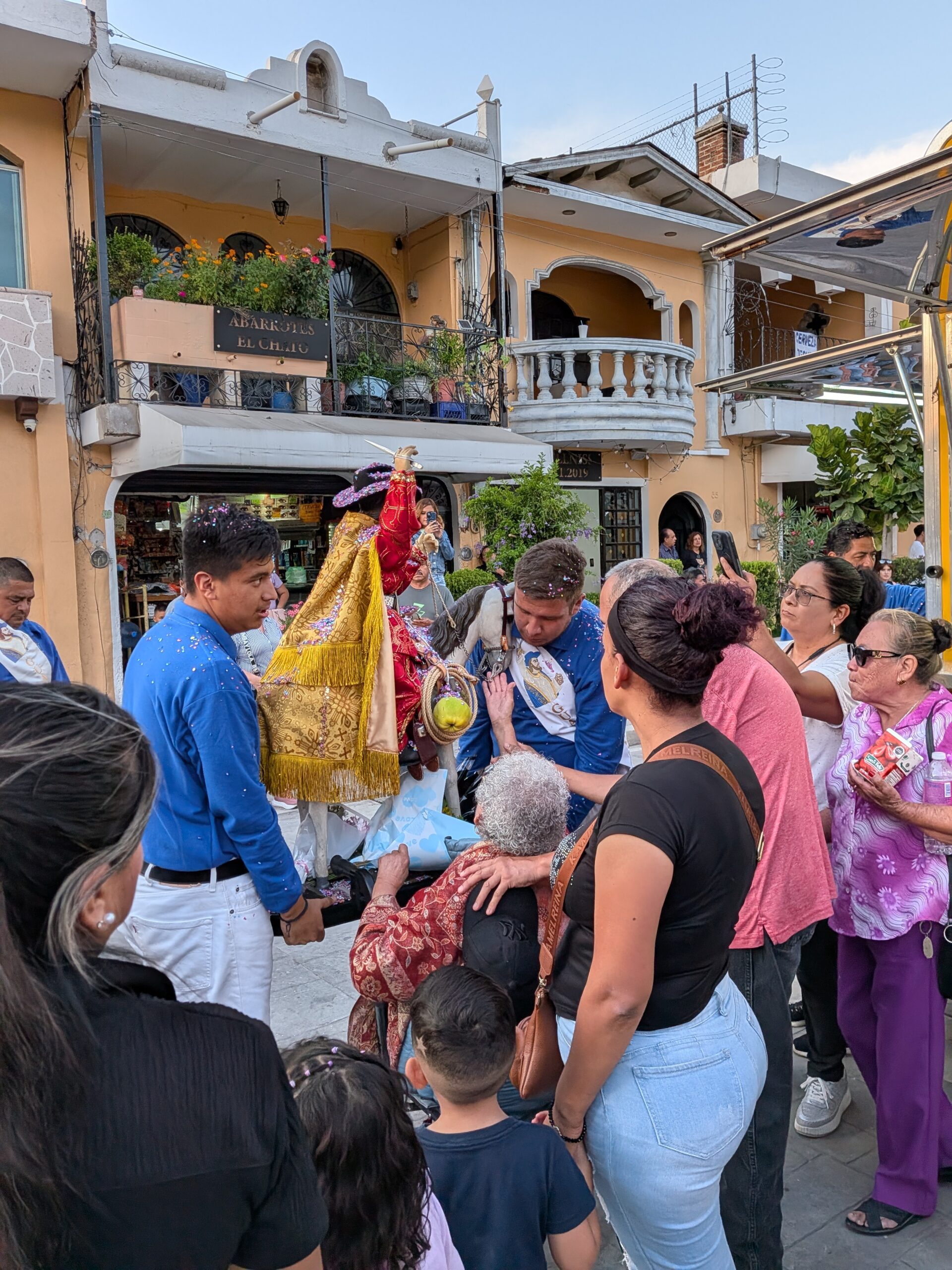
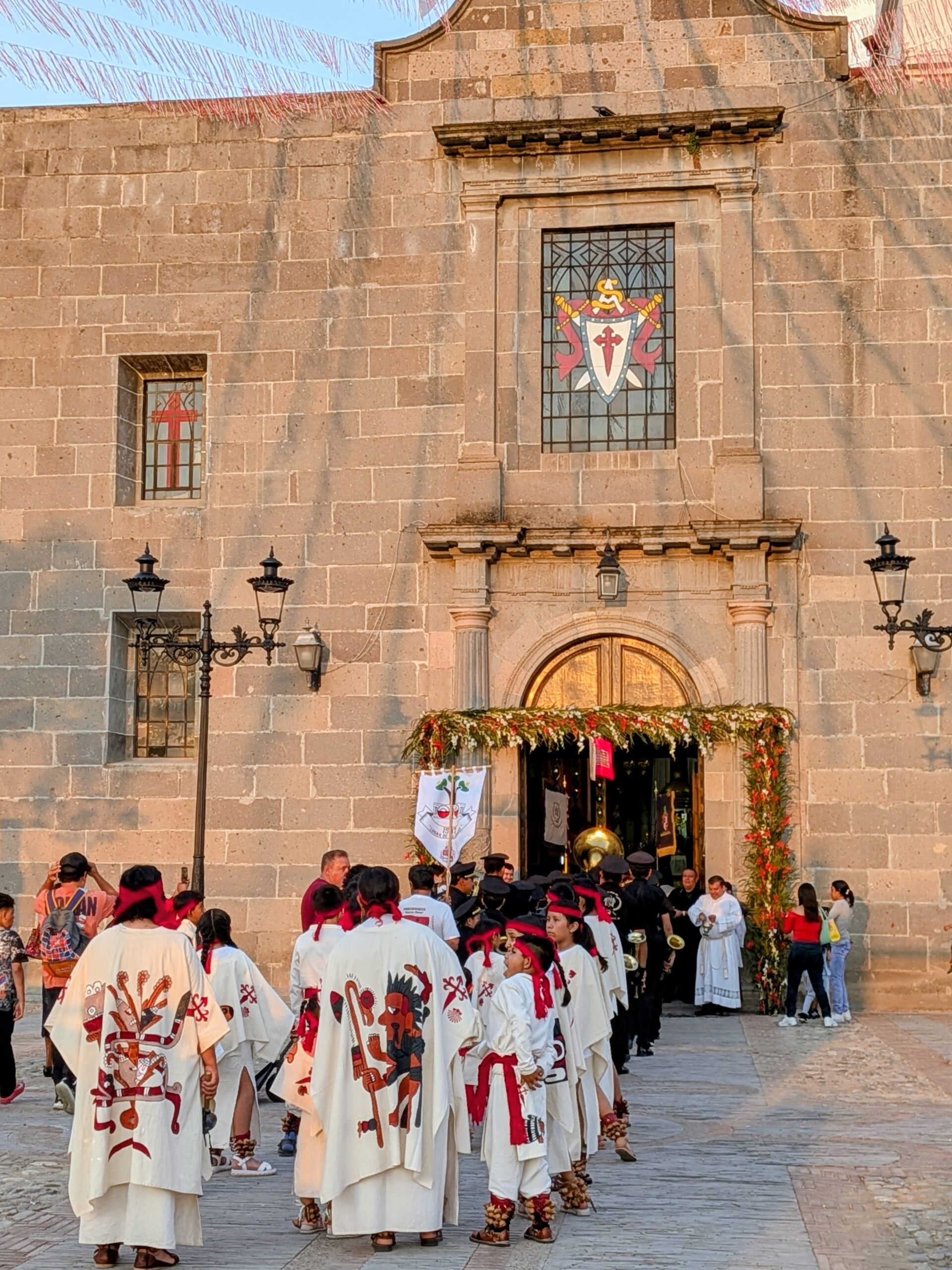
Each evening the procession begins — cohetes fired into the sky, the town’s congregation gathered, and the statue of Santiago Apóstol ceremoniously carried through the streets. At stops along the way, the statue is lowered so that people can touch it and receive a blessing — children held up by parents, elderly residents in wheelchairs leaning in, the faithful pressing forward with a reverence that is deeply moving to witness even as an outsider. The statue is then carried into the church, where a cowboy hat — symbolic of the one Santiago wore as a horseman and warrior saint — is ceremonially lowered onto the heads of those lined up to receive it. One by one, the faithful bow their heads and the hat descends, intimate and powerful.
What to Expect on Your First Night at a Mexican Fiesta Patronal
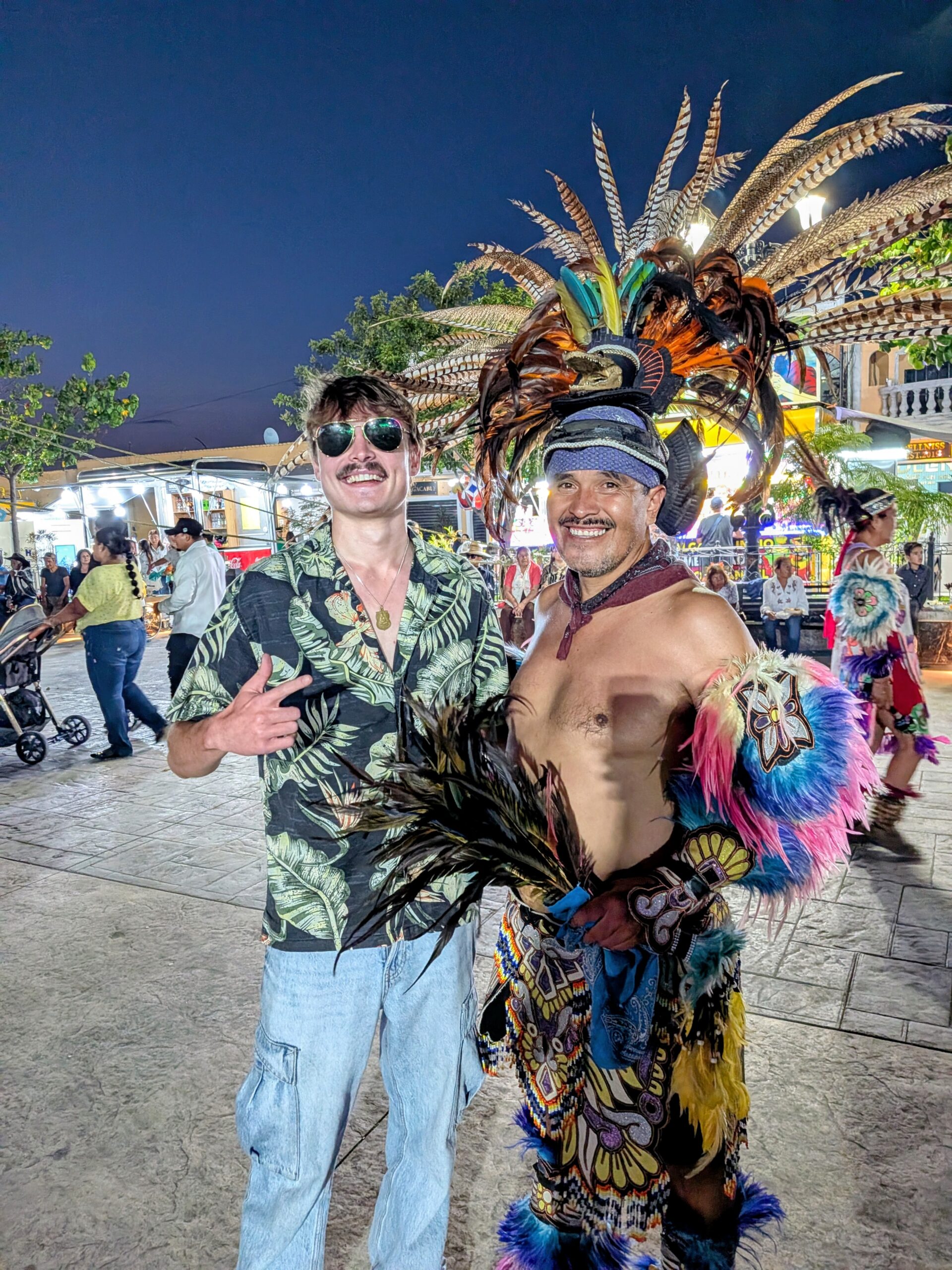
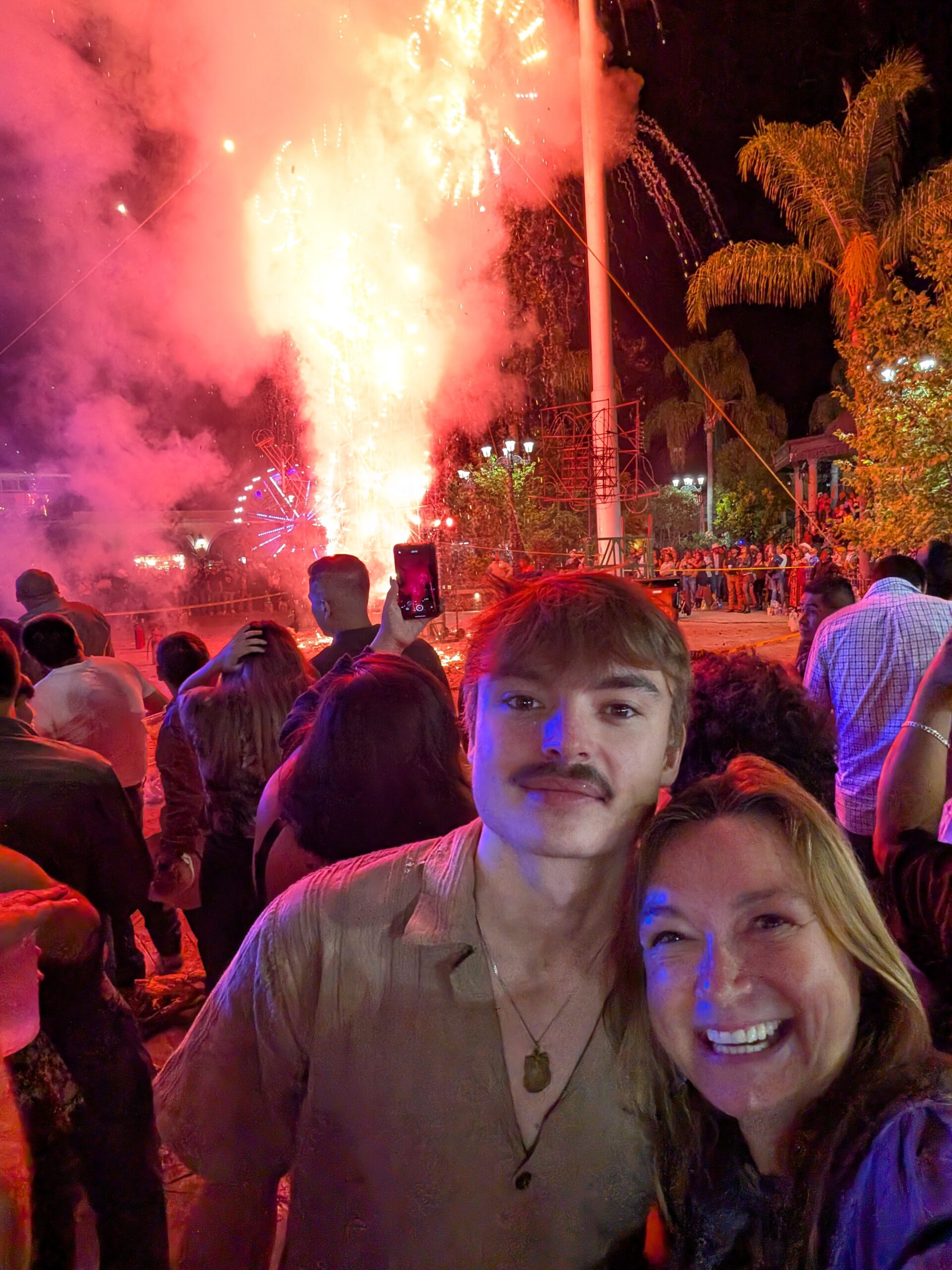
My son Graham landed in town right at the start of the festivities. We basically got him from the car to the house and straight back out the door to the plaza — no easing in, no adjustment period. Mexico, all at once, the best way to experience it.
What Are Castillo Fireworks? Mexico’s Most Spectacular Fiesta Tradition Explained
If you have never seen a castillo at a Mexican fiesta, it is one of the most spectacular and genuinely unhinged things you will ever watch.
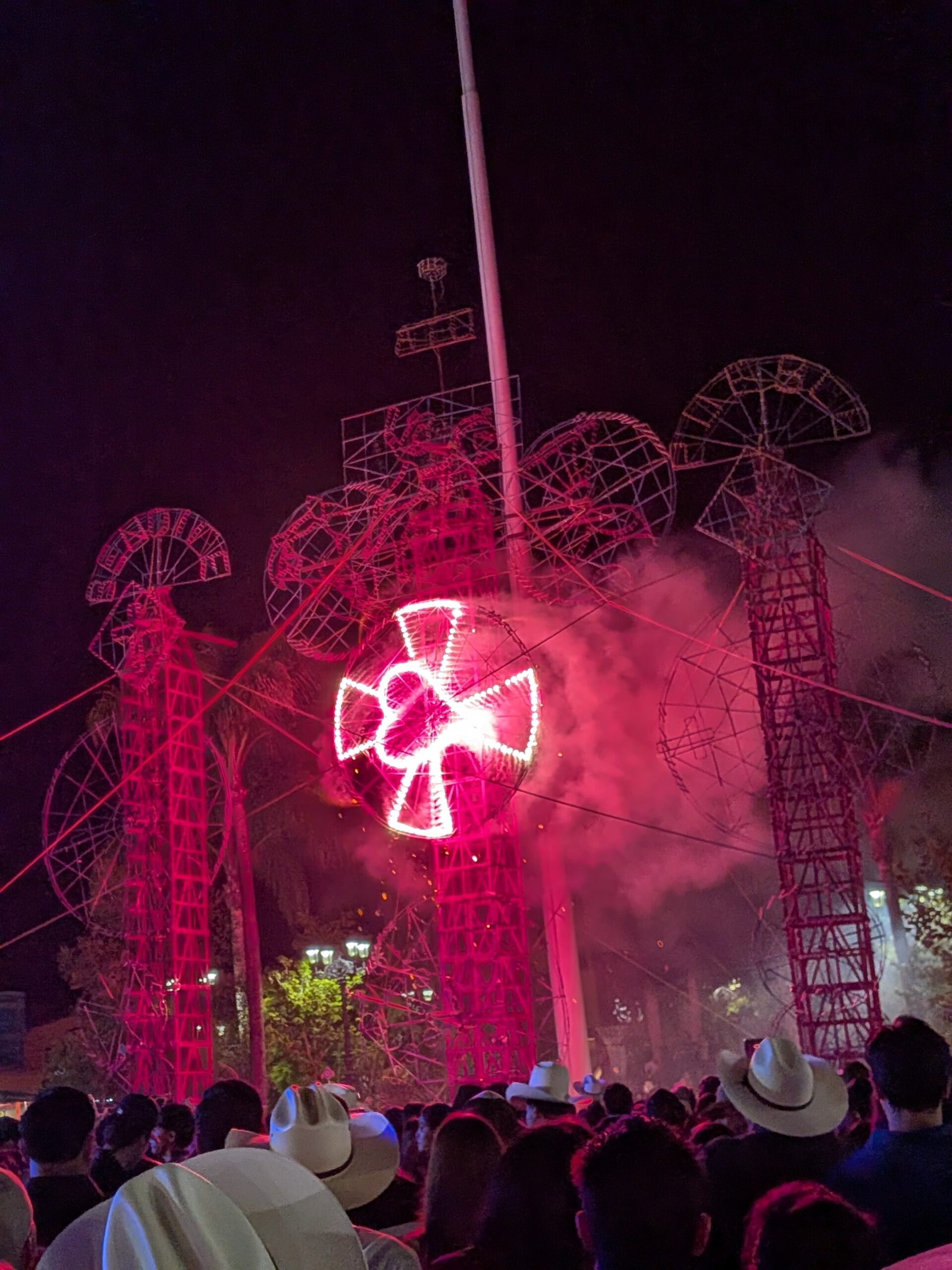
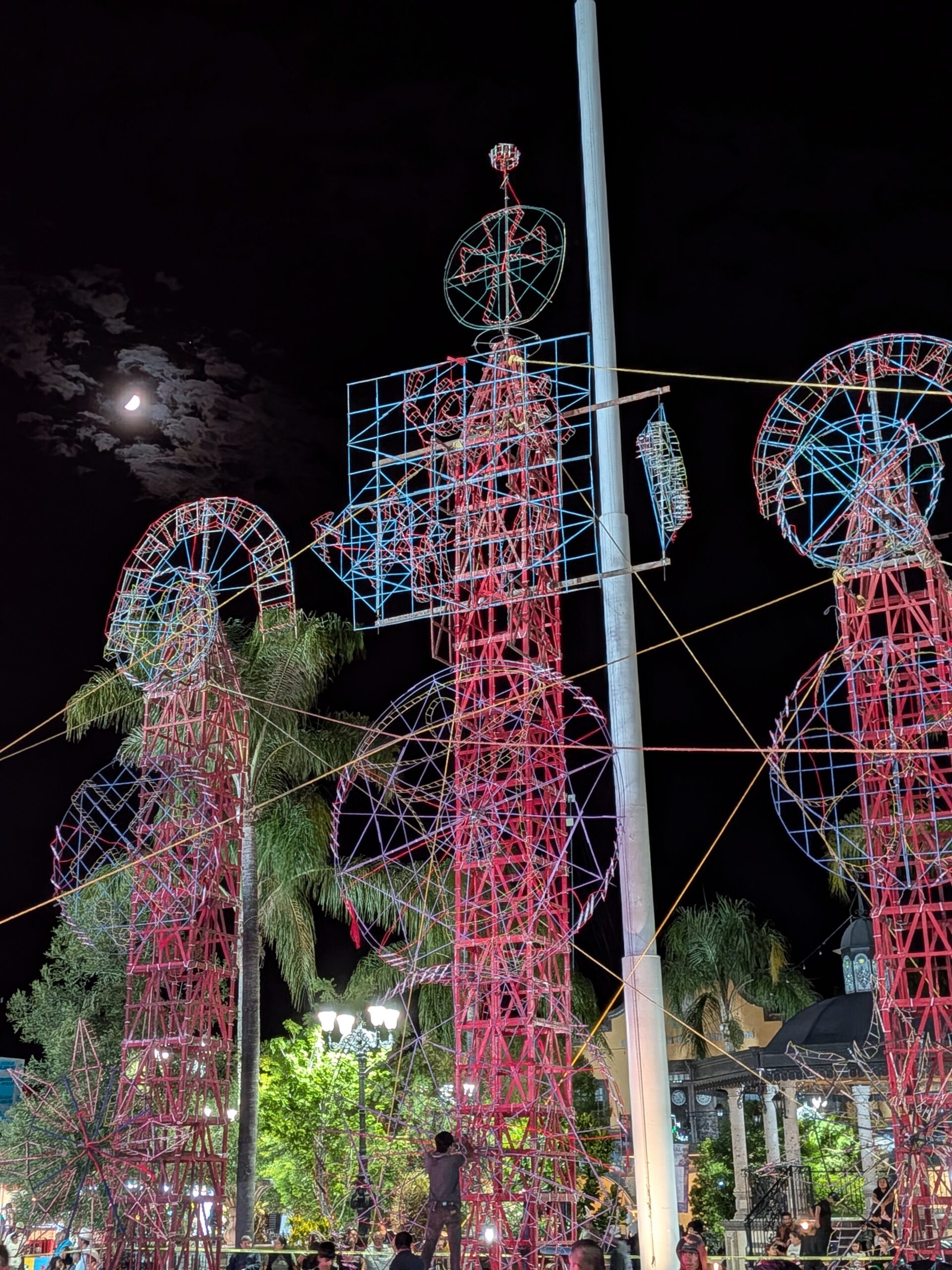
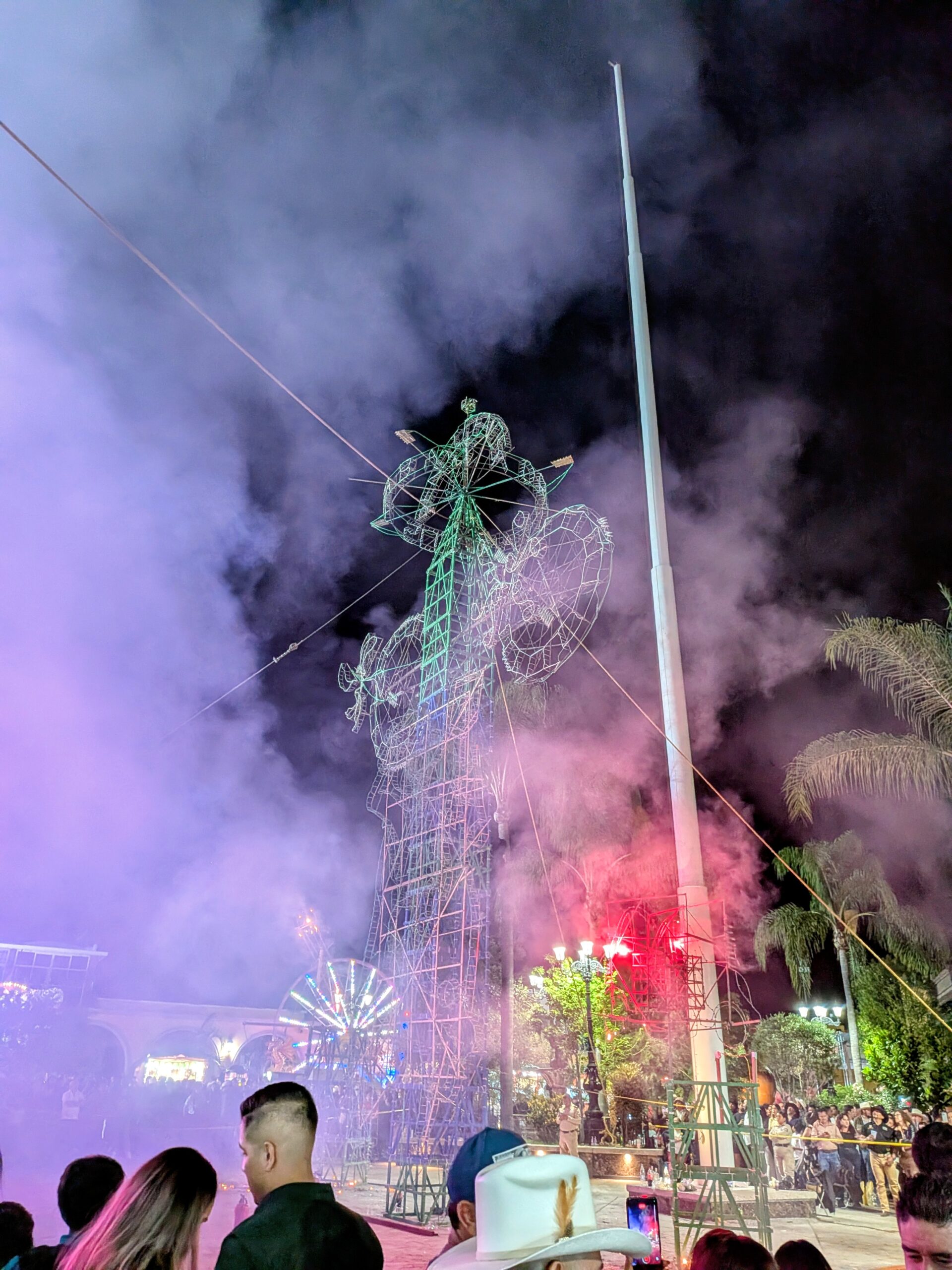
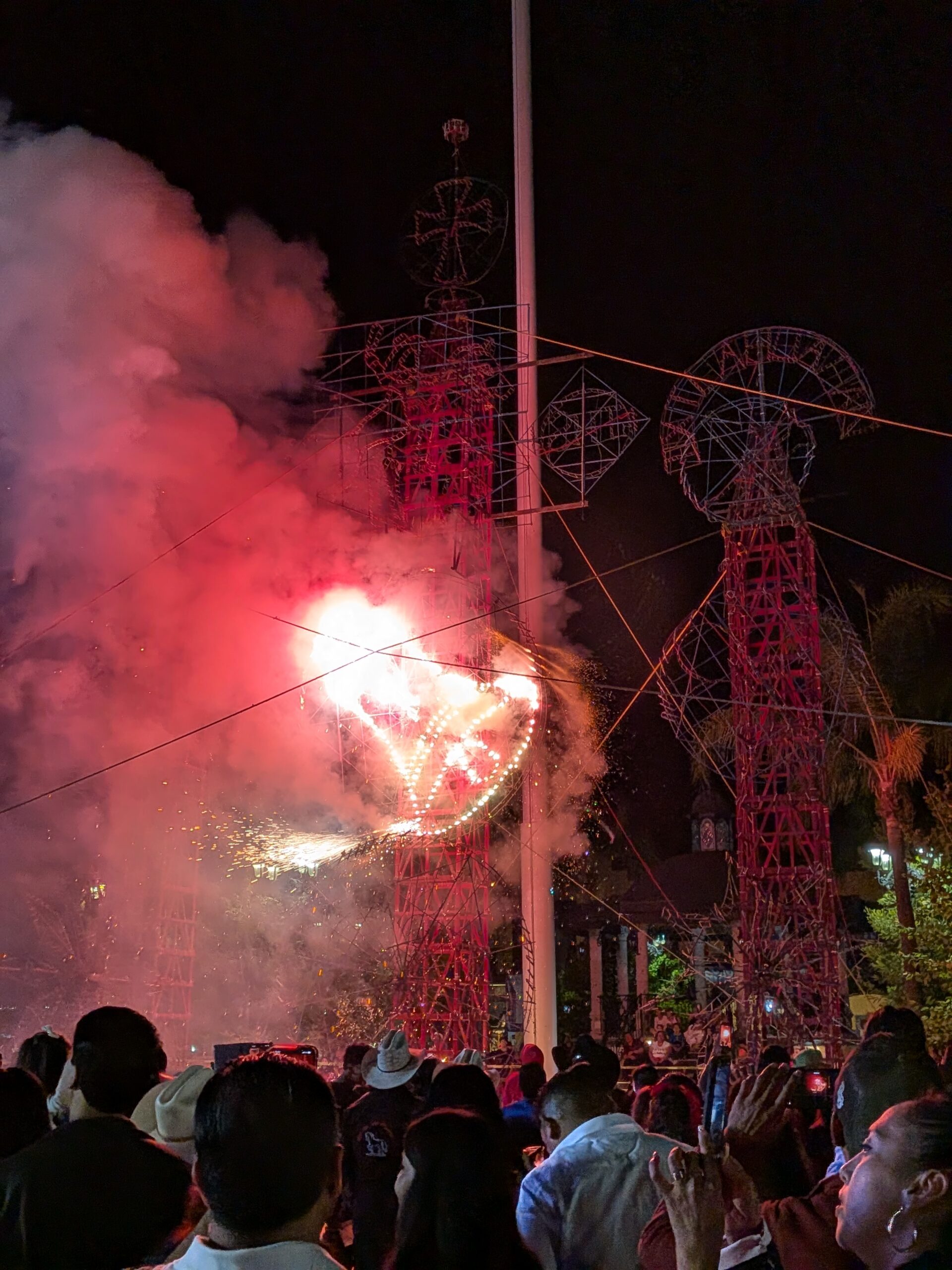
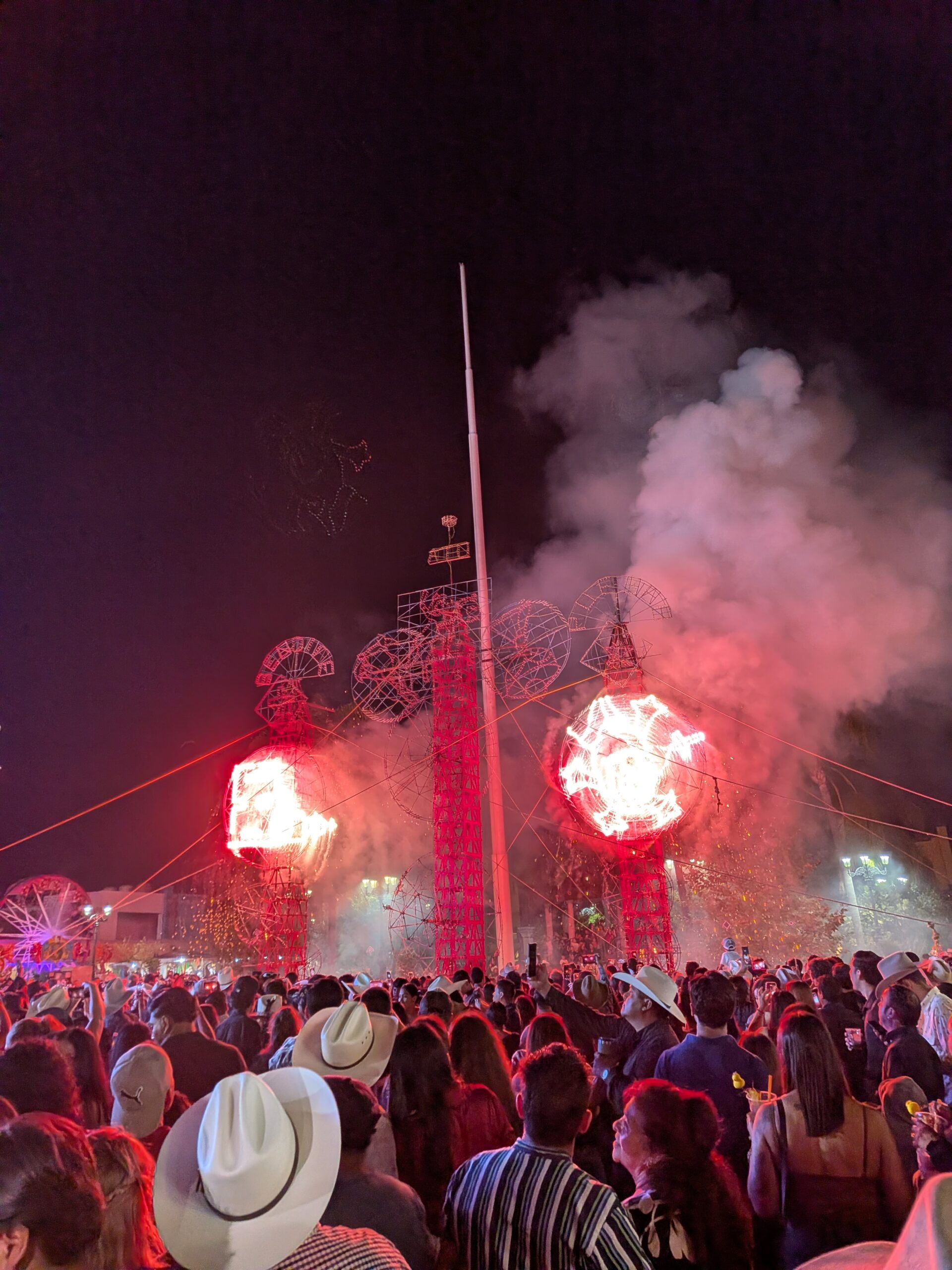
Castillos — literally “castles” — are handcrafted towering wooden structures adorned with fireworks, burned during patronal festivals with deep symbolic meaning. These structures, engulfed in flames and brilliant colors, are thought to scare away evil spirits and bring good fortune and blessings to the community. The tradition is a fusion of pre-Hispanic fire ceremonies and Spanish colonial Catholic festivals, and it has been refined over centuries into something that is simultaneously an art form and a fire hazard.
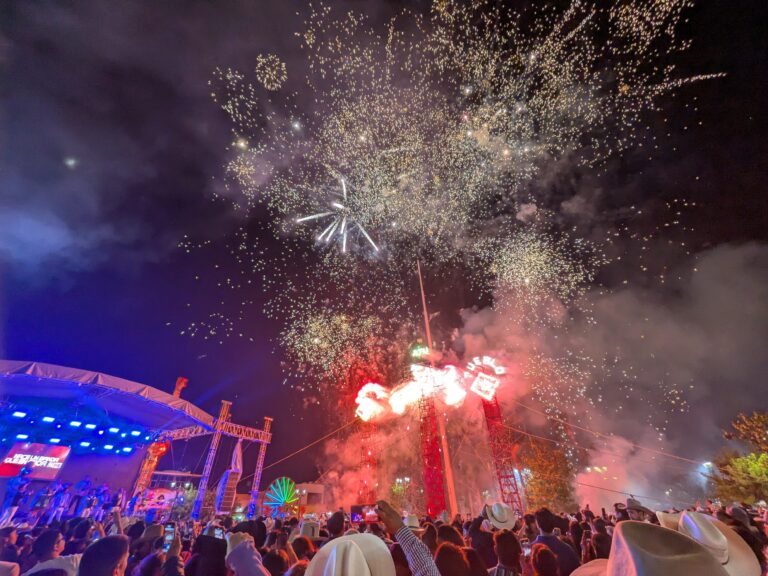
When a castillo gets lit up, the thing starts shrieking with a high-pitched whistle and the parts start rotating, sending sparks and smoke onto the crowd below.The ones in Ixtlahuacan were the best and biggest we have seen yet — each section lighting up in sequence, spinning, releasing a message written in fire, and throwing flames outward into the night air in ways that made the crowd simultaneously step back and lean forward. The choreography was extraordinary. And then there are the men who climb up into the structure to ignite each section from the inside — calmly, deliberately, while it is already on fire around them. Watching that requires a specific acceptance of how differently Mexico relates to risk that takes some getting used to.
💡 Retire & Roam Pro-Tip: For the best castillo viewing, position yourself far enough back to see the full structure from base to top. Sparks genuinely do fall on the crowd like a very dangerous rain, so a hat is useful. The whole lighting sequence typically takes 15-20 minutes and builds in intensity — don’t leave early.
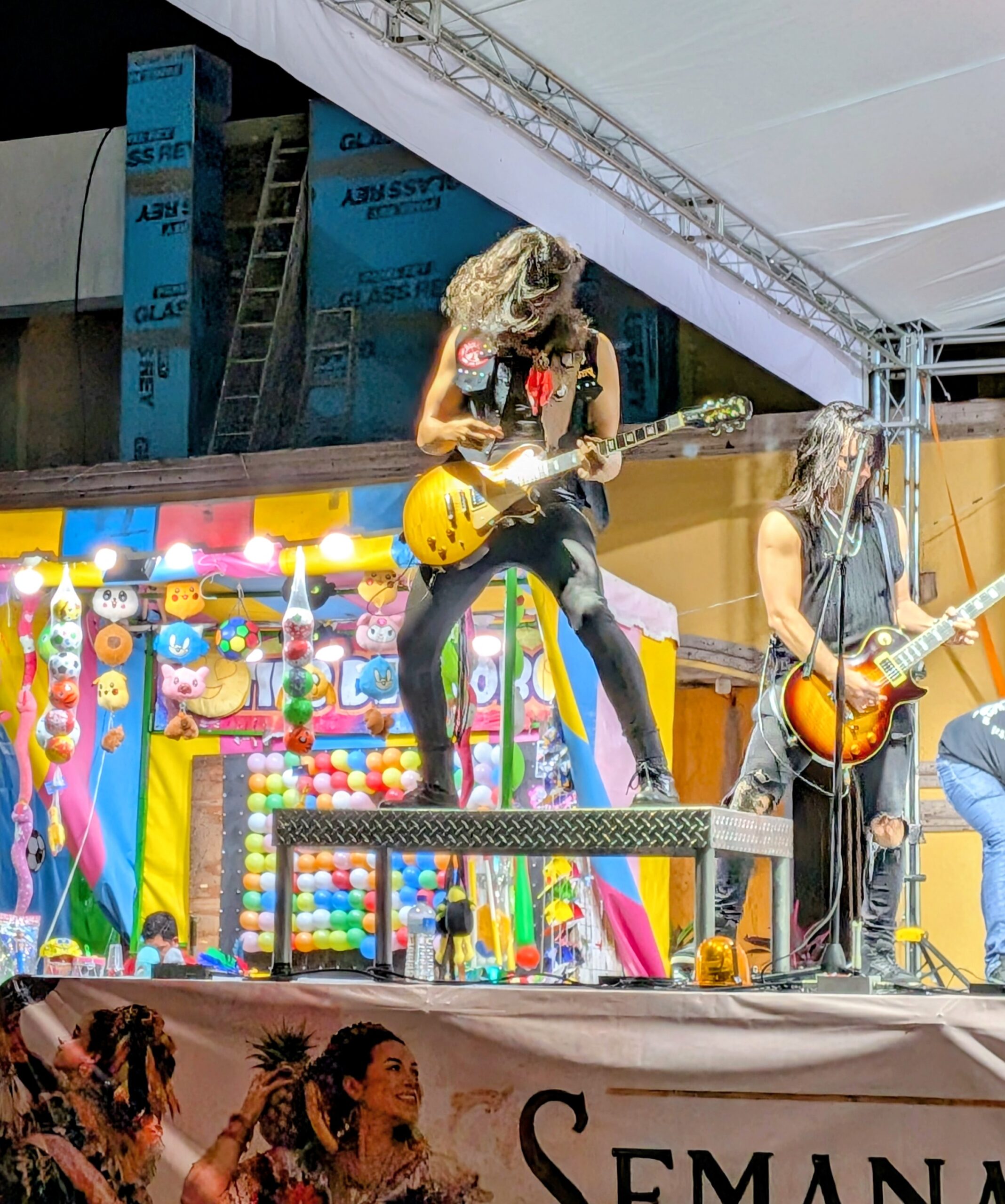
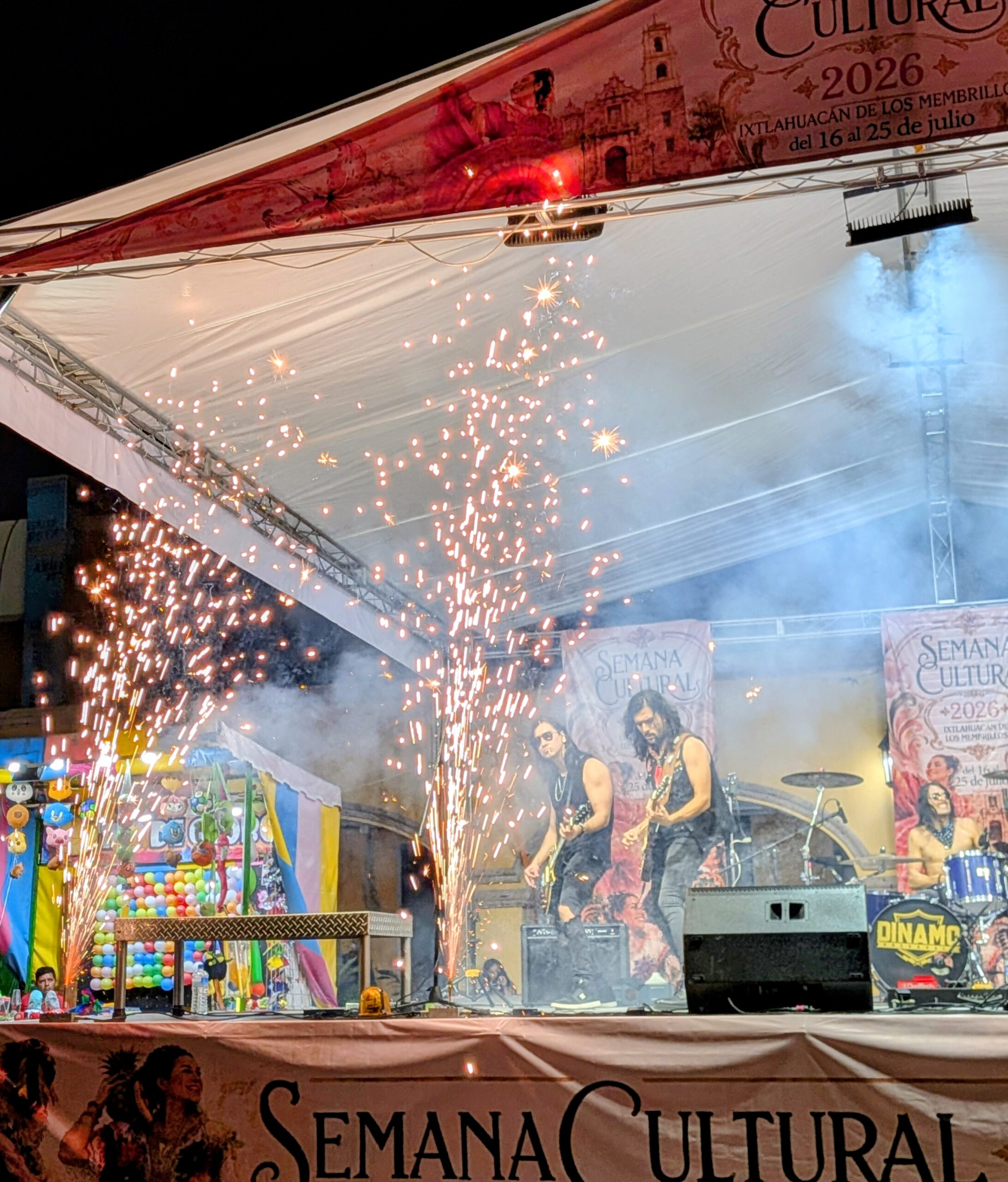
Night Two: Dinamo Brings the Rock
The second night featured Dinamo — a rock band that had also played at the Día de Muertos celebrations in Ixtlahuacan and left a strong impression. They showed up again with head banging and pyrotechnics- our kind of show.
The Friends Who Made It Better
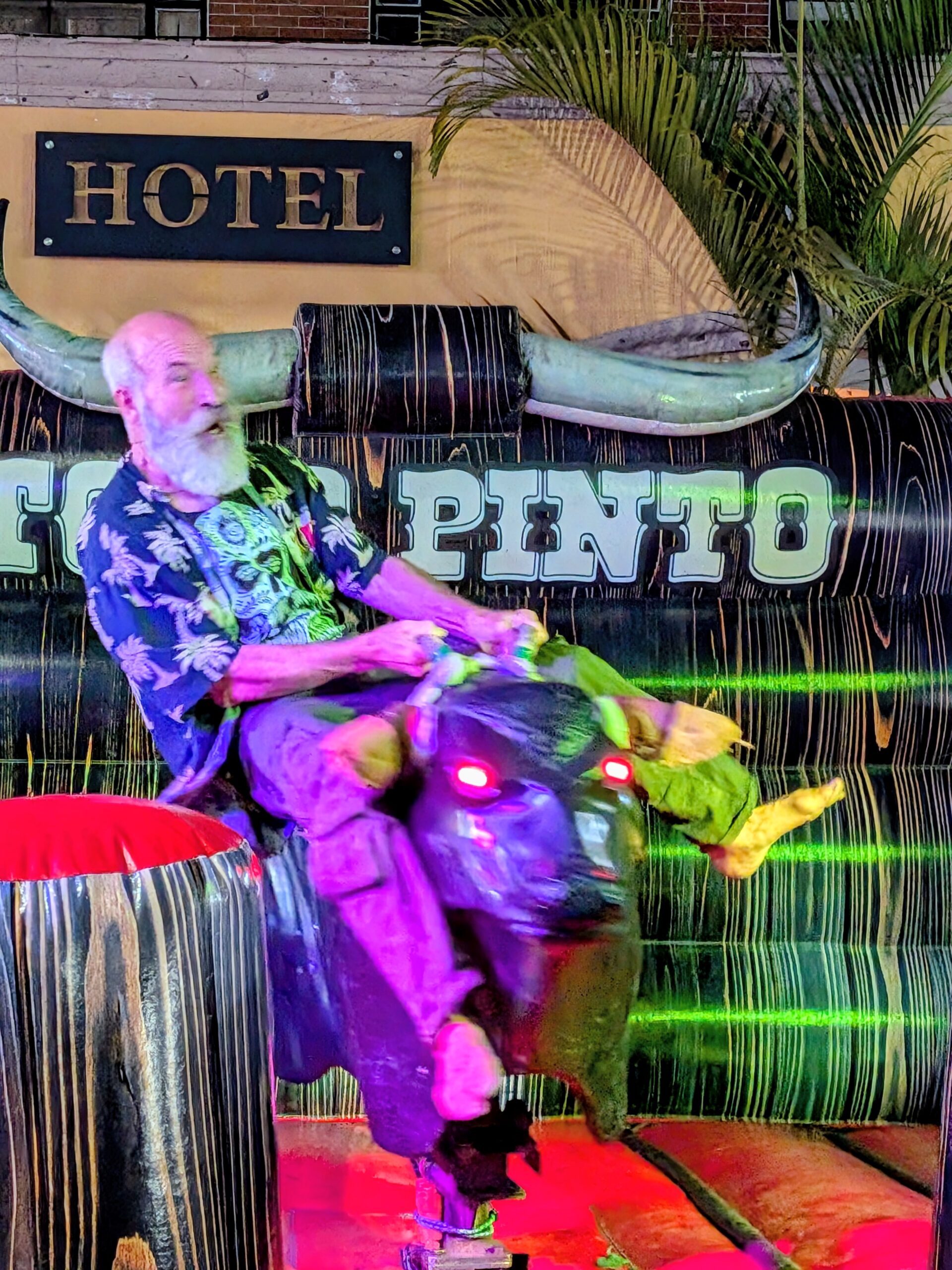
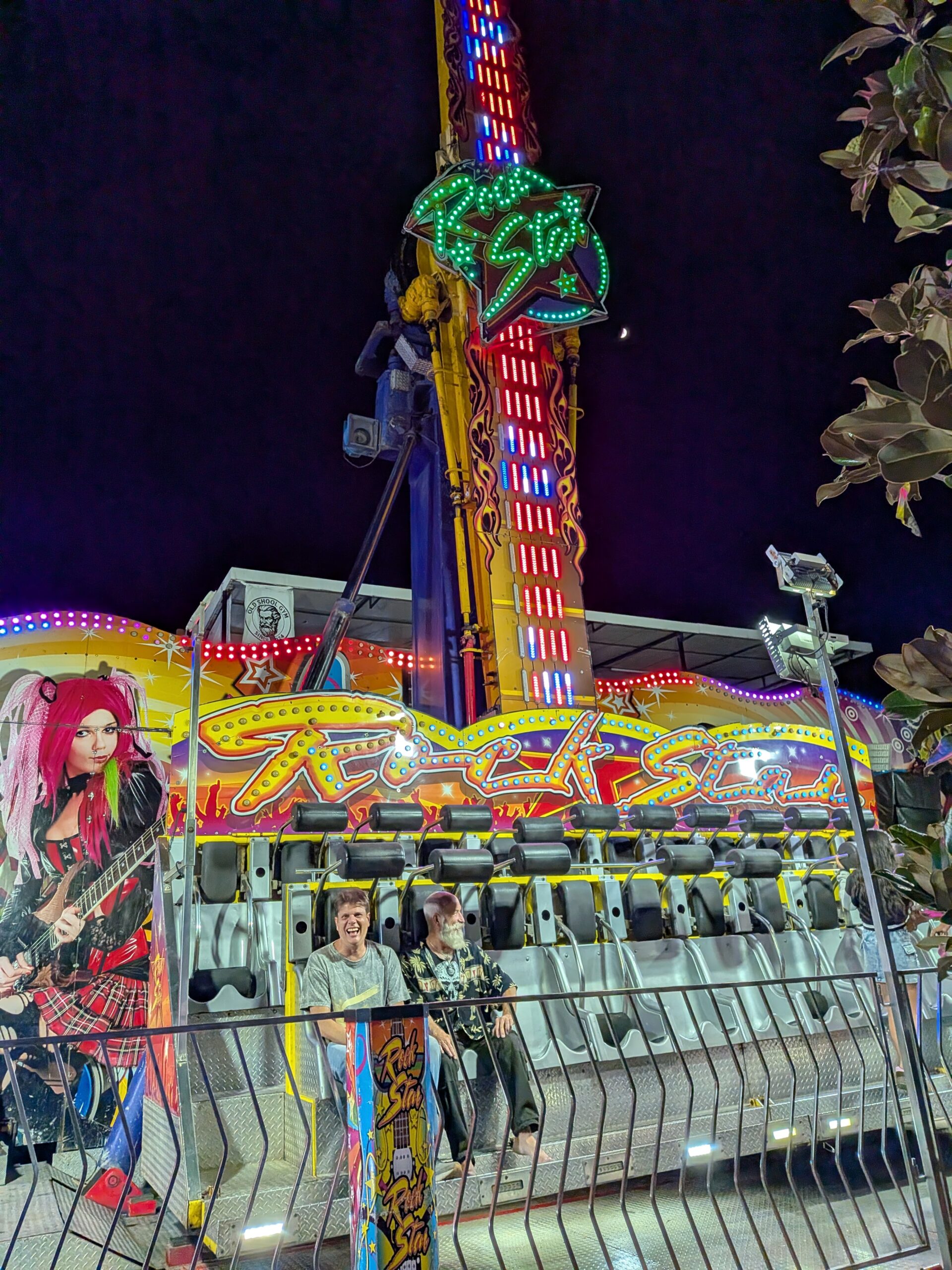
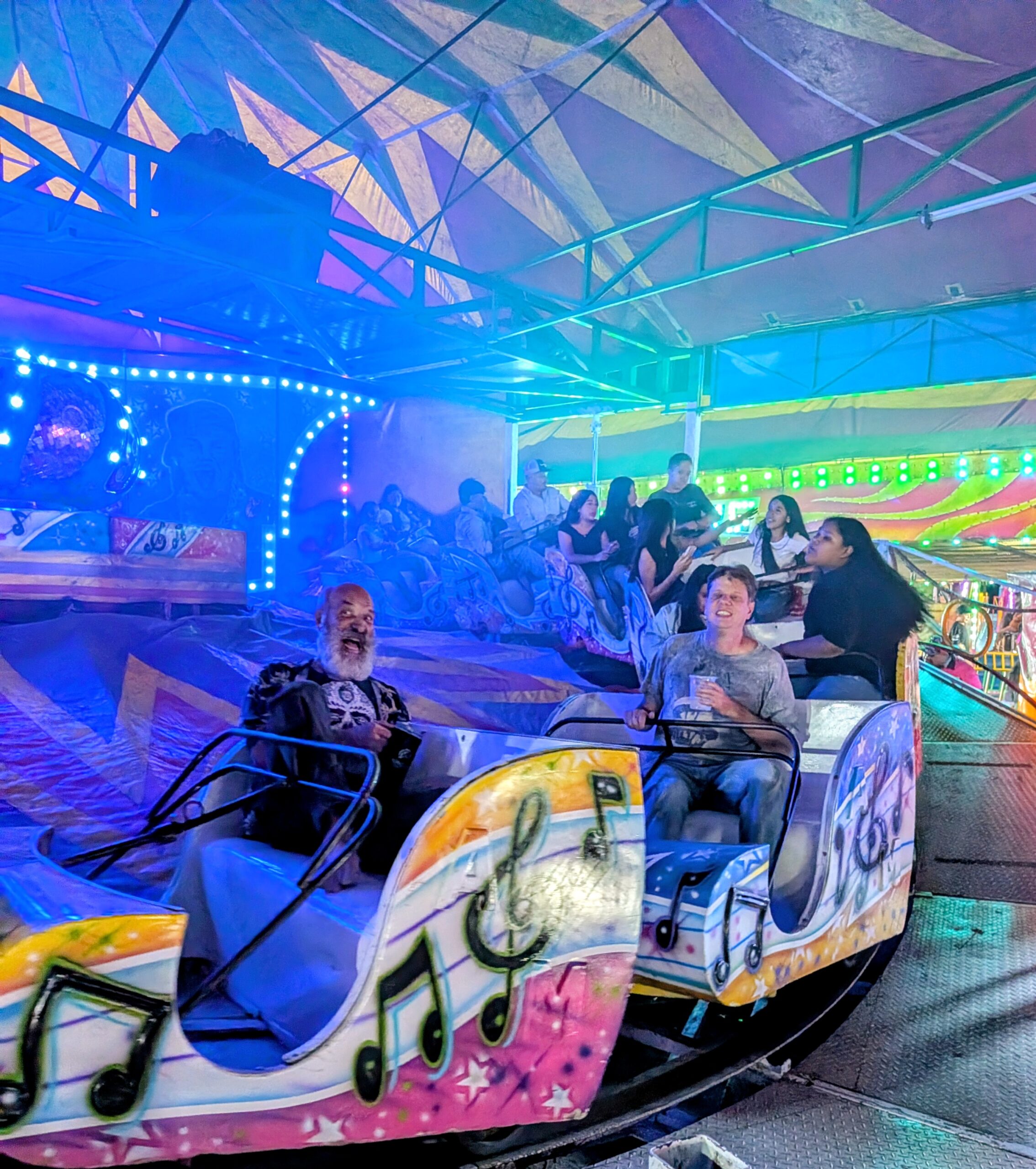
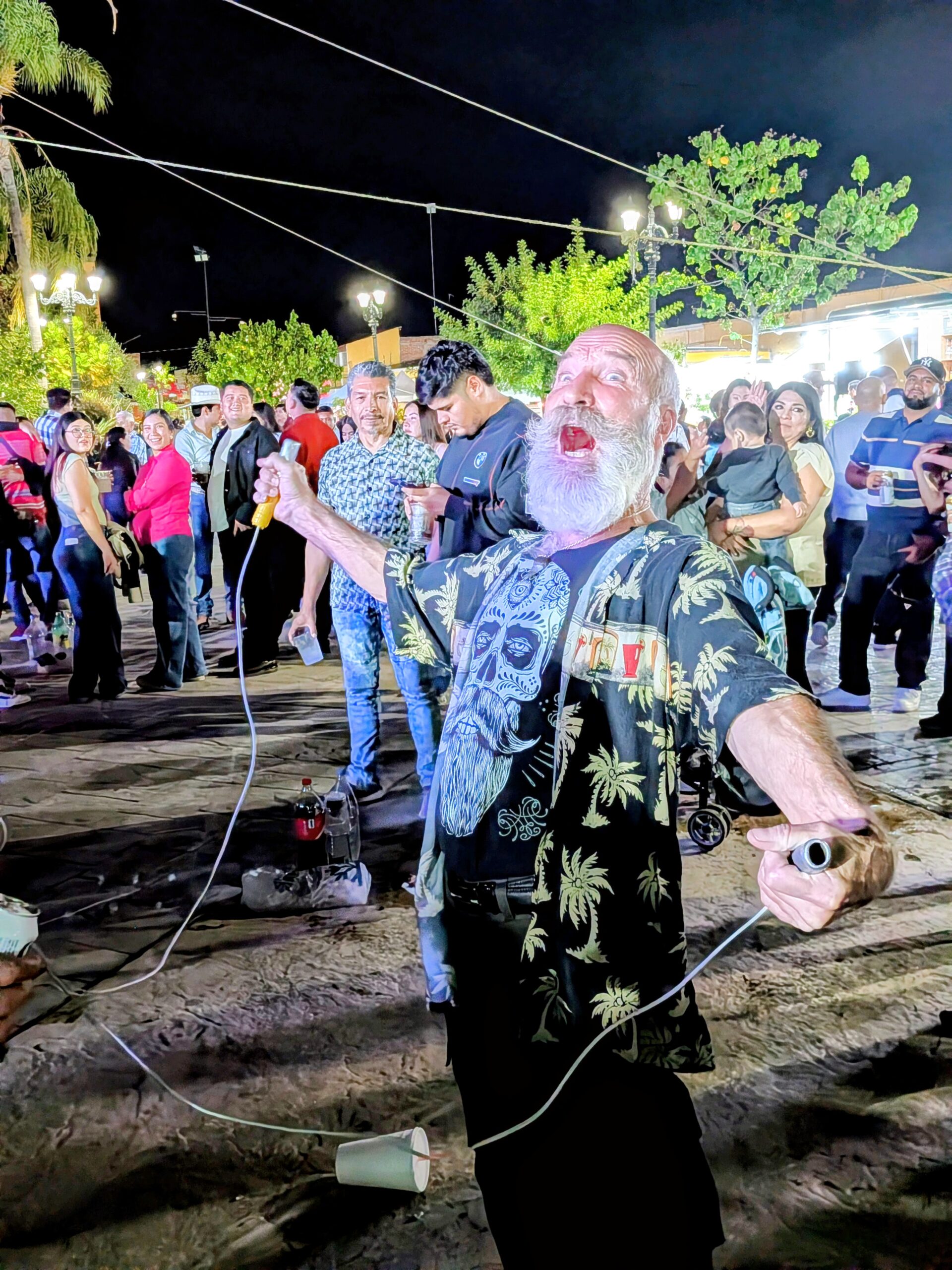
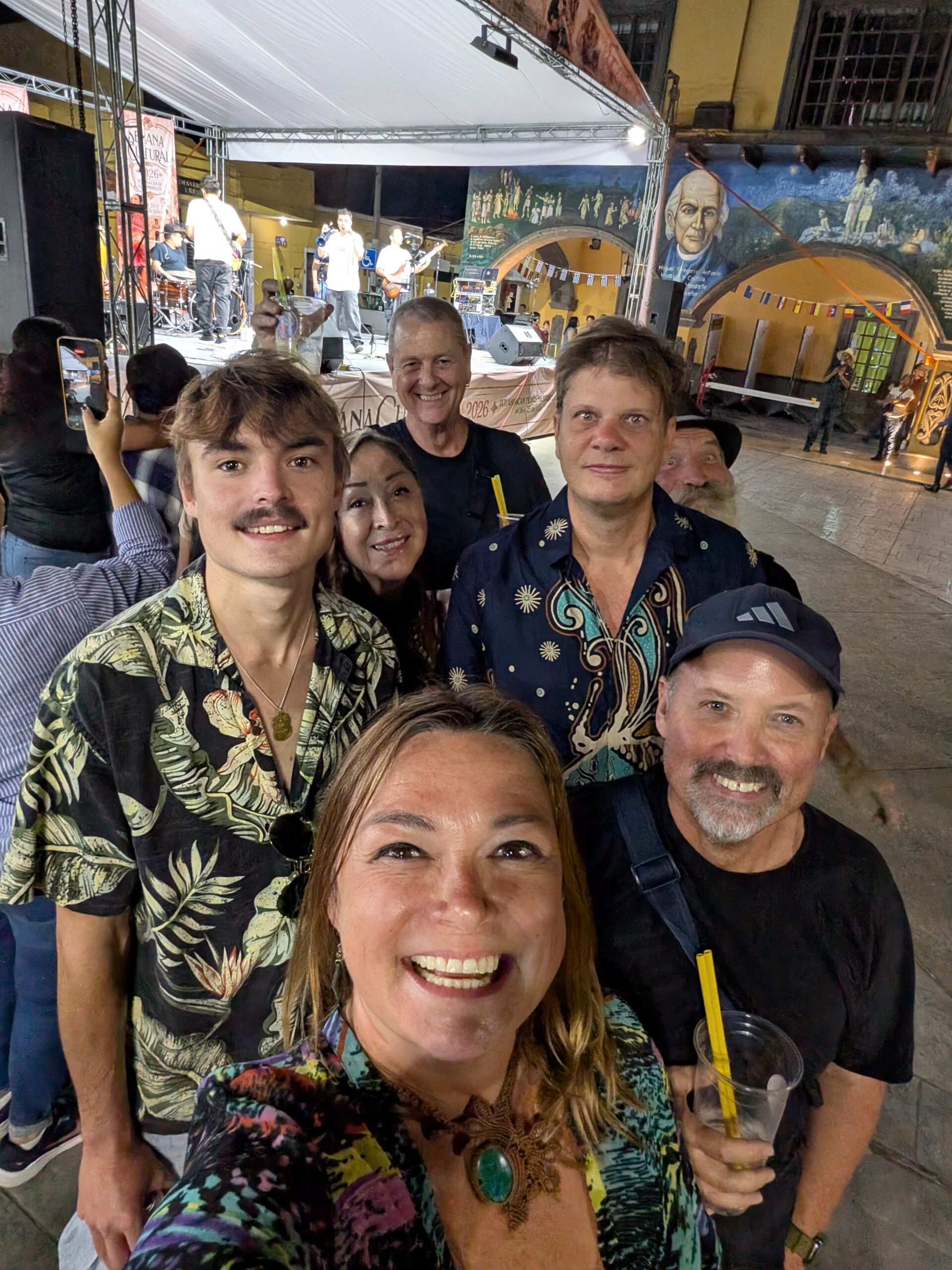
Our friends Carla and Steve took on the mechanical bull, which delivered everything a mechanical bull should deliver in terms of spectacle for everyone watching. Steve also accompanied Joe on the rides — pretty much all of them, since I have reached the stage of life where I am genuinely content to watch other people spin at high speed from a safe distance while taking the occasional photo to capture the moment. Steve also agreed, for reasons best understood by him, to submit to increasing electric shocks from a portable machine someone was carrying through the crowd. Enormously entertaining!
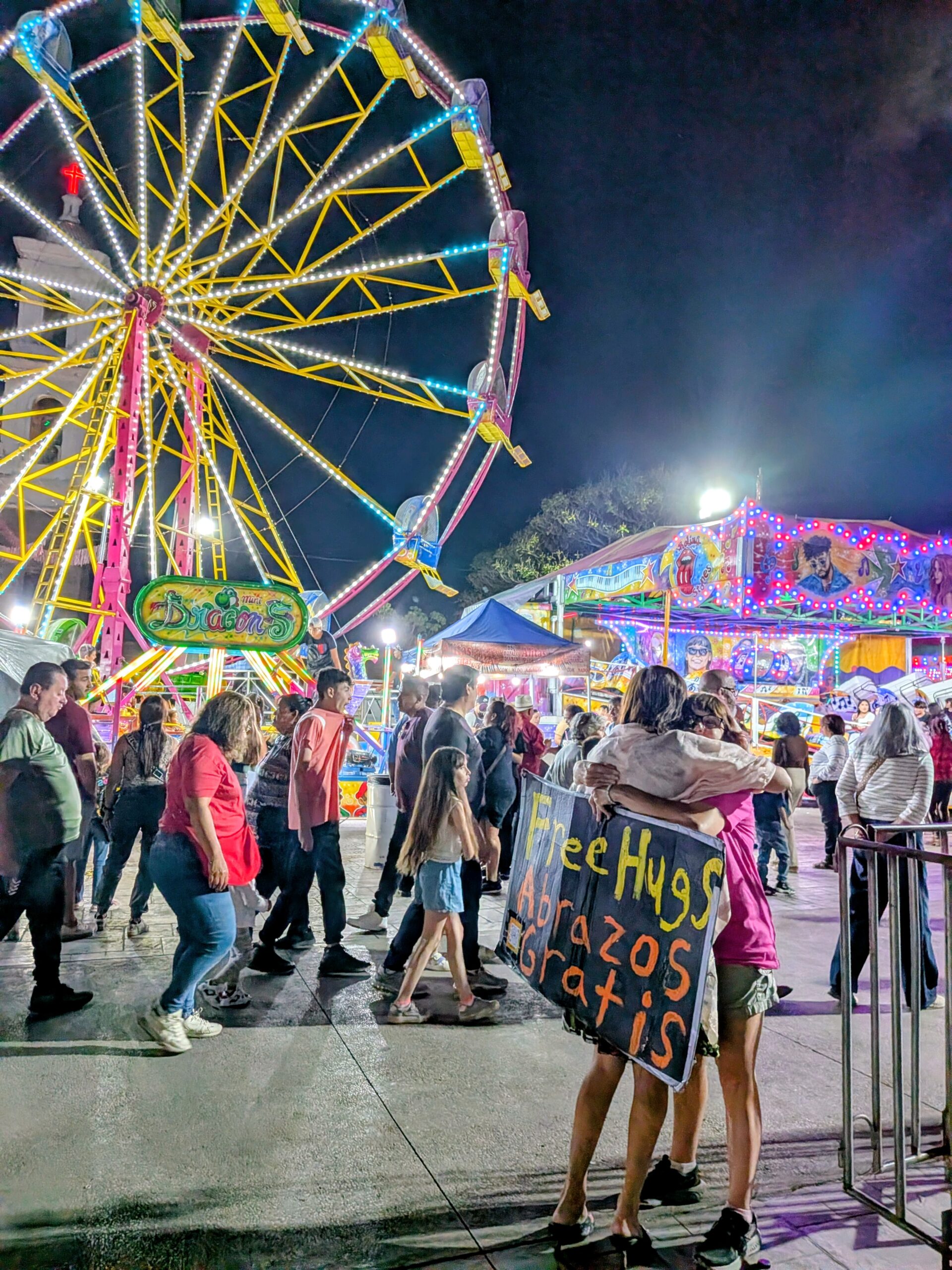
Our friend Sherry of Zenfullheart brought a free hugs sign on one of the nights, and the response from the crowd — people young and old, stopping, reading it, and happily accepting the offer — was one of those simple and genuinely lovely moments that reminds you why you live somewhere like this. People here will hug a stranger with a sign. We love it.

Final Night at the Fiesta: Rain, Fire, and Why Rain Is a Blessing in Jalisco
On our final night the skies threatened rain, and the castillo lighting started early to beat the weather. In the Lake Chapala region, rain is not just weather — it is a blessing that communities actively pray for, particularly during the dry months before rainy season arrives. There is something fitting about a festival honoring a warrior saint ending under approaching storm clouds, the castillo burning against a darkening sky while the community gave thanks for what was coming.
Ixtlahuacan de los Membrillos is a small village with a huge heart and some of the most genuinely spectacular fiestas in the region. If you have any opportunity to catch a party in this village, go. You will not regret it.