Singapore Stopover: Hawker Centers, a Health Scare, and the Most Futuristic Garden on Earth
Getting to Indonesia from the United States is not a casual undertaking. Our journey involved three domestic flights before we even boarded a plane headed to Asia — GSP to Baltimore, Baltimore to Denver, Denver to San Francisco — followed by a 17-plus hour flight to Singapore. By the time we landed, we had been traveling long enough that time had become a loose concept.
Rather than spending a few hours in the airport and immediately catching the next connection, we decided to spend a couple of nights in Singapore to decompress, see the city, and arrive in Indonesia feeling like human beings.
Arriving in Singapore
The approach into Changi Airport alone sets the tone. Coming in over the water and landing at one of the world’s most celebrated airports — where even the terminal is filled with lush living greenery — immediately signals that this is a city that takes its environment seriously. We arrived a bit too early to see the famous indoor waterfall at Jewel, which was a small disappointment, but even at that hour the airport was beautiful enough to soften the blow.
Driving into the city, the care that has gone into Singapore’s urban planning is impossible to miss. Perfectly maintained trees and plants line the roads in a way that feels deliberate and considered — green woven into the infrastructure of the whole city rather than added as an afterthought. The cleanliness and order of it all is striking, especially arriving from the chaos of long-haul travel.
The Hawker Centers: Singapore’s Greatest Institution
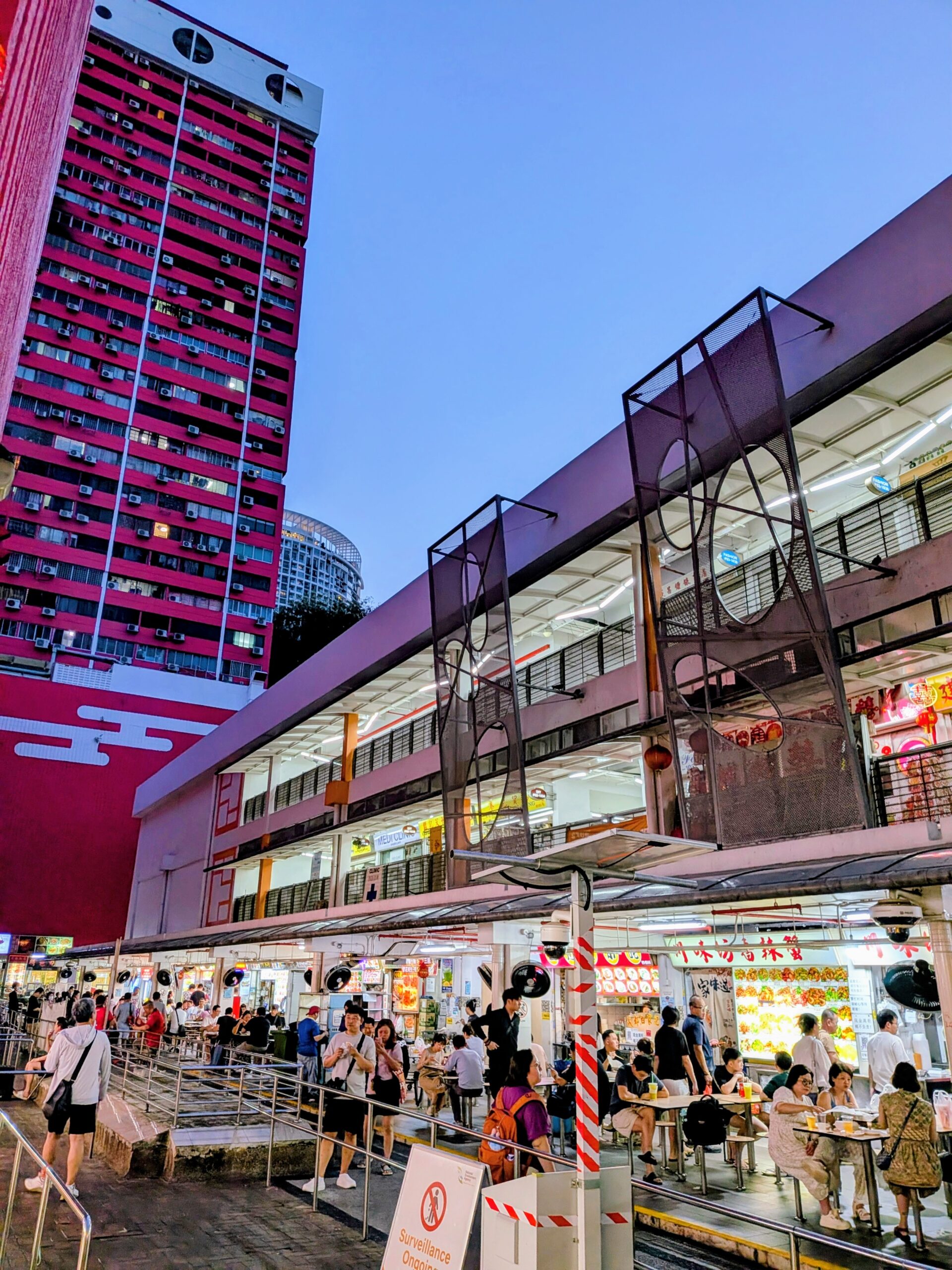
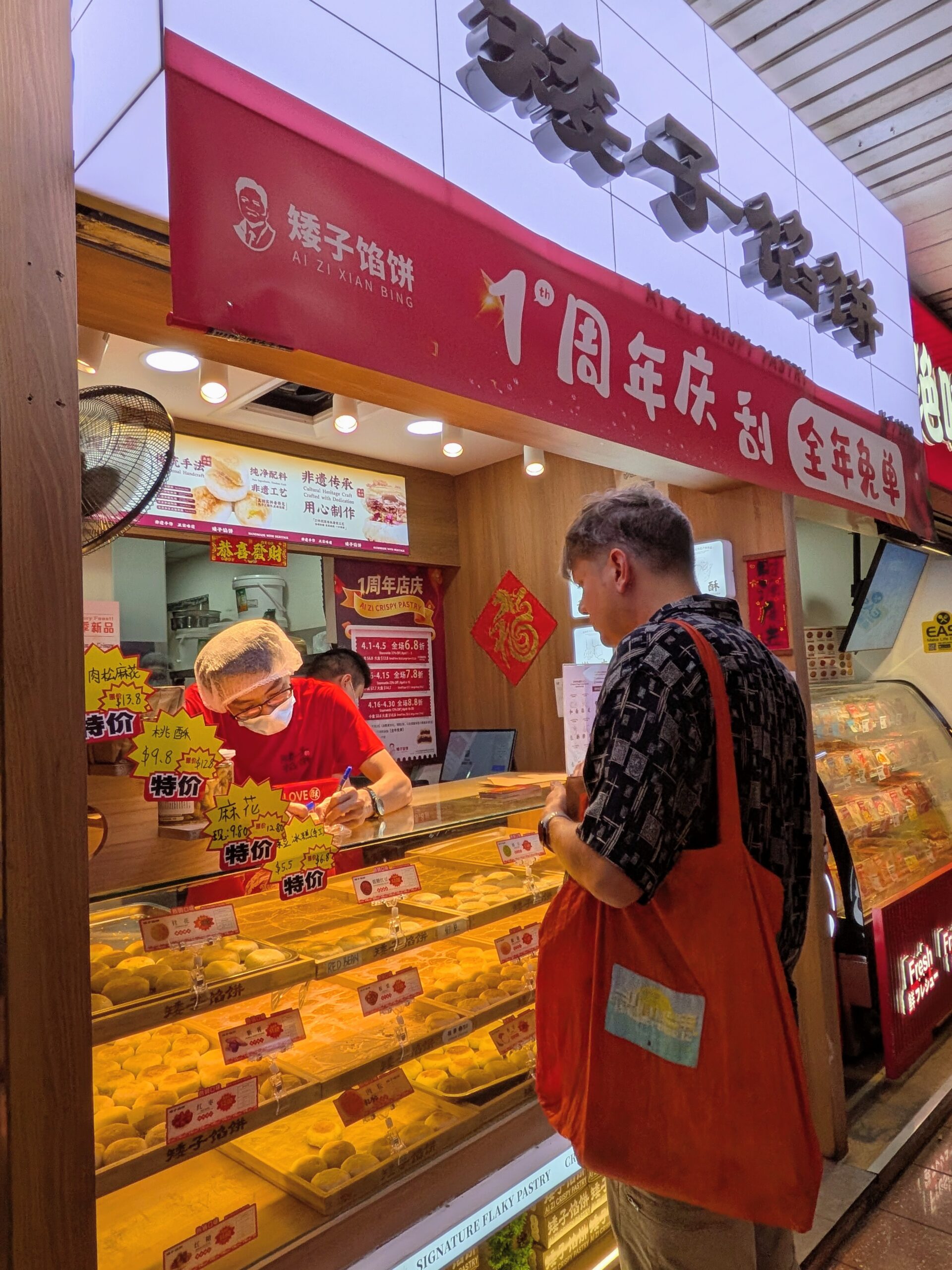
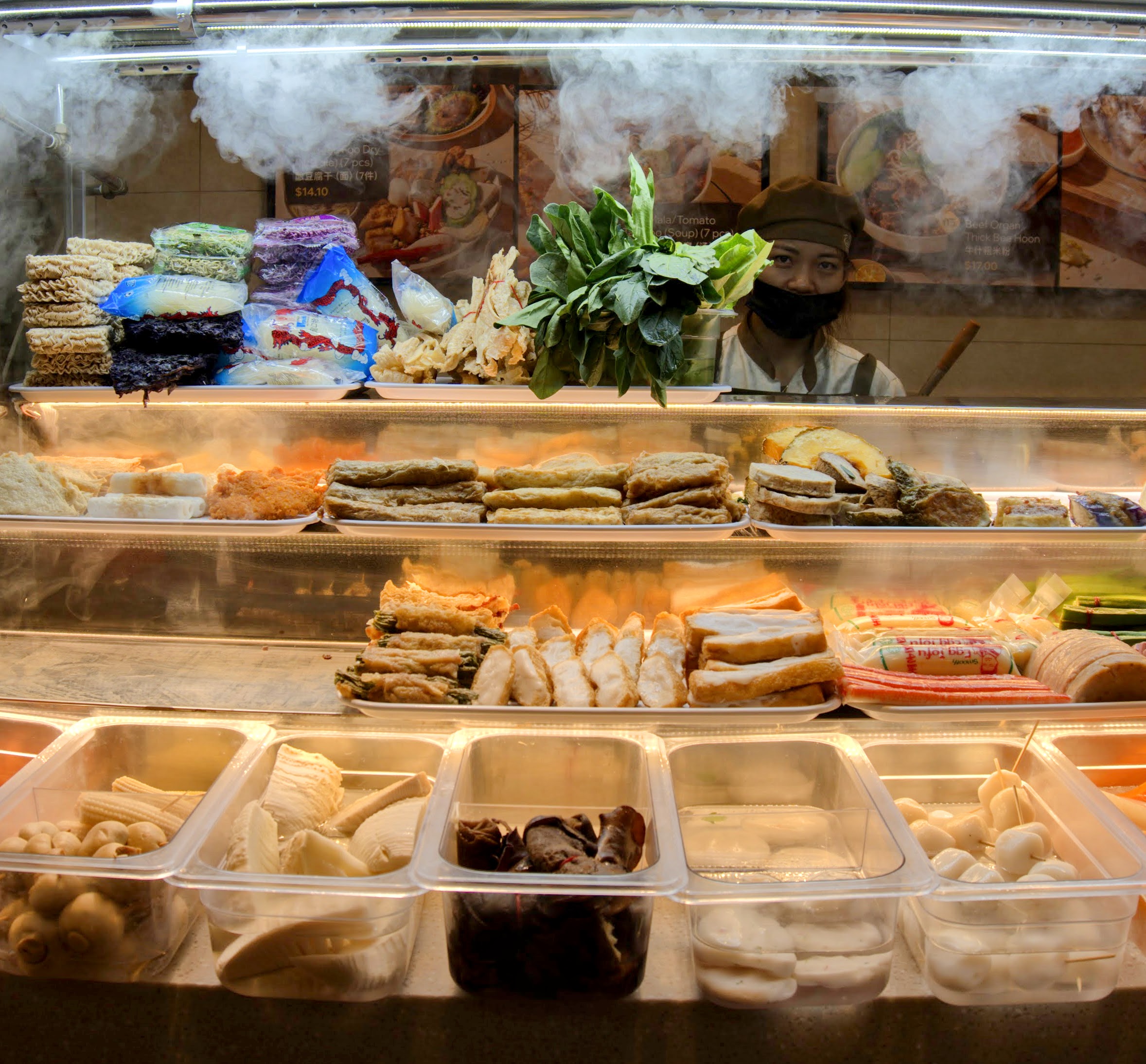
After dropping bags and showering, the priority was food — and specifically hawker centers, which had been at the top of my Singapore list from the beginning.
Singapore’s hawker culture has its roots in the street vendor tradition that goes back centuries, with itinerant food sellers carrying their wares through the city and setting up wherever they could find customers. The government eventually moved to consolidate these vendors into organized, hygienic spaces — and the result became one of the great food institutions of the world. In 2020, UNESCO added Singapore’s hawker culture to its Intangible Cultural Heritage of Humanity list, which tells you something about how seriously this food tradition is taken.
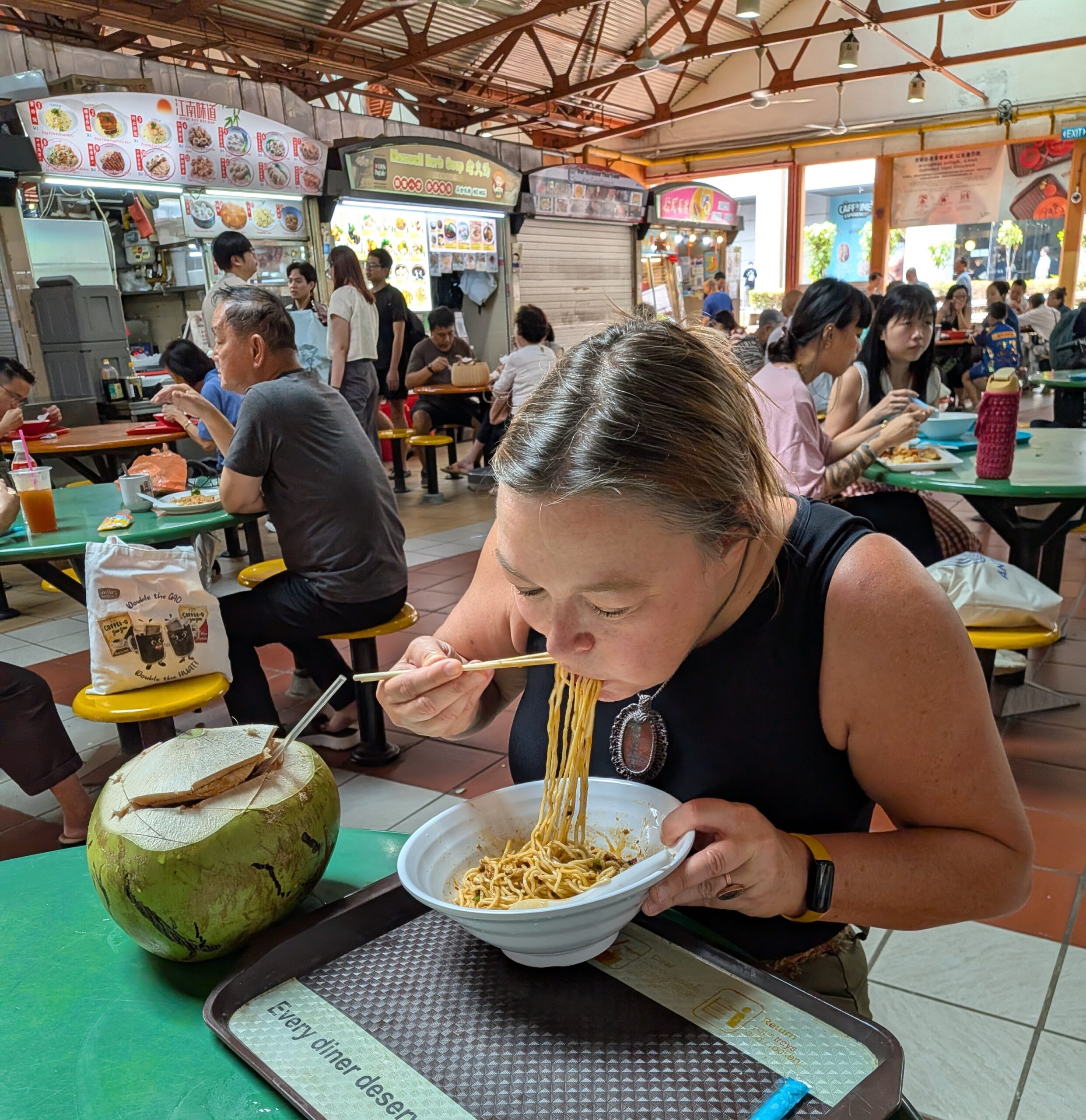
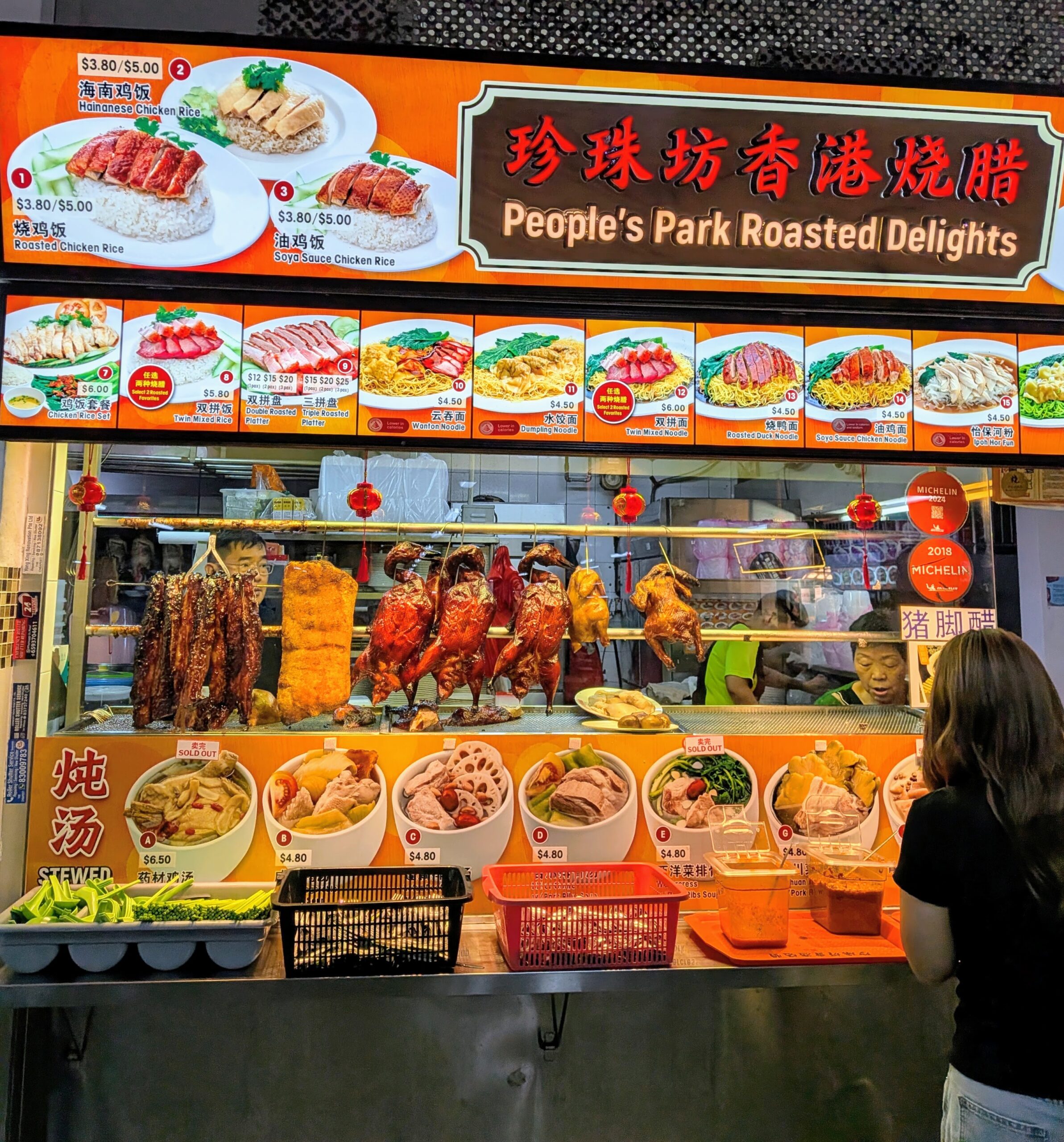
Our first stop was Maxwell Food Centre, one of the most beloved and storied centers in the city, dating back to 1928 when it opened as Maxwell Market. With over 100 stalls offering everything from Hainanese chicken rice to dumplings to South Indian pancakes, the hardest part is choosing. Many of the stalls have earned Michelin recognition — which remains one of the more surprising and wonderful things about Singapore, that world-class cuisine exists in an open-air food court at prices that are very affordable.
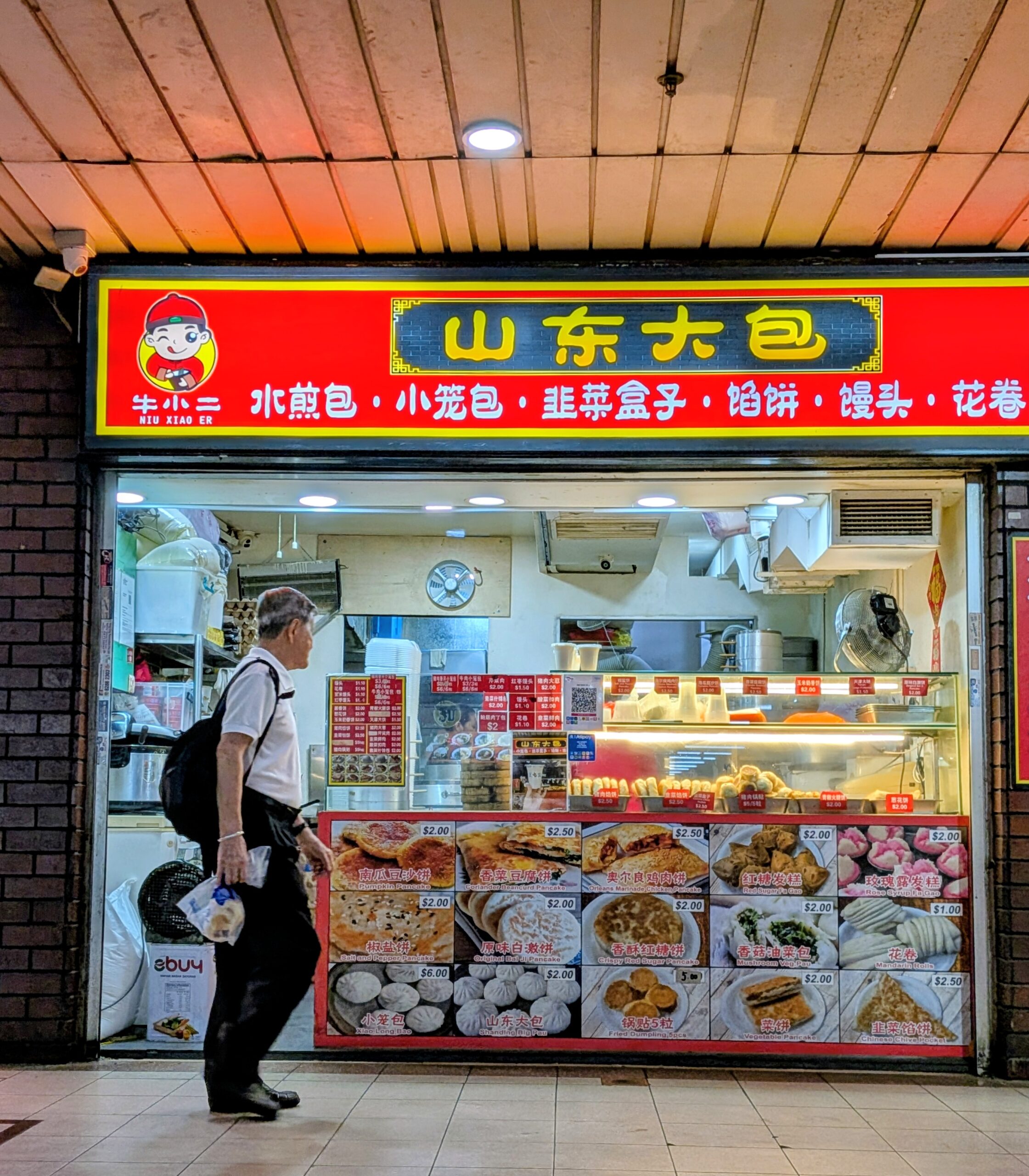
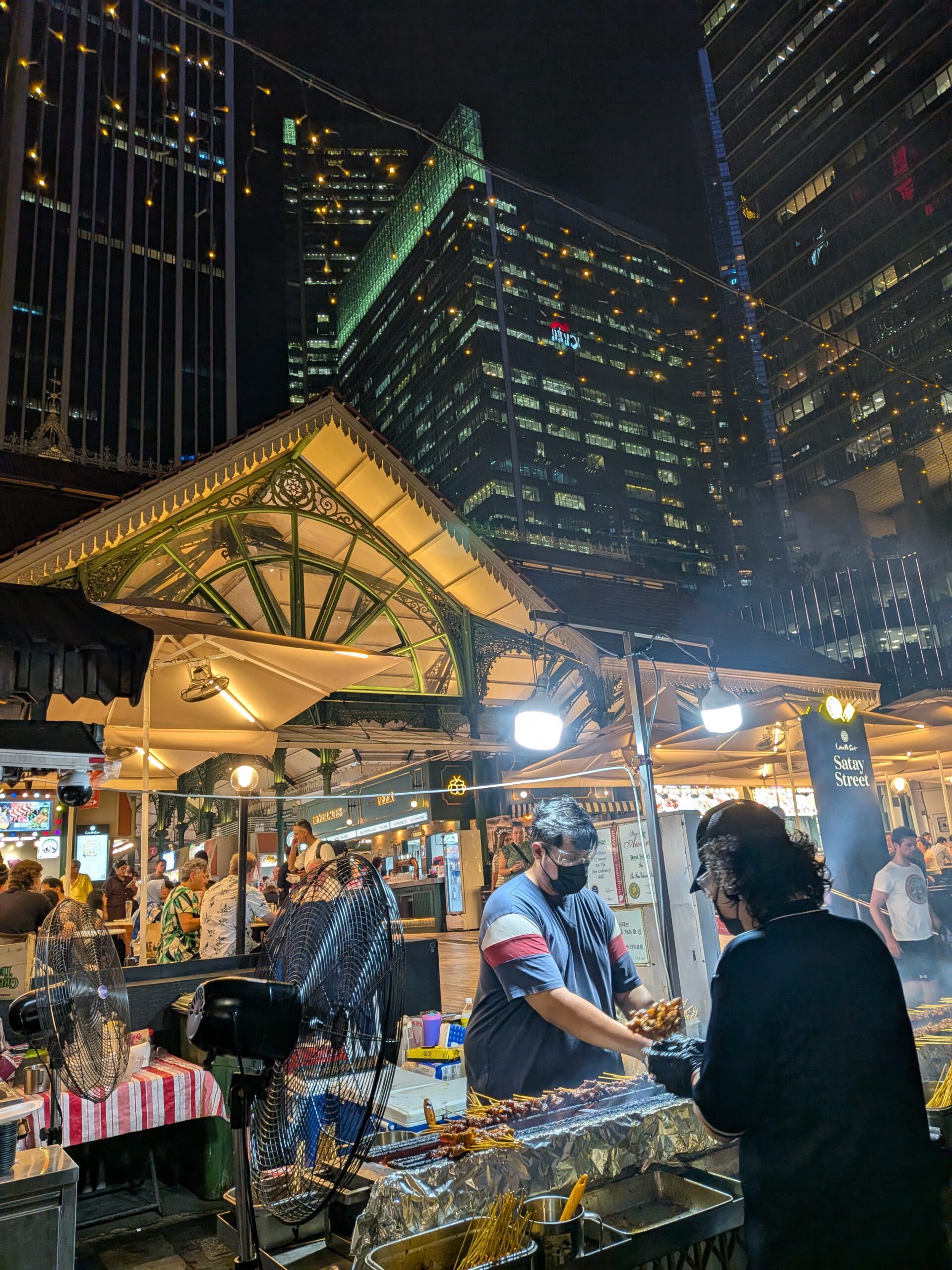
Over our two days we also wandered through Chinatown Hawker Complex, Lau Pa Sat, and Satay Street, where we tried the famous satays with peanut sauce. Taking in the sheer variety of what’s on offer – hundreds of stalls, cuisines from across Asia, dishes we couldn’t identify and ordered anyway – was overwhelming in the best possible way.
Chinatown: Color, Temples, and the Smell of Durian
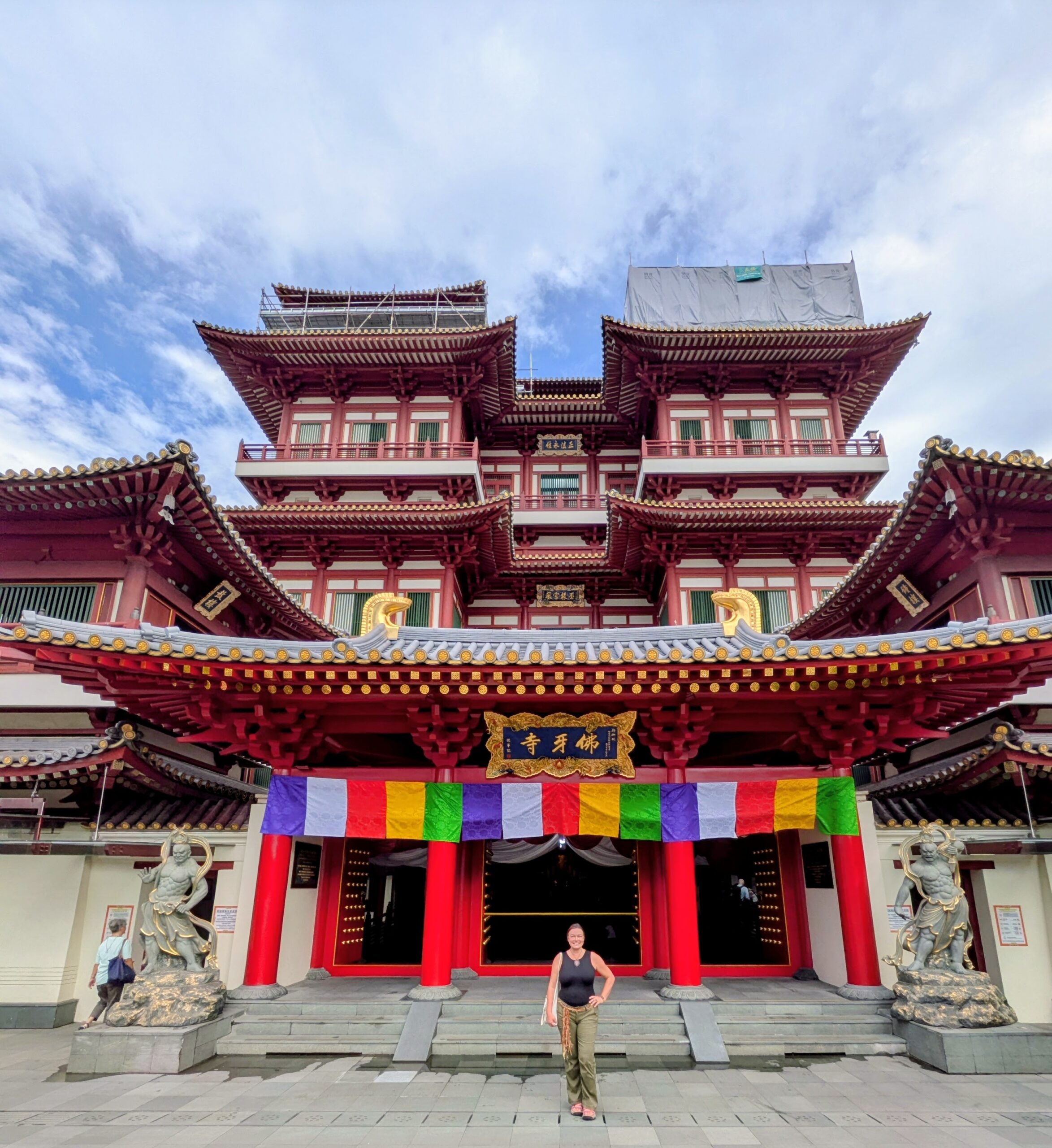
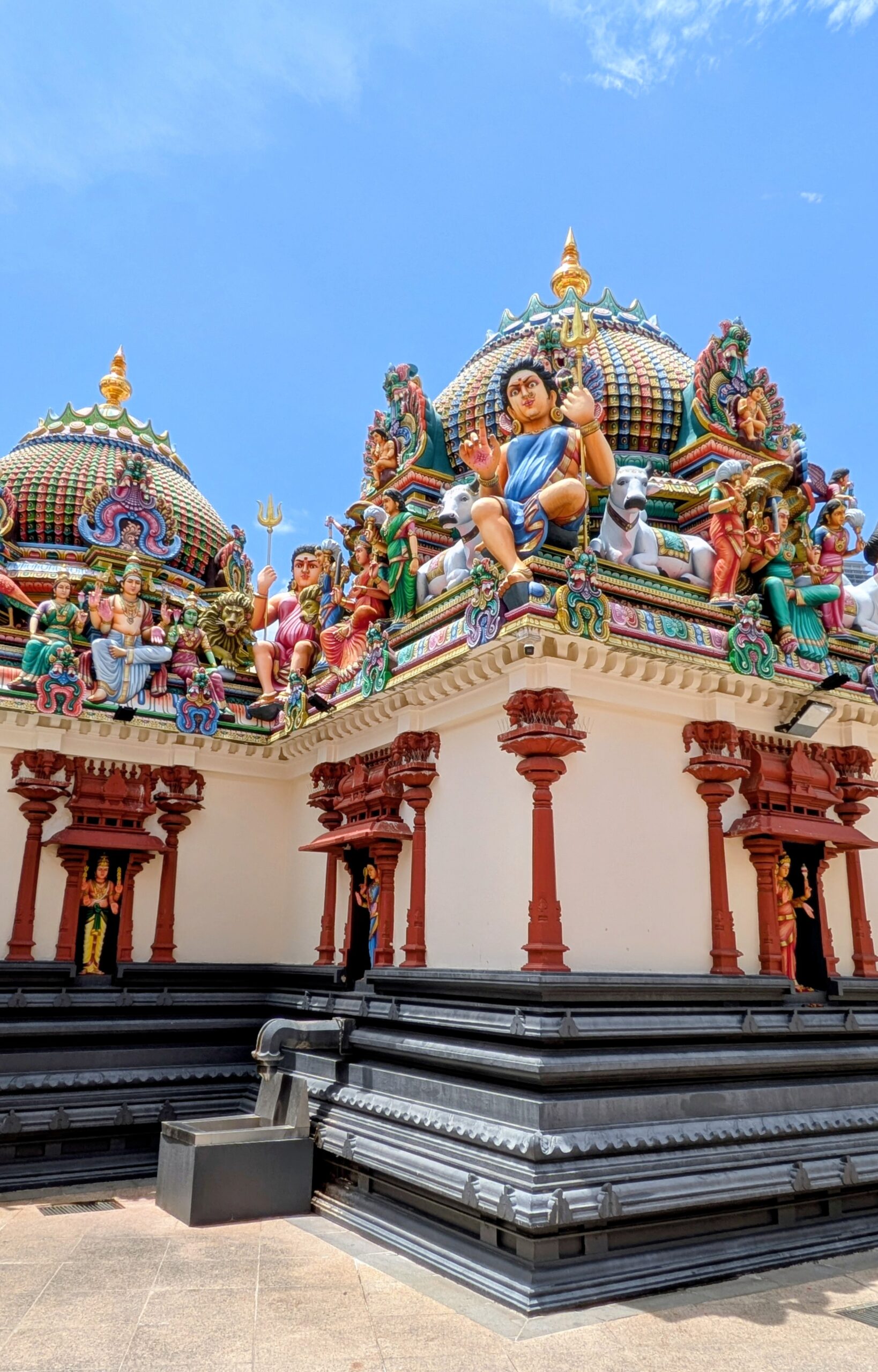
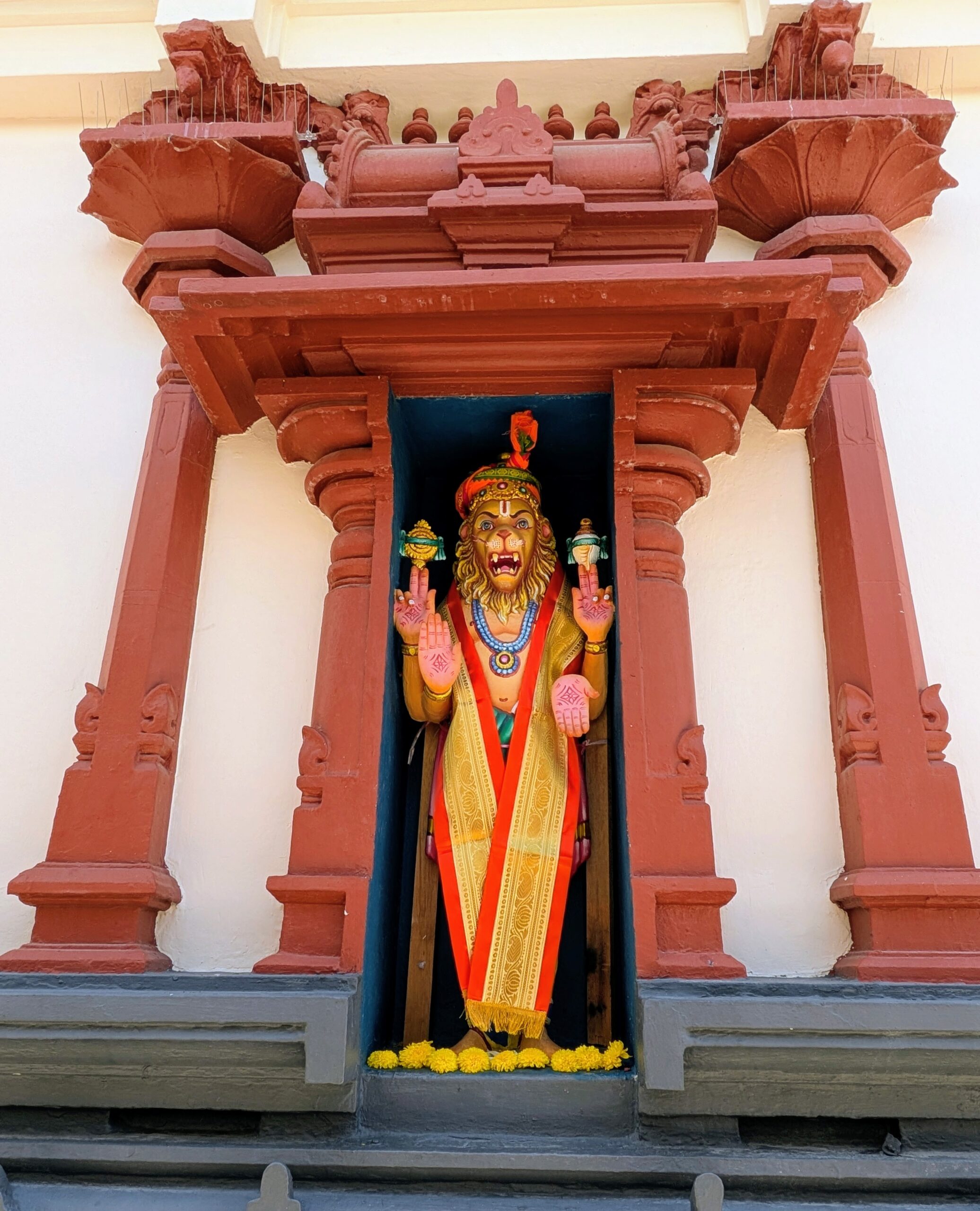
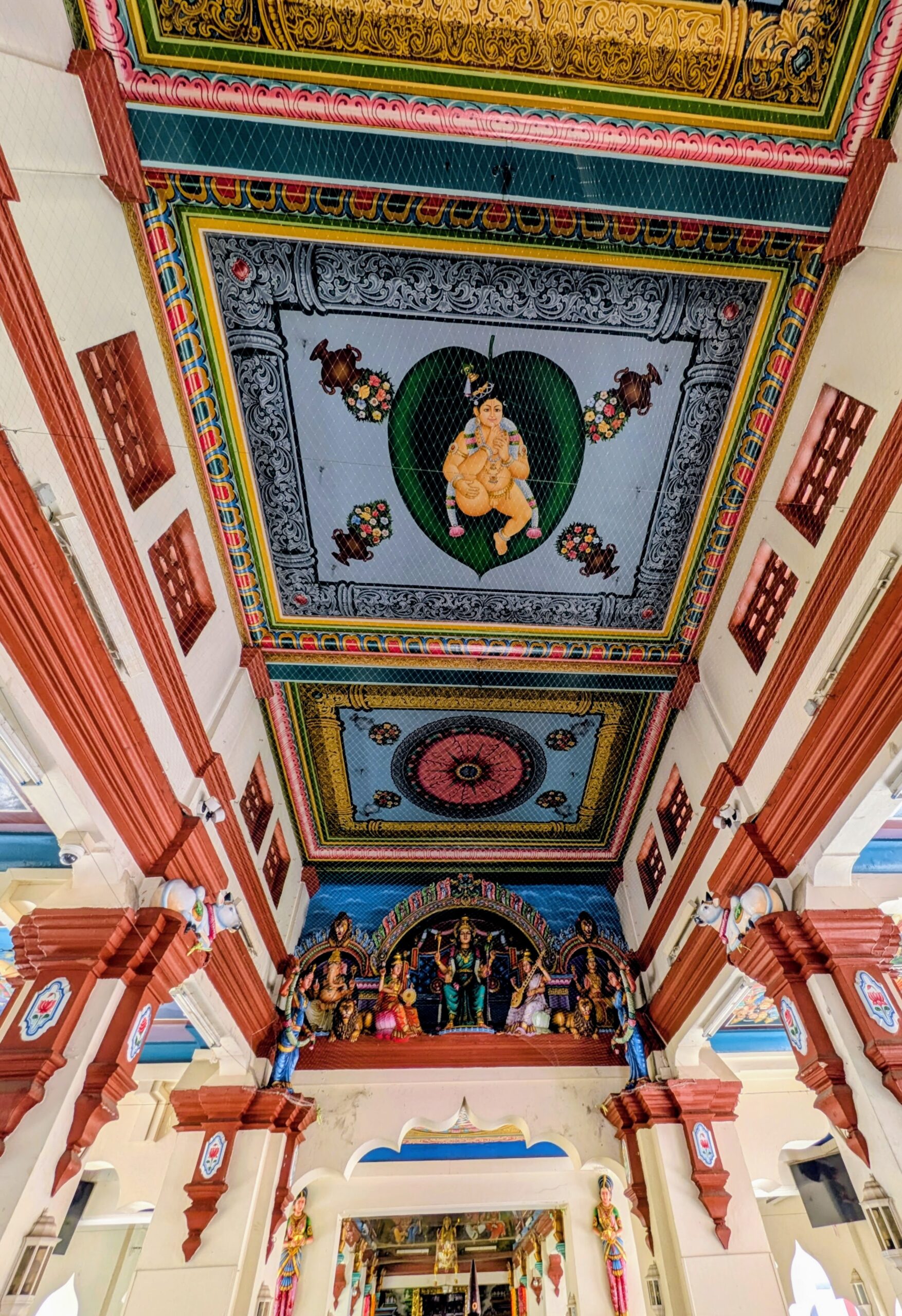
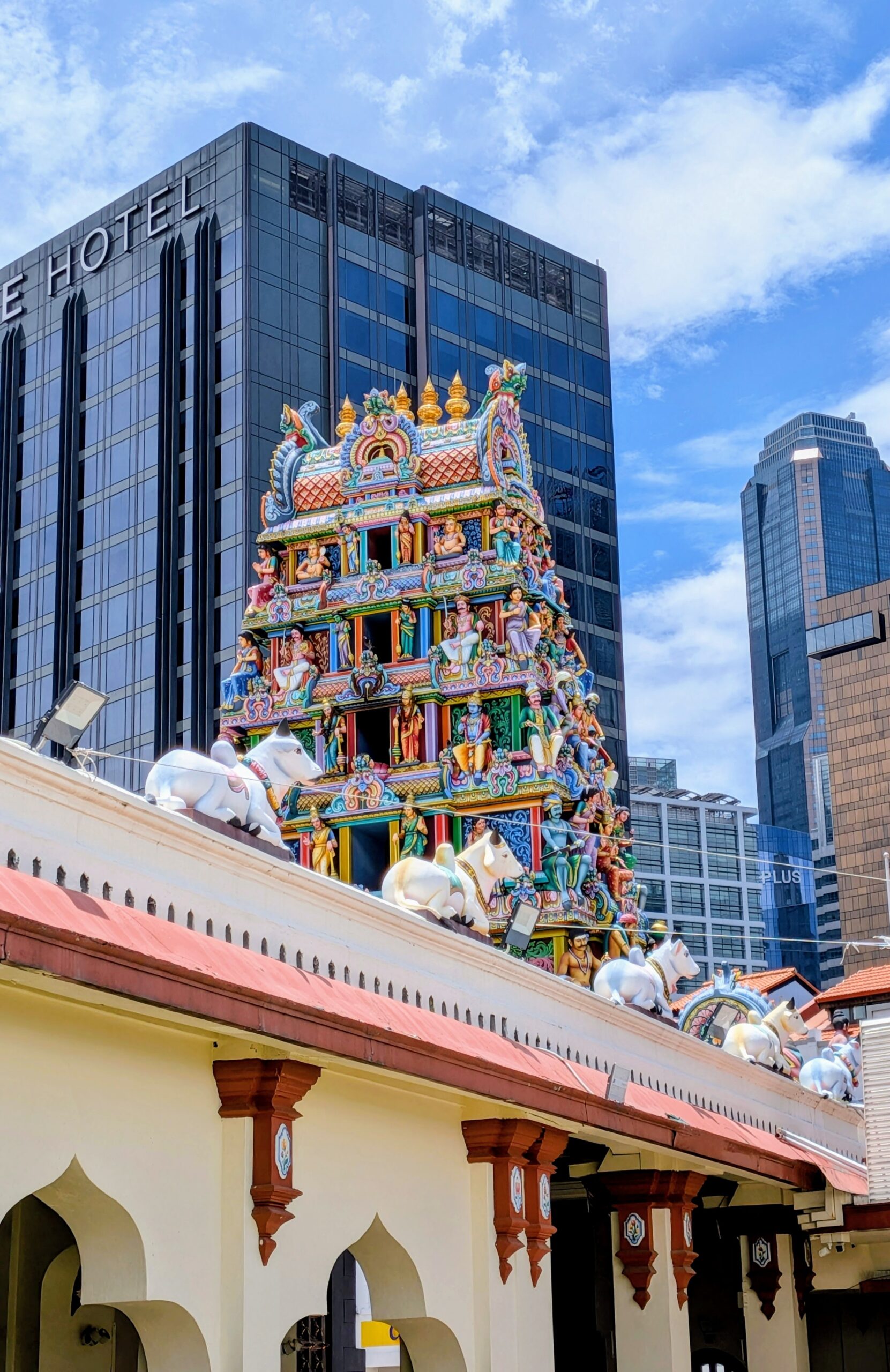
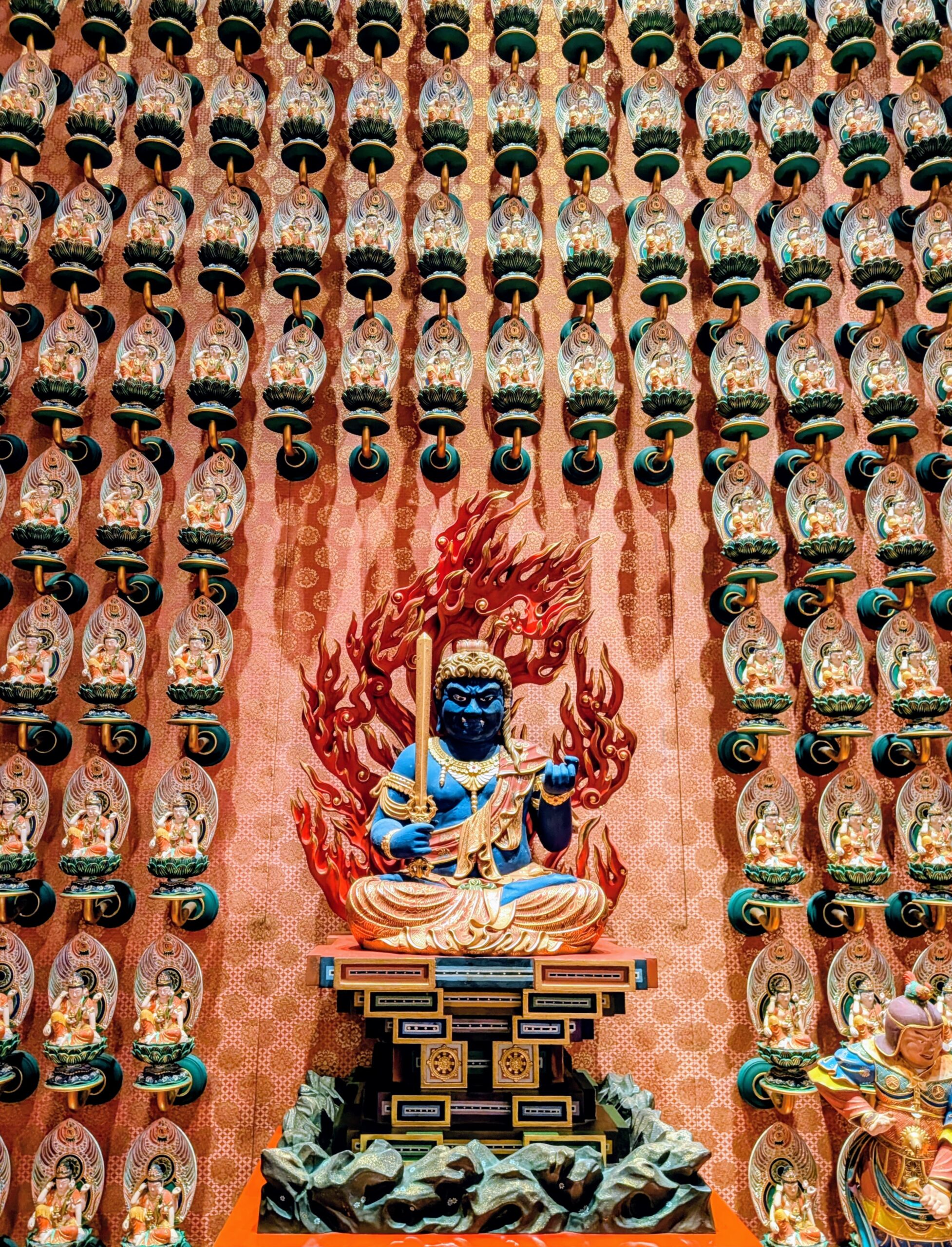
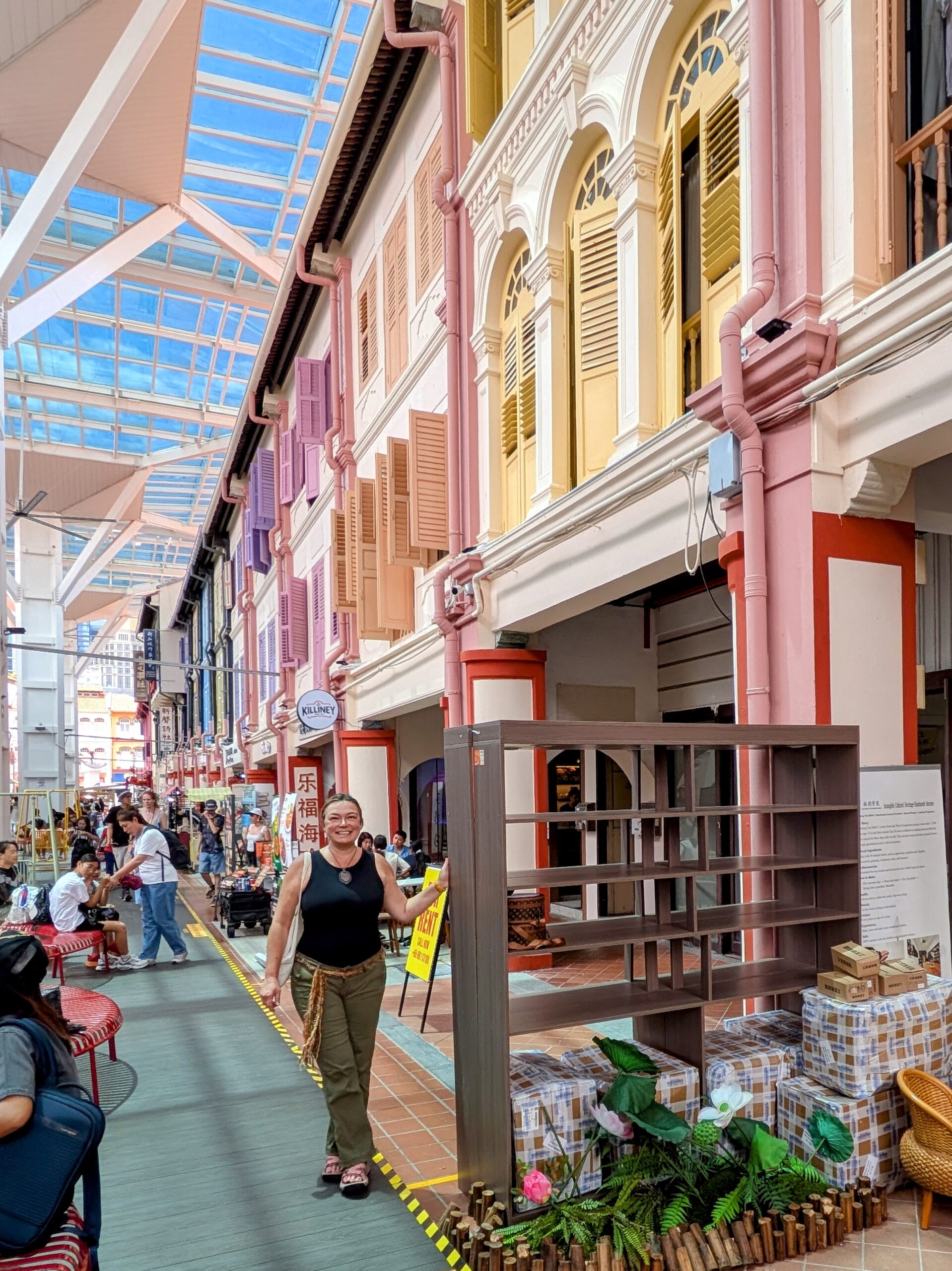
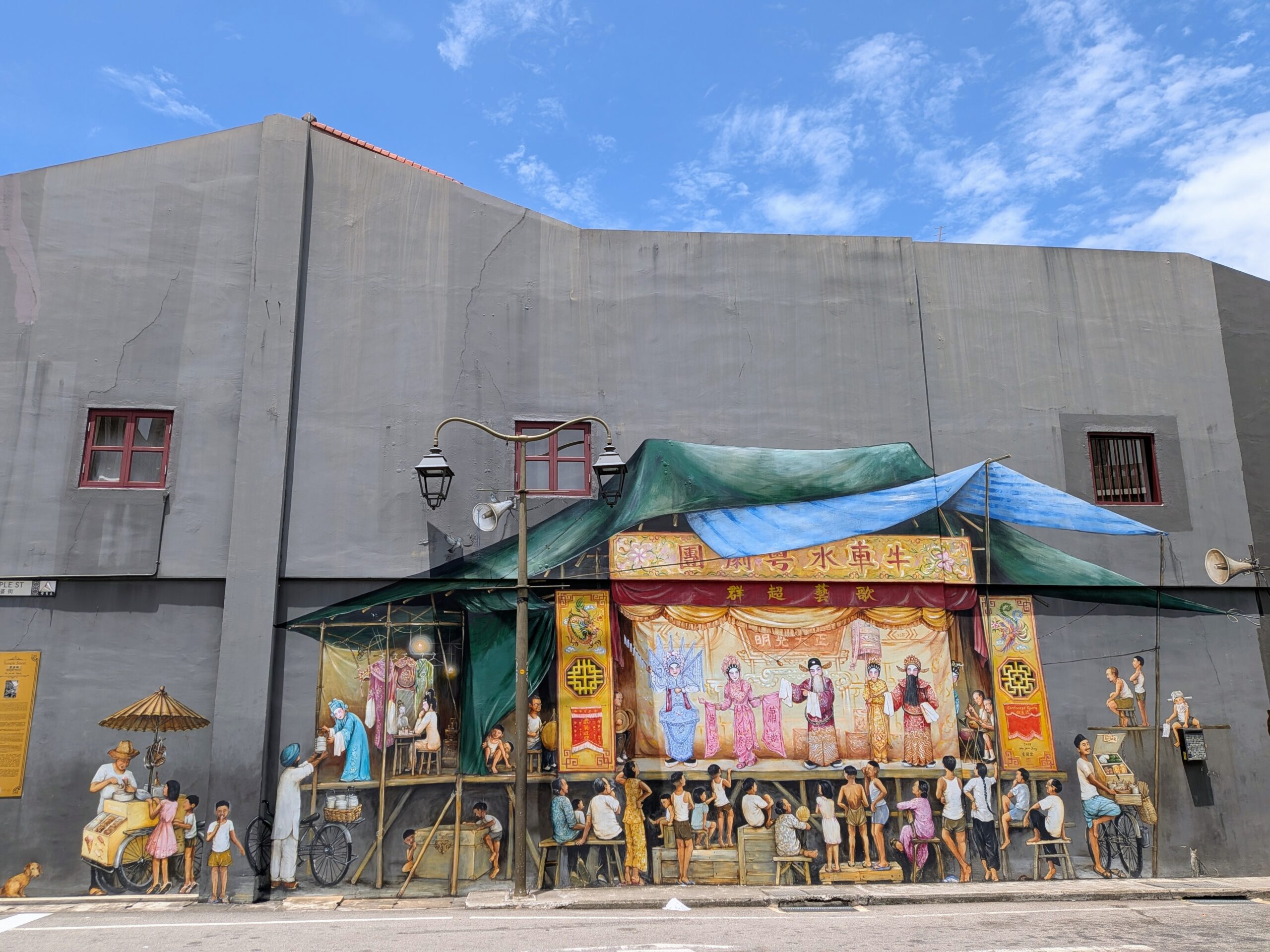
After eating our way through the hawker centers we wandered into Chinatown, which rewards an aimless stroll completely. The streets are lined with brightly colored shophouses, murals, and street food vendors at every turn. We stopped into Sri Mariamman Temple — the city’s oldest Hindu temple, dating back to 1827. And then there was the durian. If you’ve never encountered the famous spiky fruit that is simultaneously beloved and banned from Singapore’s public transit, you’ll know it the moment you pass a vendor selling it. The smell is singular and unforgettable. We did not stop to try it. Perhaps next time.
A Detour to the Hospital
This is the part of the trip I didn’t plan for.
The night after arriving I noticed my legs were swollen — not unusual after a flight of that length, and I assumed a good night’s sleep would sort it out. But by morning my right leg had improved while my left leg remained swollen, warm to the touch, and tight. After some late-night reading I recognized the possibility of a blood clot, and given that we were about to head into Indonesia, I made the pragmatic decision to get it checked out in Singapore rather than wait.
I could not have been better cared for. Within minutes of arriving at the clinic I was seen, thoroughly questioned, and treated with genuine kindness — and for $20 I was sent to the public hospital for an ultrasound. The hospital complex was enormous, impeccably clean, and organized with a precision that was quietly impressive. Through bloodwork, two ultrasounds, a chest X-ray, and heart monitoring, every box was checked systematically and carefully. The verdict was good — all clear — and I walked out grateful both for the result and for the quality of care that produced it.
Singapore’s public healthcare is something. We could learn a thing or two. I could also learn a thing or two and invest in some compression socks for the trip home!

Gardens by the Bay: Where Nature Meets the Future
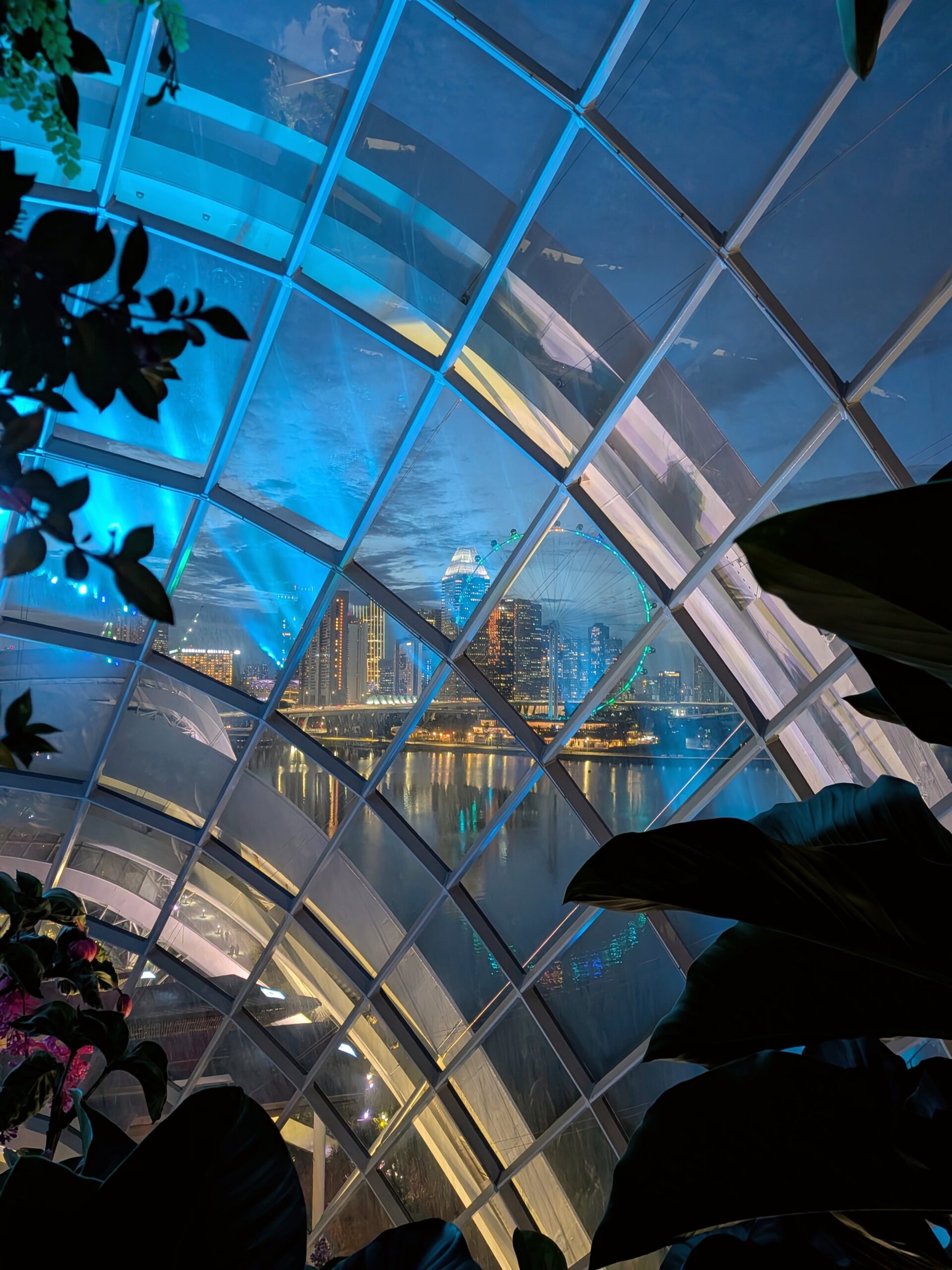
Cleared by the hospital with enough late afternoon left to use it, we took the immaculately clean and efficient MRT Subway to the waterfront. Walking out of the station, the first thing you see is Marina Bay Sands — the iconic hotel with its extraordinary rooftop infinity pool and boat-shaped Sky Park connecting three towers — rising against the skyline like something from a science fiction film.
Then we walked into Gardens by the Bay, and were immediately enthralled.
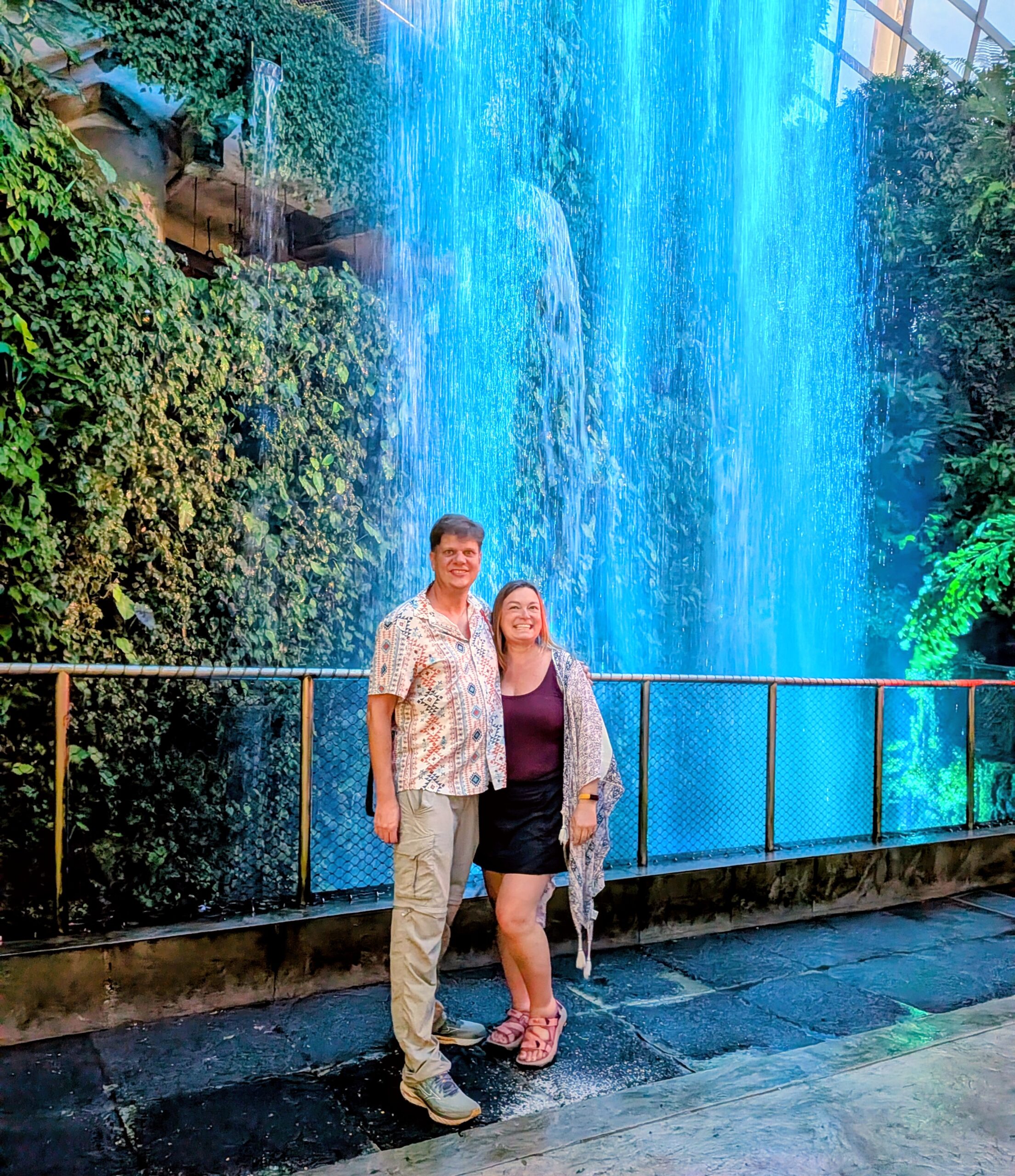
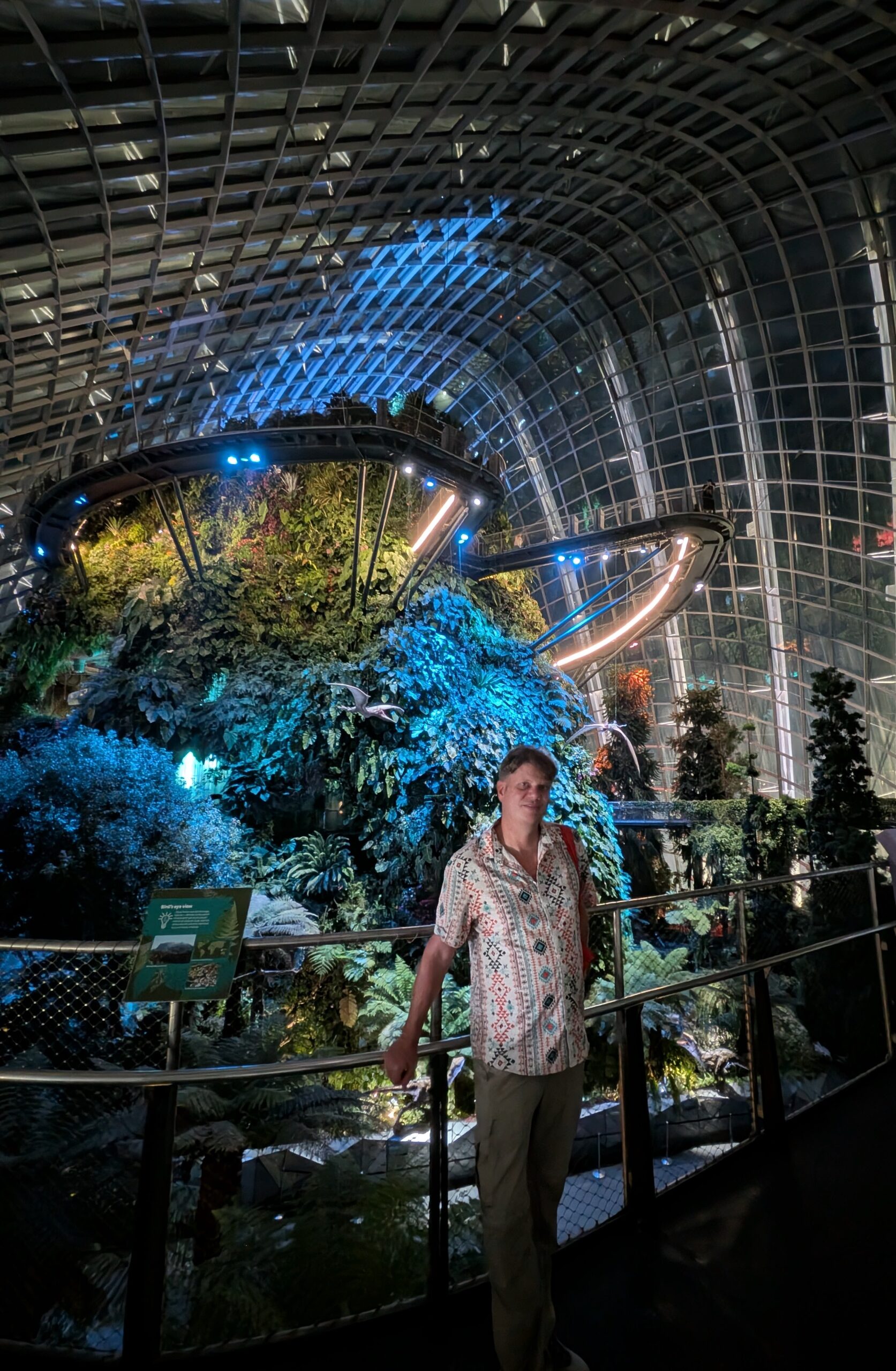
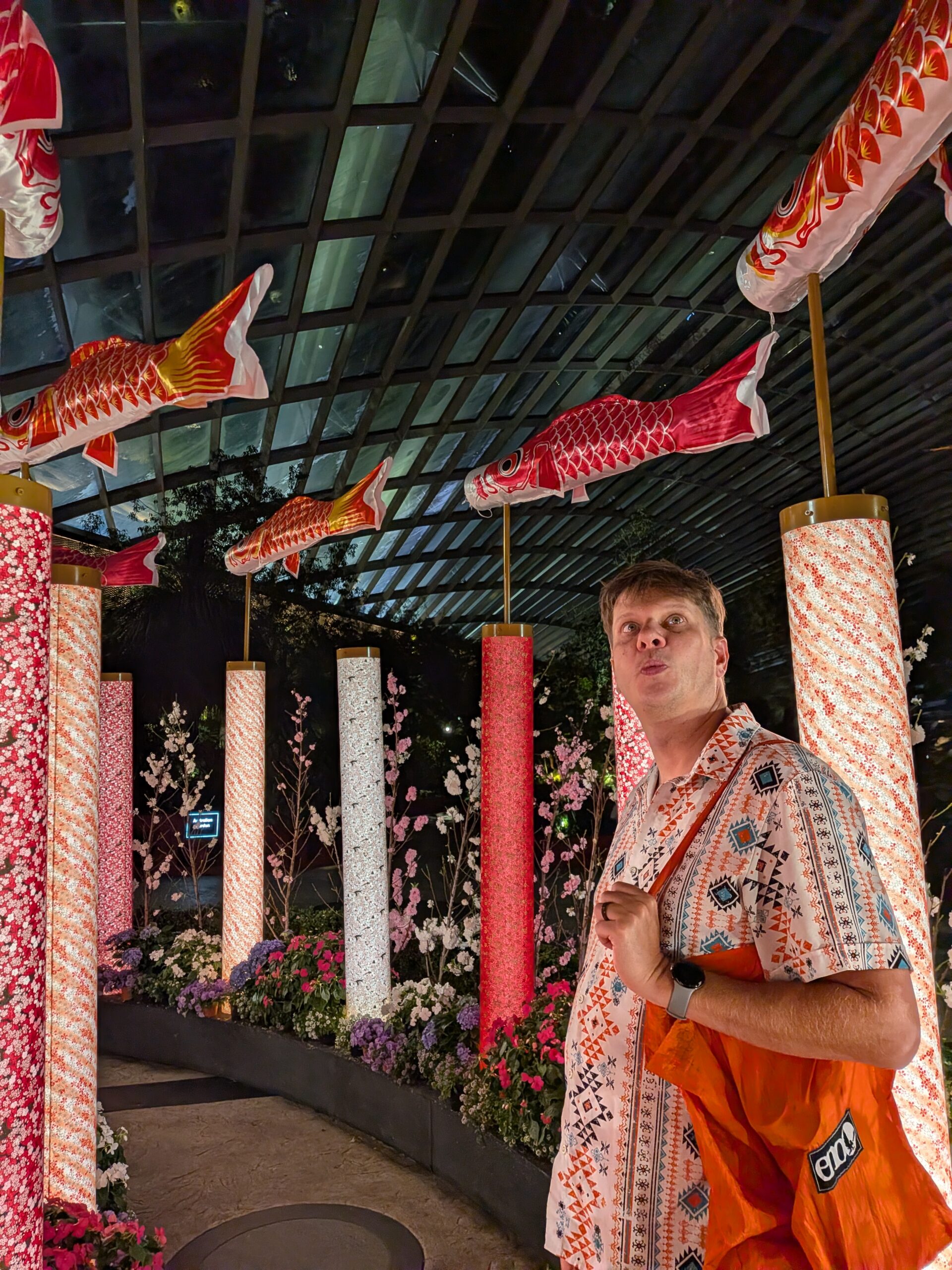
The Cloud Forest dome is extraordinary — a misty, lush mountain environment inside one of the largest glass domes in the world, with a 42-meter indoor waterfall at its center. You ascend through layers of cloud forest vegetation — carnivorous plants, orchids, ferns — on aerial walkways while the mist moves around you. It is genuinely unlike anything I have experienced in a building.
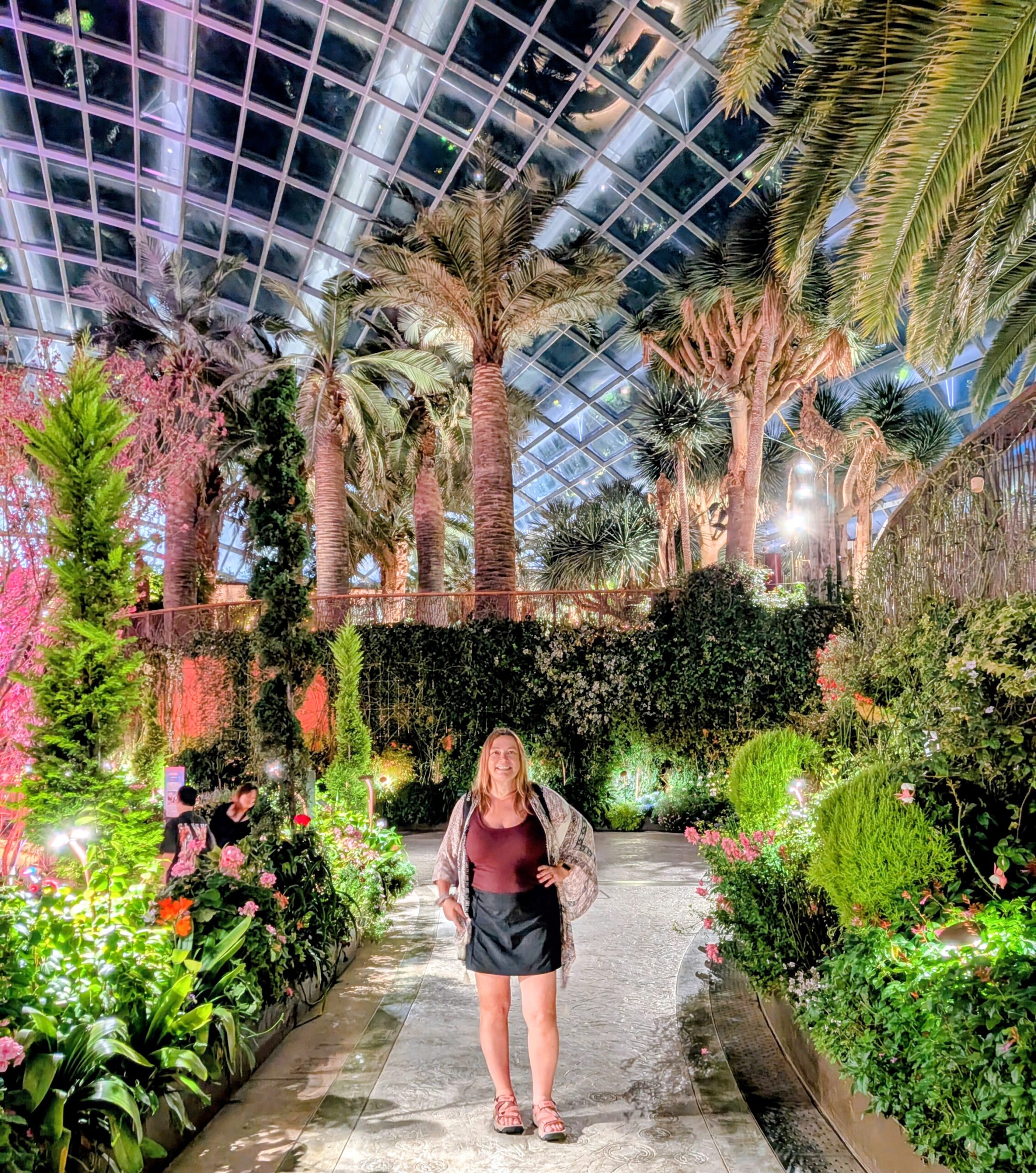
The Flower Dome next door is the world’s largest glass greenhouse according to the Guinness World Records, holding an extraordinary collection of plants from Mediterranean and semi-arid regions across five continents. Walking through it feels like traveling through ecosystems.
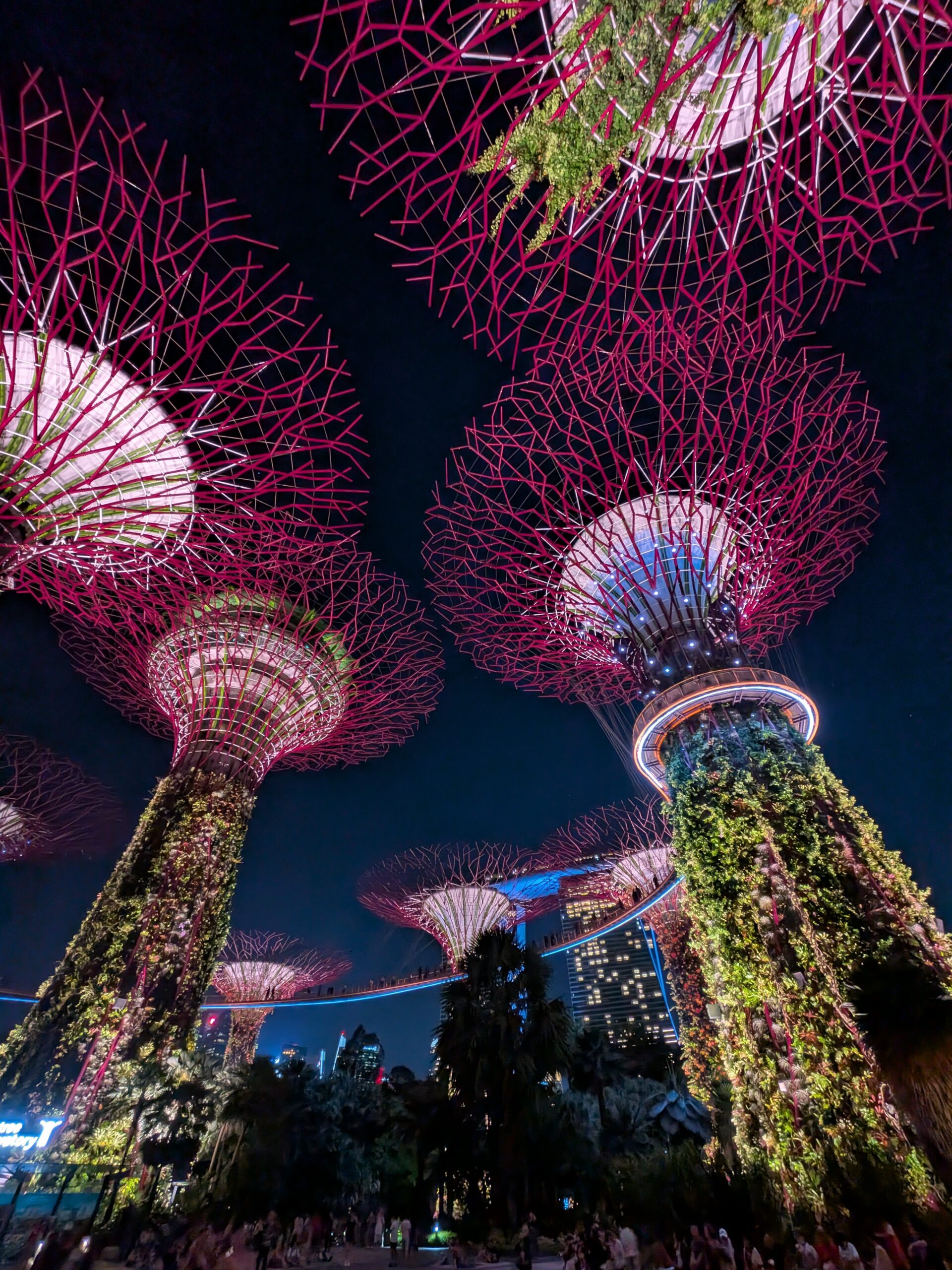
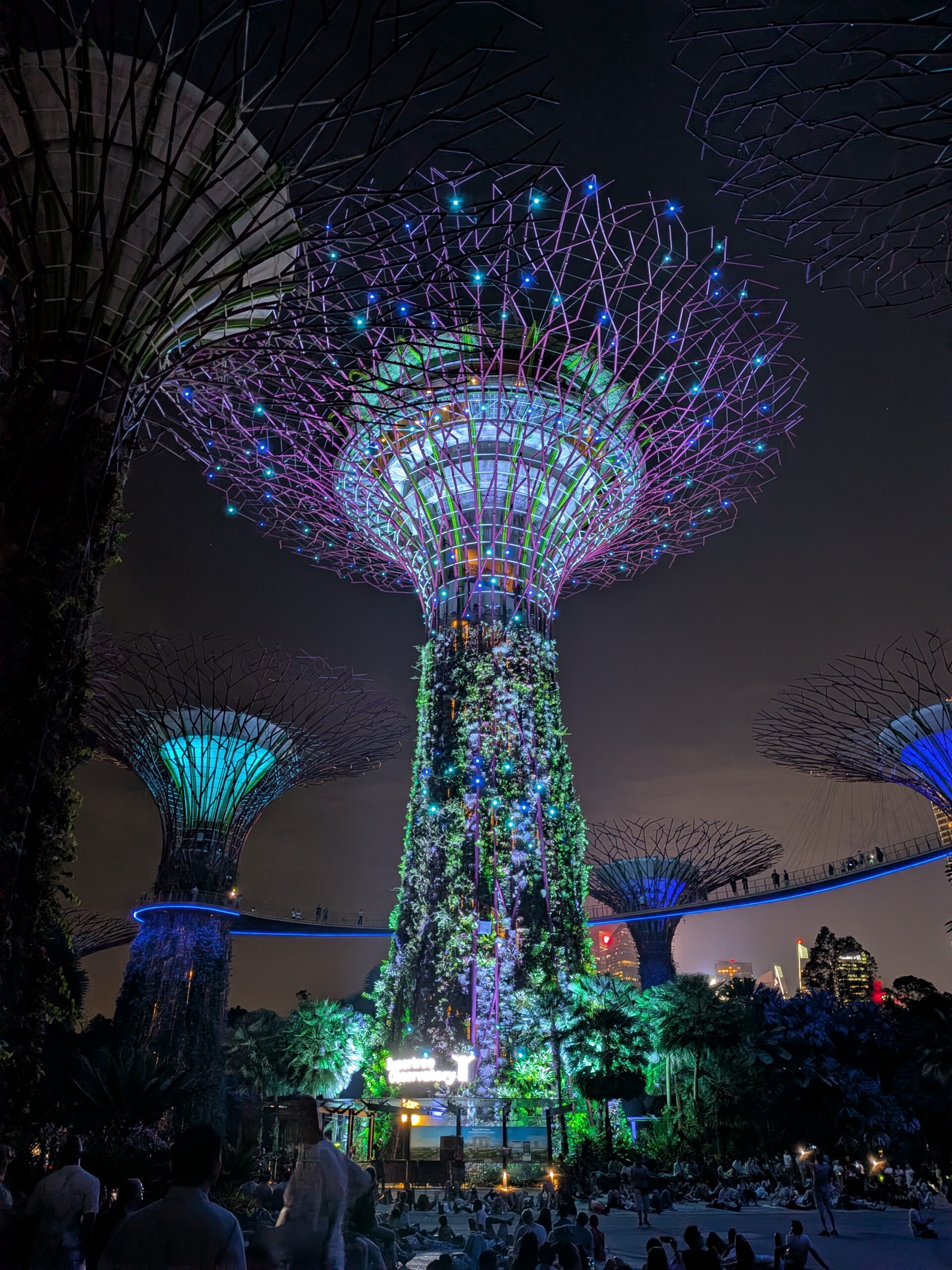
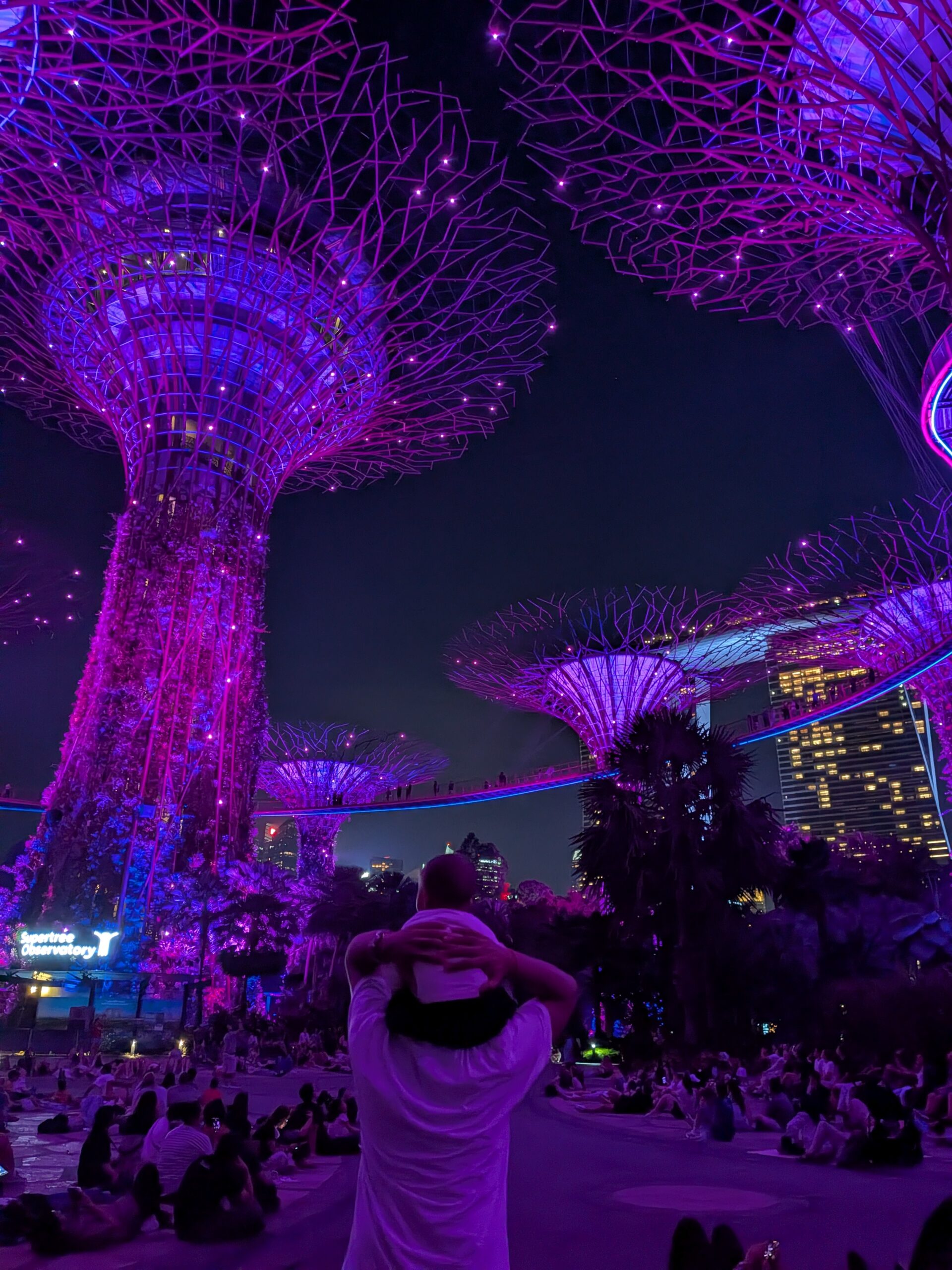
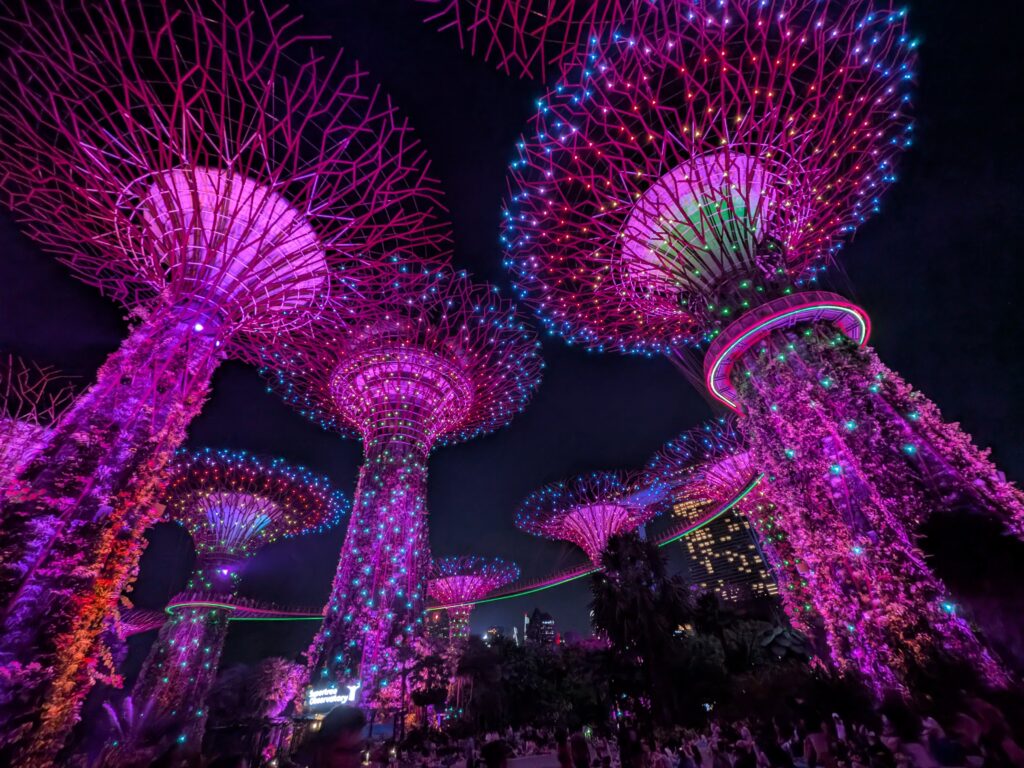
And then the night arrived, and so did the Garden Rhapsody light show at the Supertree Grove.
The Supertrees are 18 towering vertical garden structures ranging from 25 to 50 meters high, covered in over 160,000 plants and embedded with solar cells and environmental systems. At night, they come alive. The free Garden Rhapsody show — synchronized lights and music pulsing across all 18 structures — is truly magical.
Singapore: Absolutely Worth the Stopover
The meeting of old and new — ancient temples alongside architectural marvels, street food traditions elevated to world-class cuisine, a city that has thought seriously about how humans and nature can share space — made two days feel both full and not quite enough.
We would absolutely stop here again. If Indonesia is on your list and the routing works, don’t skip Singapore. Give it a couple of nights. Eat everything.