Yogyakarta: Sacred Temples, Street Life, and a Drag Cabaret in a Batik Shop
Yogyakarta arrived with rain.
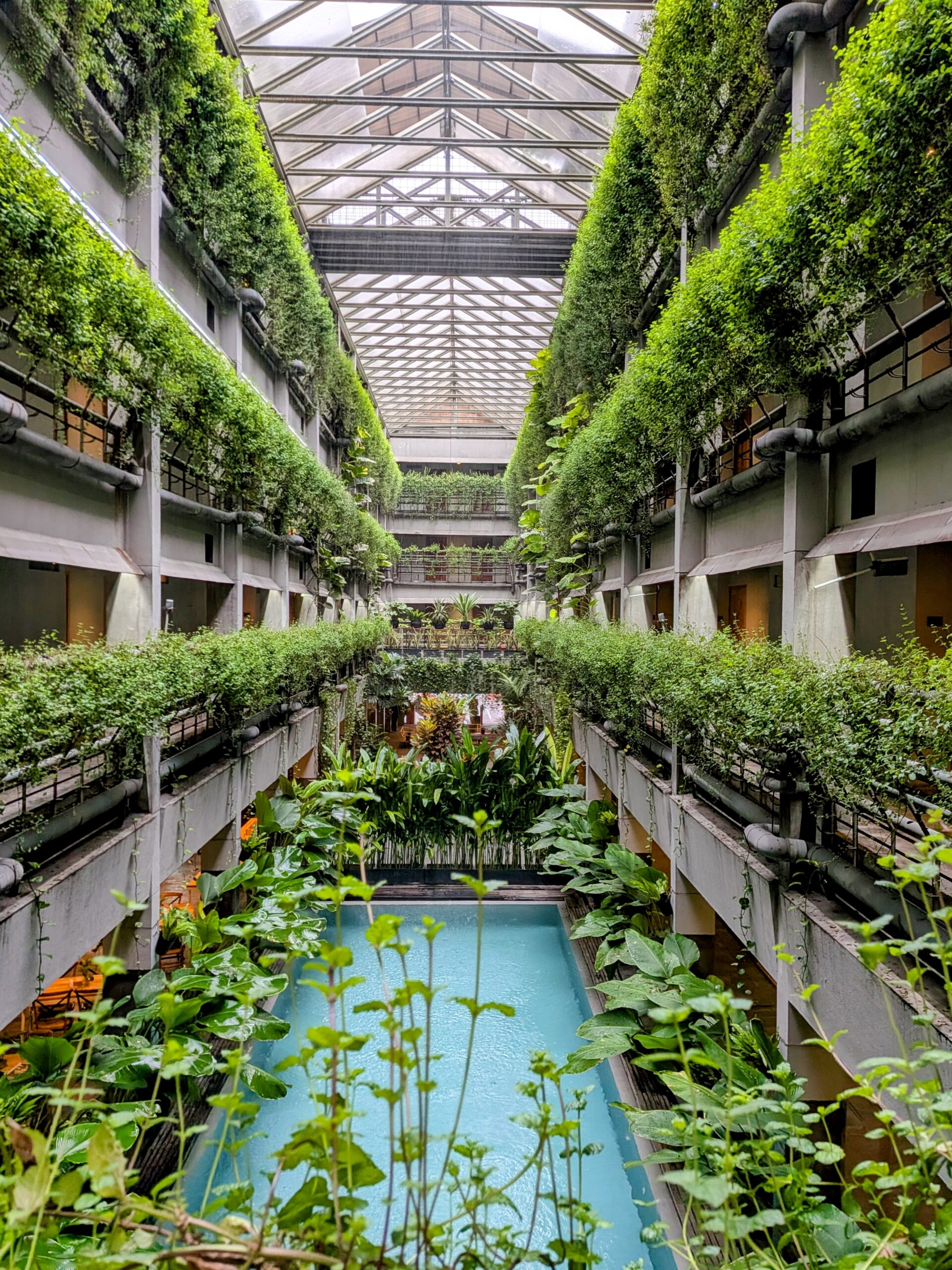
We checked into the Greenhost Hotel in the afternoon — one of the greenest lobbies I’ve ever walked into, a lush open-air space with a pool on the main floor surrounded by living plants that blurred the line between indoors and outdoors completely. Then the skies opened. We quickly learned this is simply what afternoons do in Indonesia at this time of year. The rains roll in, cool everything down, and give you an excuse to rest before the city comes back to life in the evening.
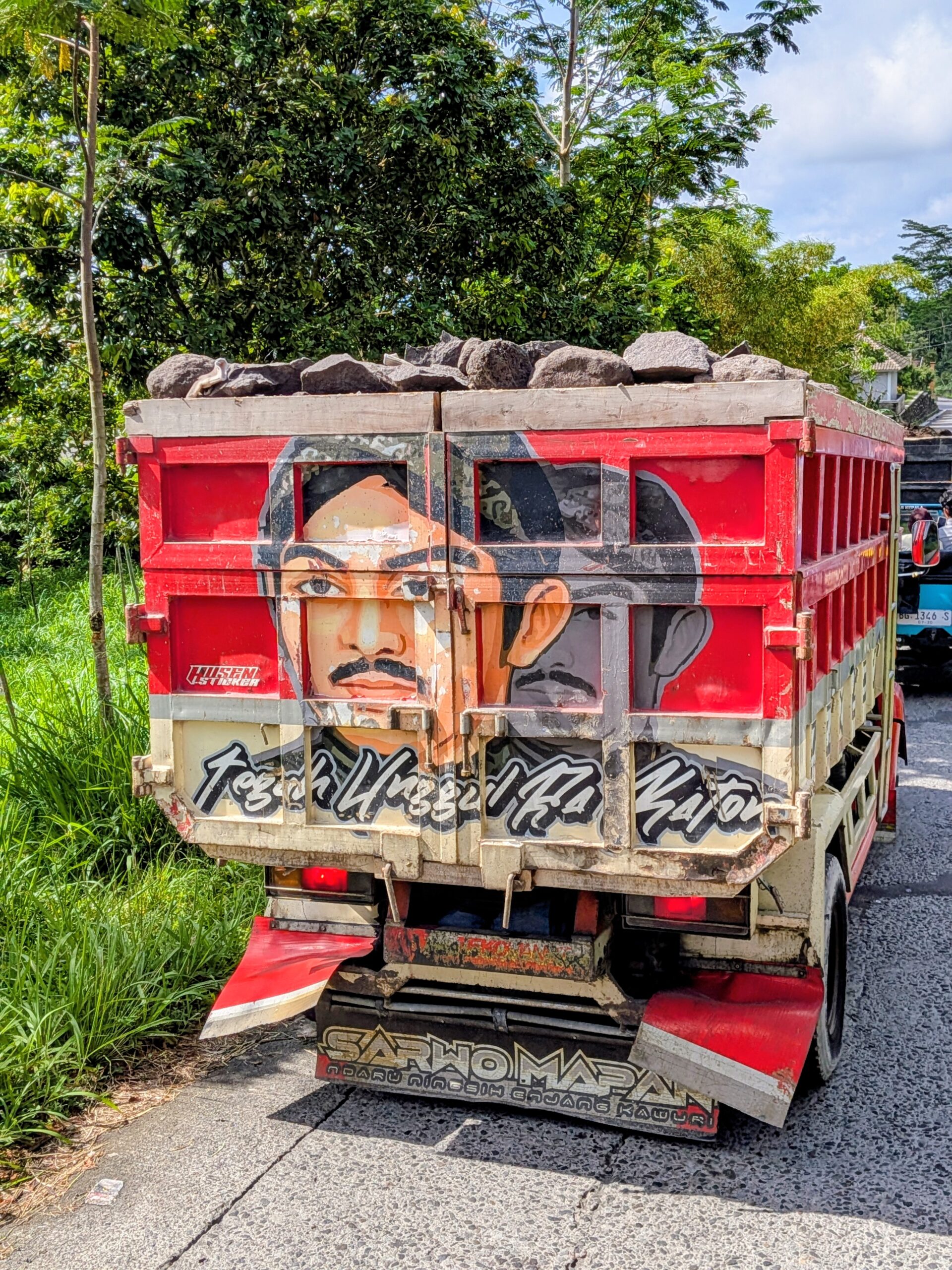
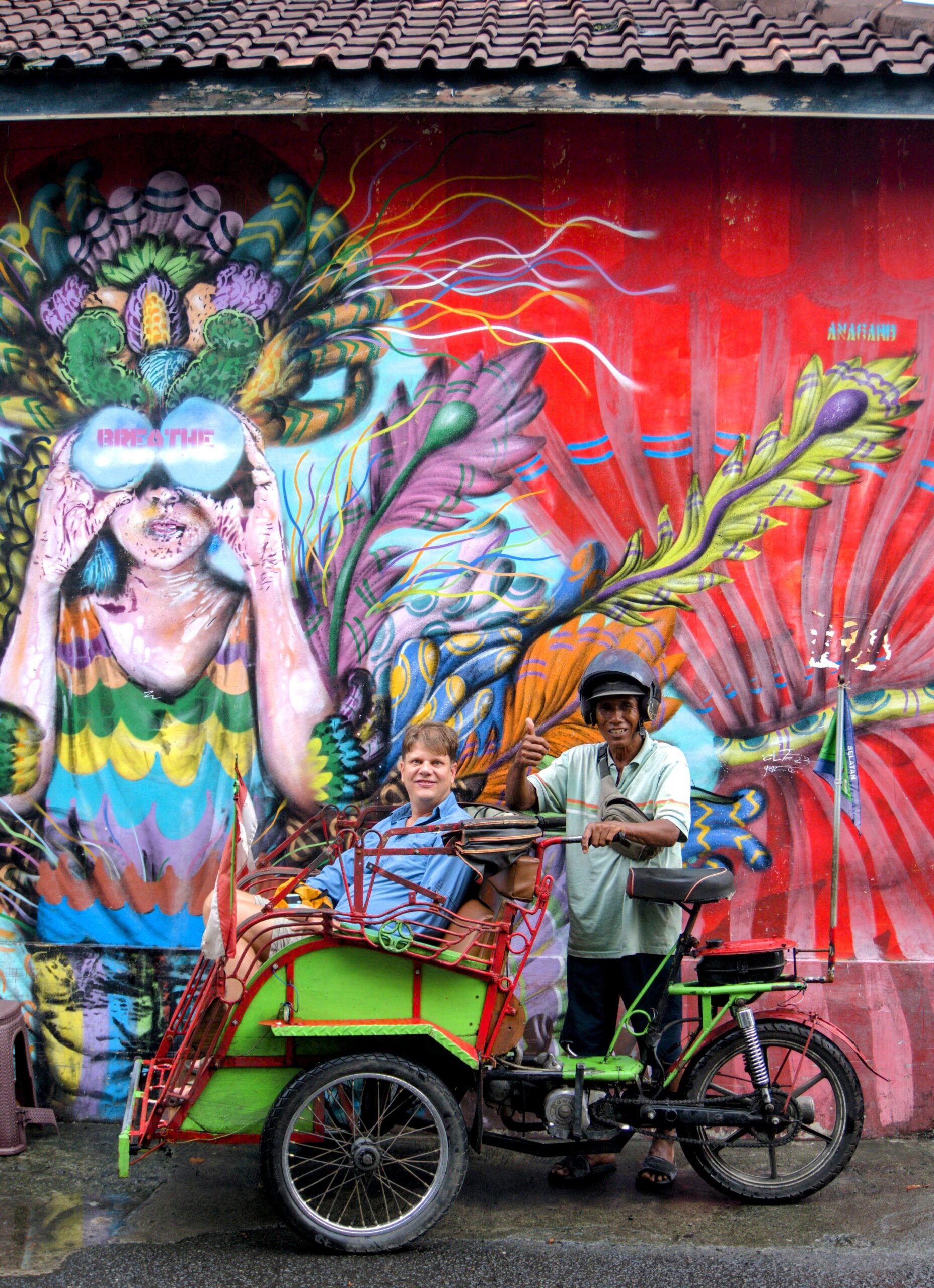
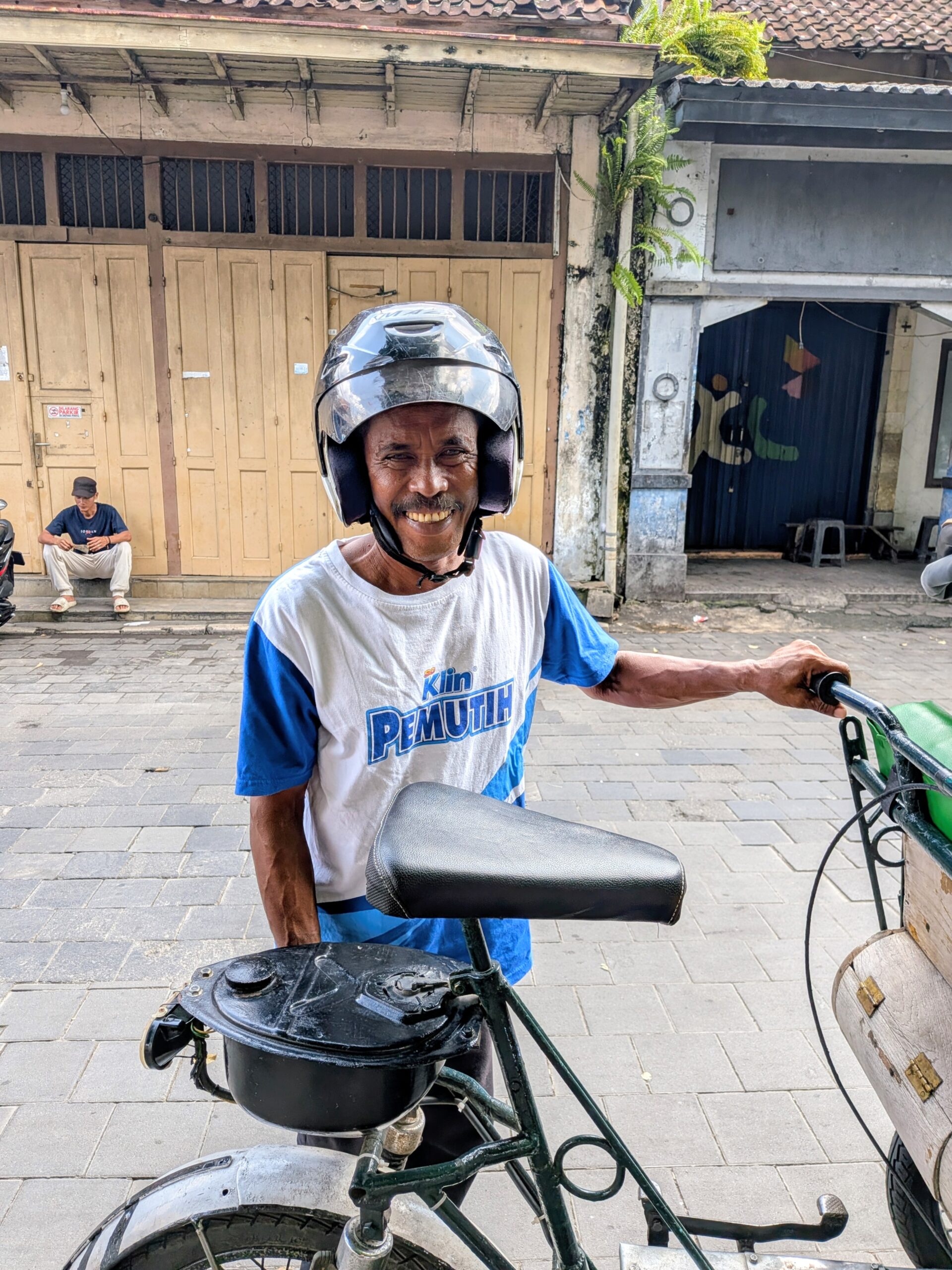
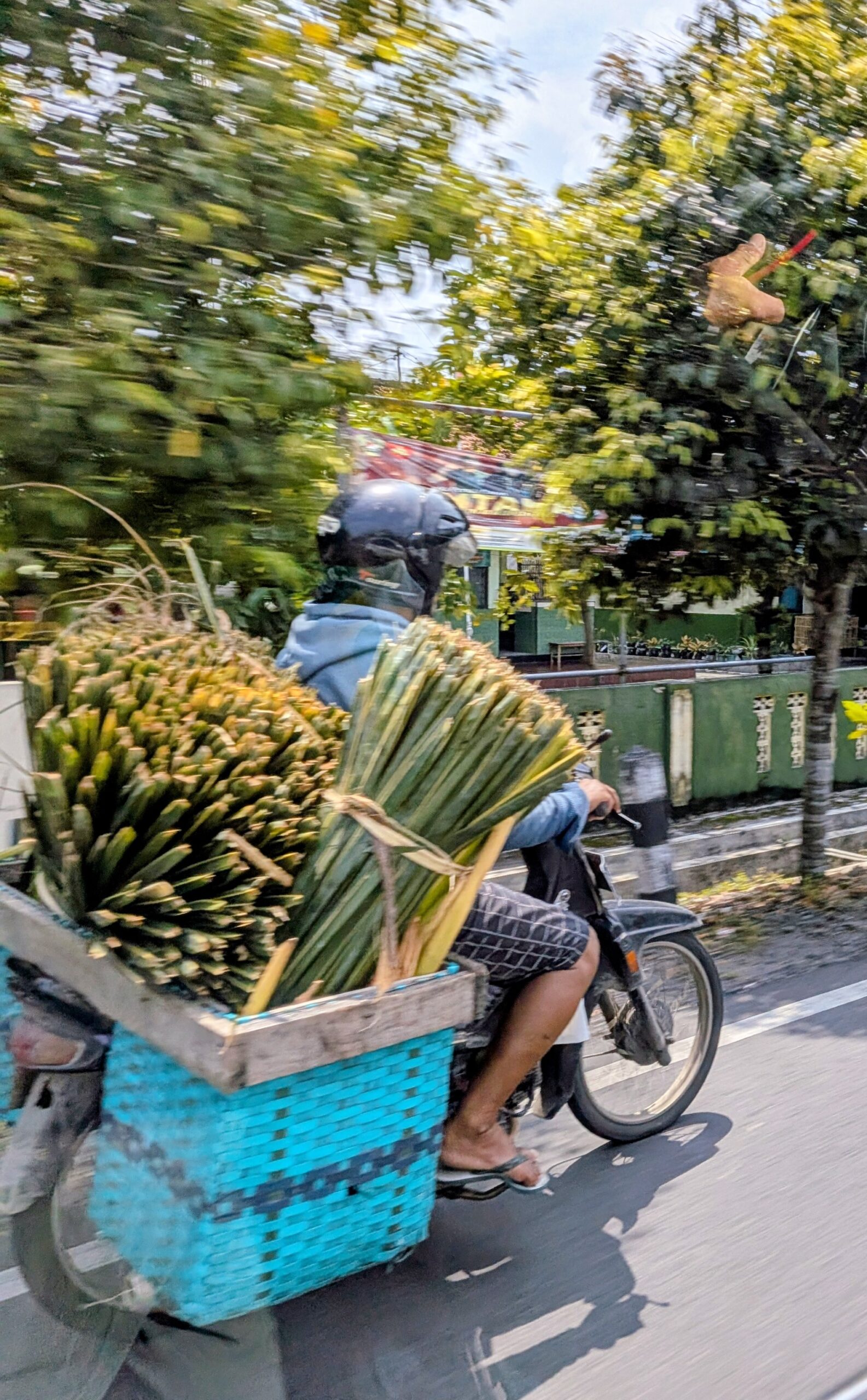
Getting around Yogyakarta the most fun way is by becak — rickshaws pulled by motorbikes that carry you through the city for around $3 a ride, open to all the sights, sounds, and smells of the streets. Indonesia runs on motorbikes, and the traffic operates on a logic I could not fully decode but which seemed to work perfectly well for everyone involved — weaving, merging, lanes treated as suggestions rather than rules. It is organized chaos, and somehow it moves.
2:30am: Borobudur at Sunrise
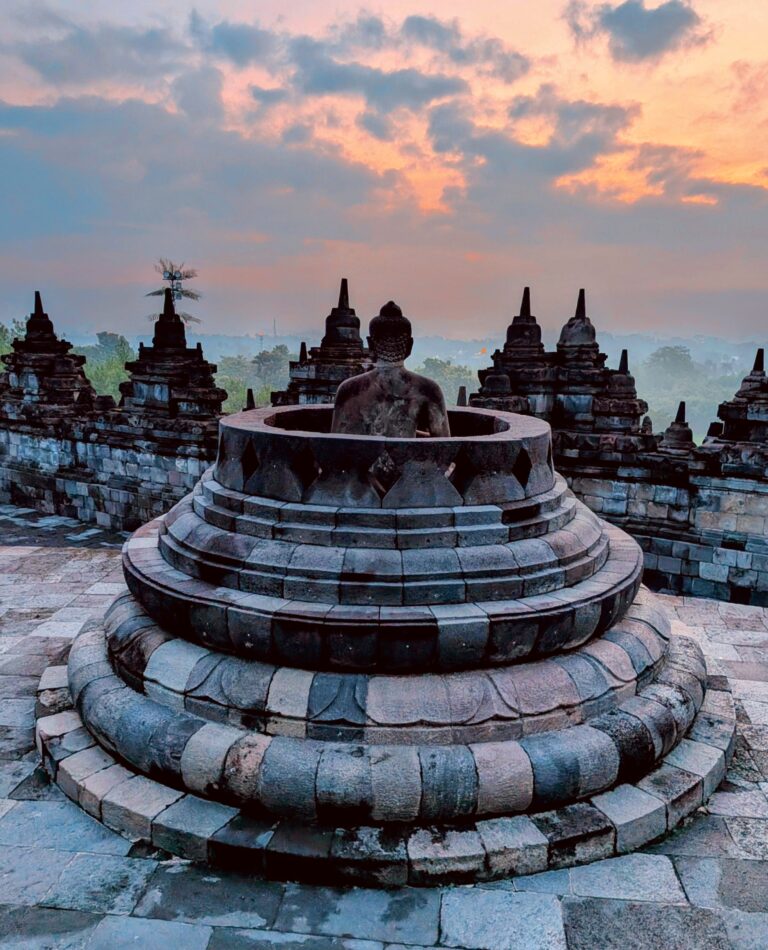
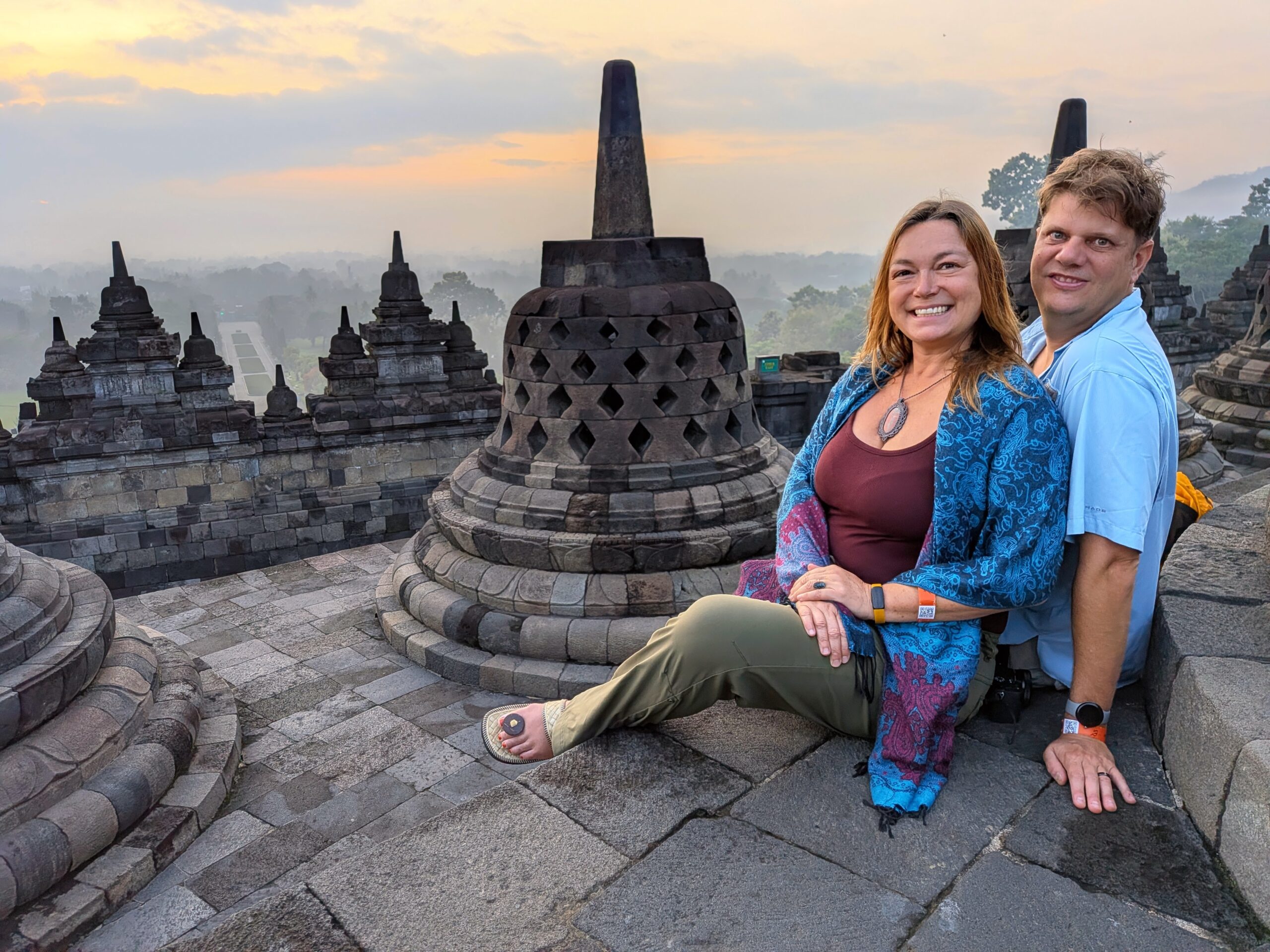
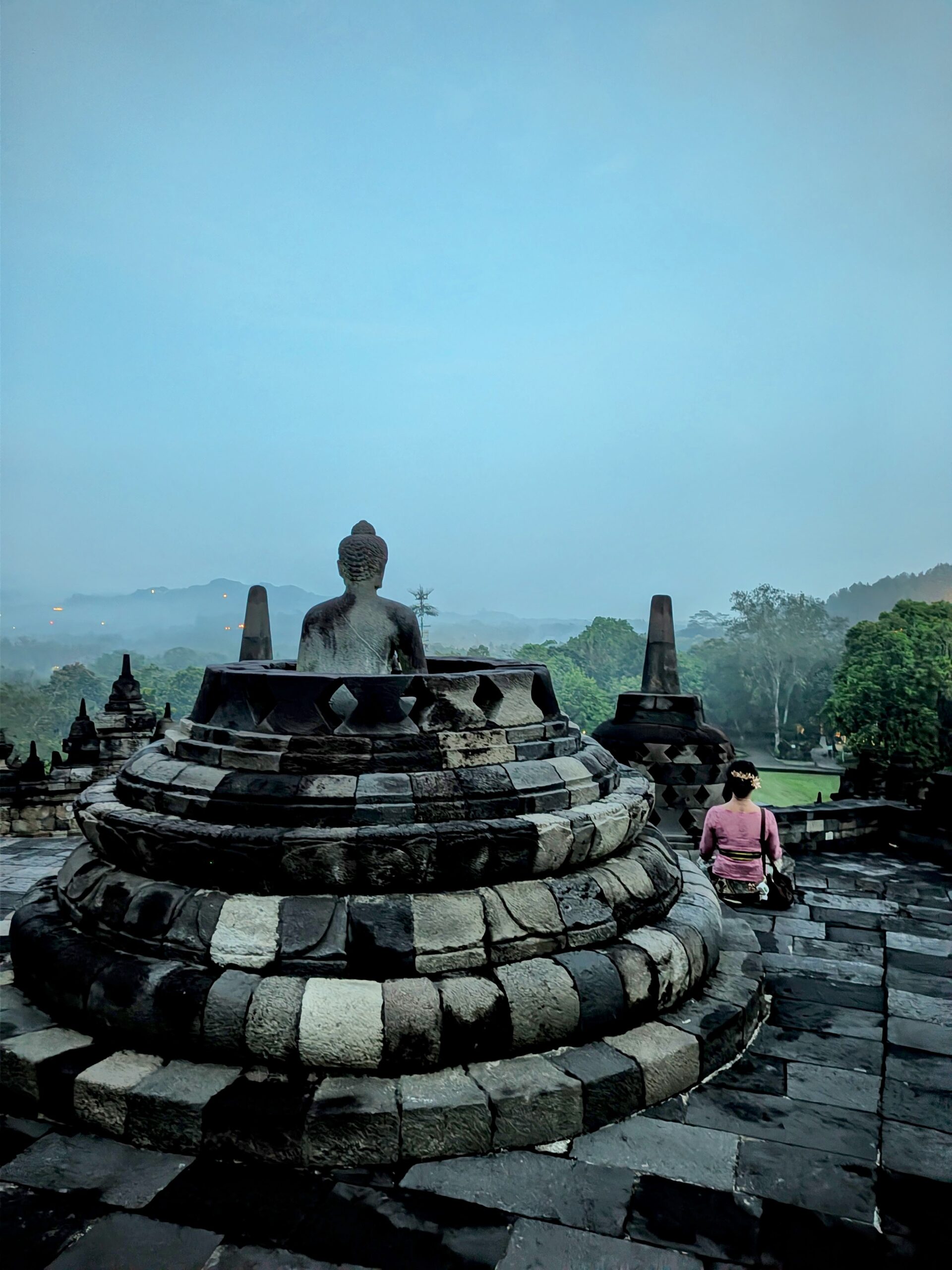
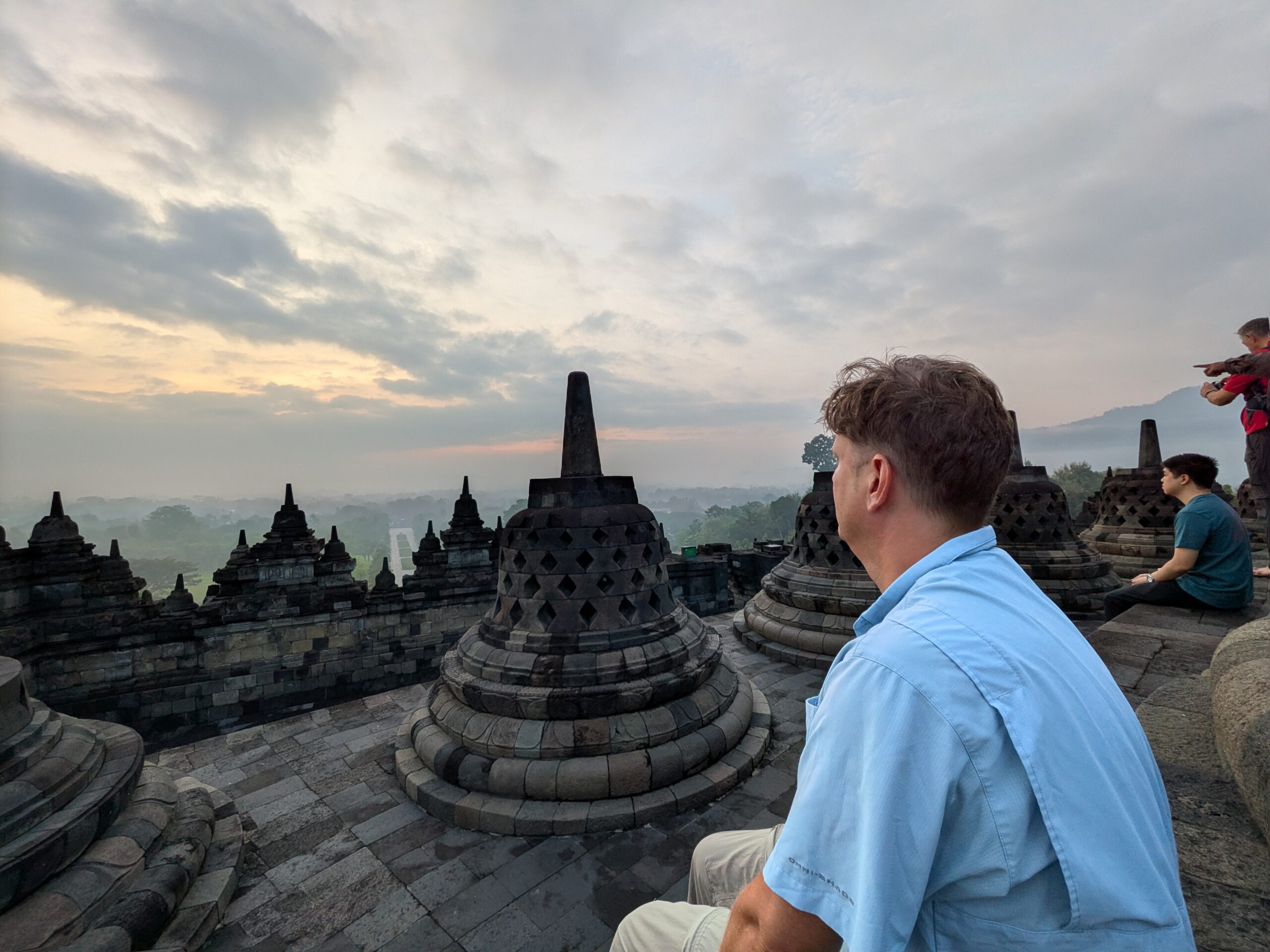
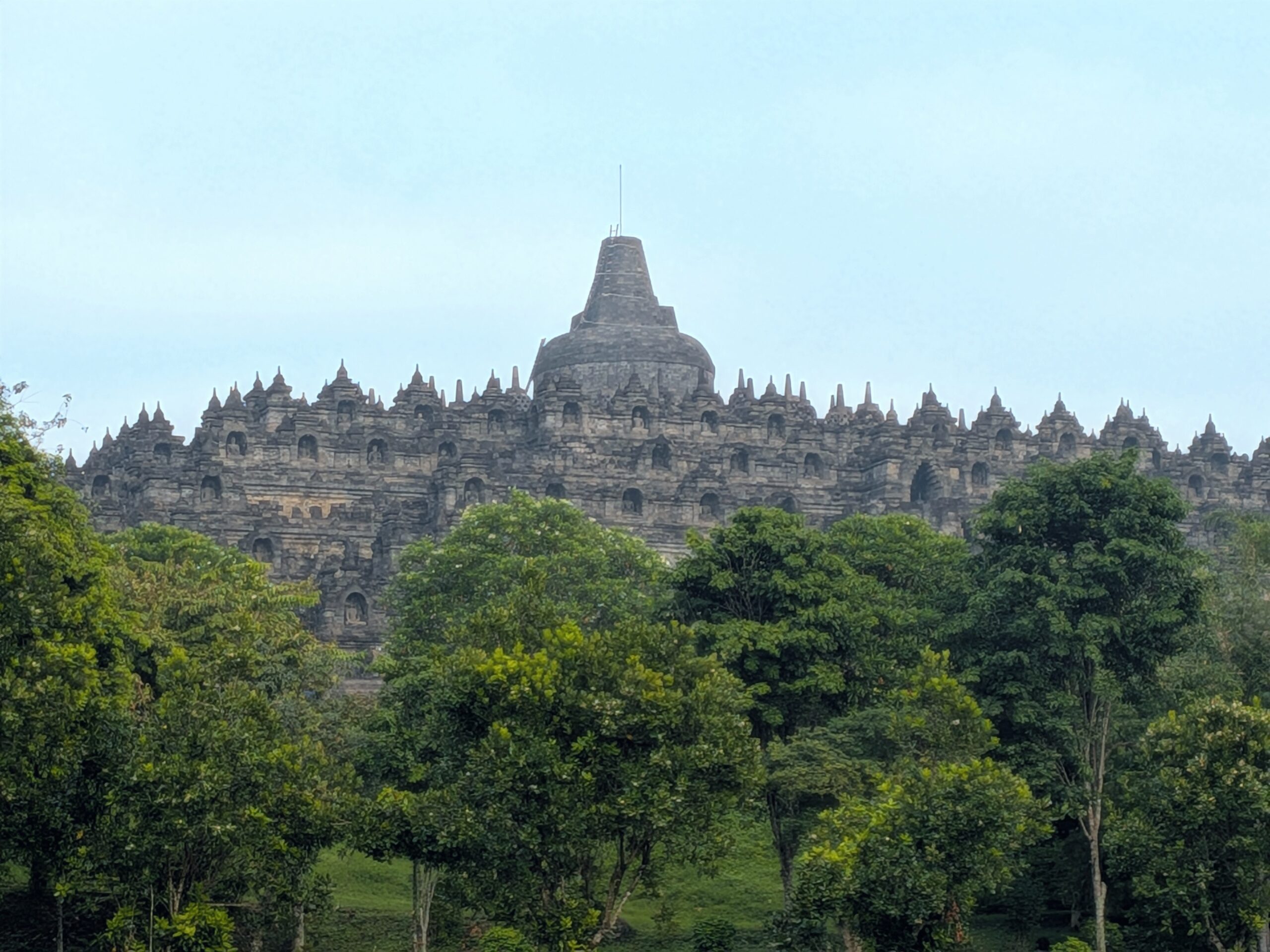
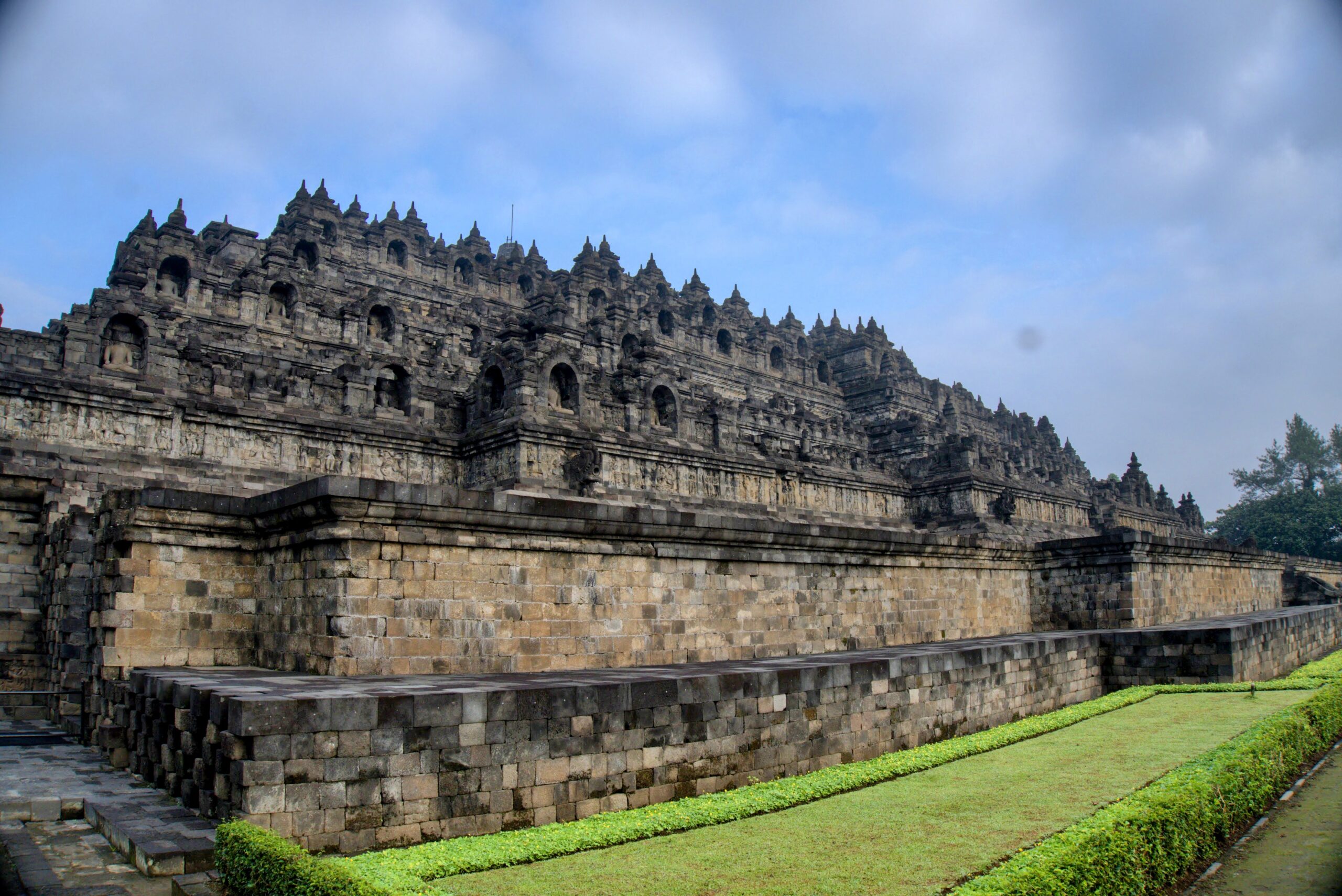
The alarm went off at 2am. We were picked up in the dark and driven to Borobudur — the largest Buddhist temple in the world, a 9th-century monument of staggering scale and beauty set in the volcanic landscape of Central Java. In the dark, arriving at the base of it, you can’t see much. You follow your guide up by feel and by trust, while he explains the history of a place that was built over 75 years, abandoned for centuries, and eventually rediscovered under volcanic ash and jungle.
Because the number of sunrise tickets is tightly limited, the experience never felt crowded — a rare gift for a site of this significance. As the light slowly came, the temple began to reveal itself. Stone stupas, hundreds of Buddha statues, intricate carved reliefs that circle the monument in an ascending journey toward enlightenment — all of it emerging from the darkness in the most gradual and moving way. We positioned ourselves and hoped the clouds would cooperate.
They did not. The sunrise was obscured, a morning of cloud and soft light rather than the dramatic colors we’d hoped for. And yet it didn’t matter. Being present in that place — one of the great sacred sites on earth — as the world woke up around it was its own kind of extraordinary. Some experiences don’t need perfect weather.
Taman Sari: The Sultan’s Water Castle
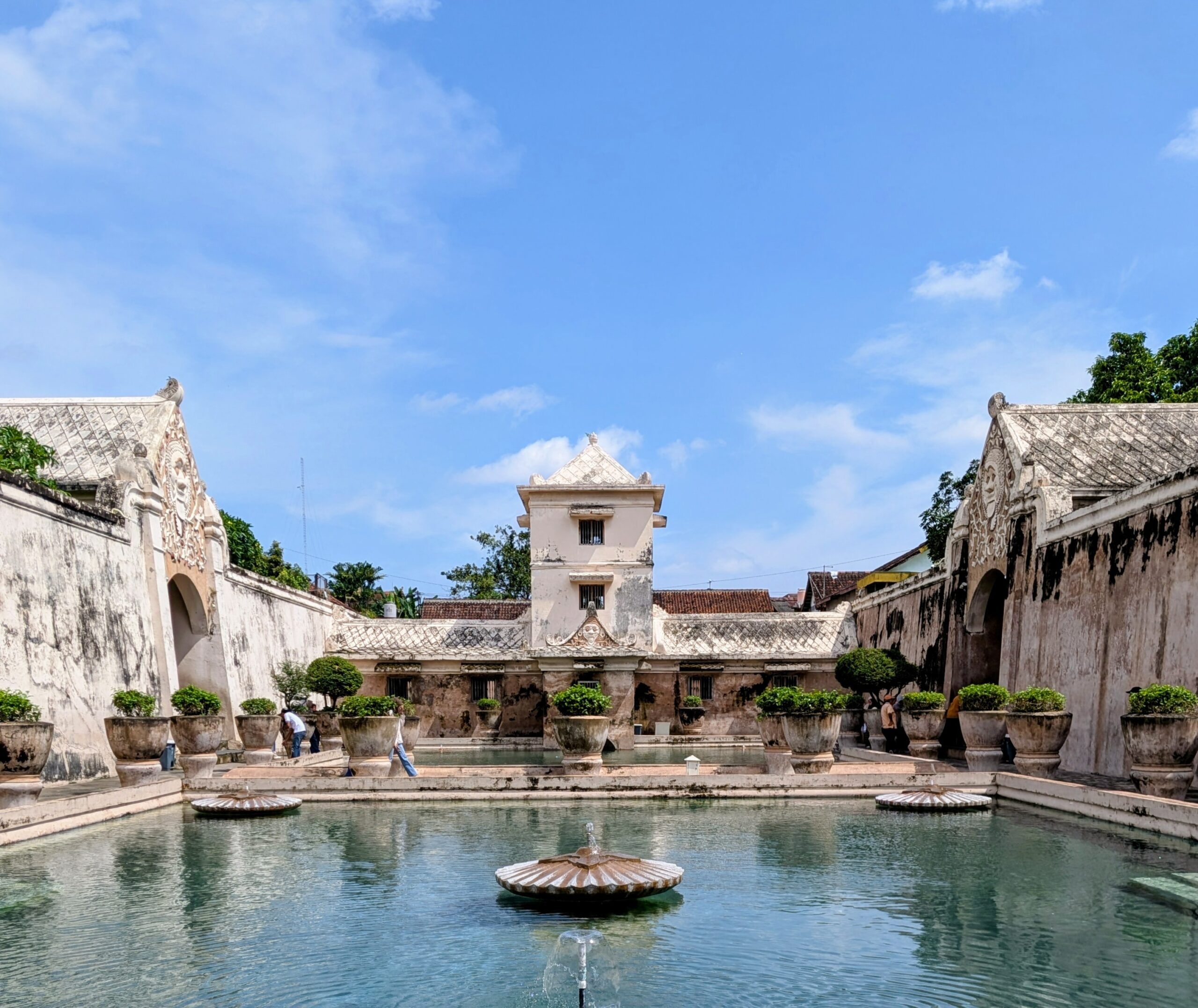
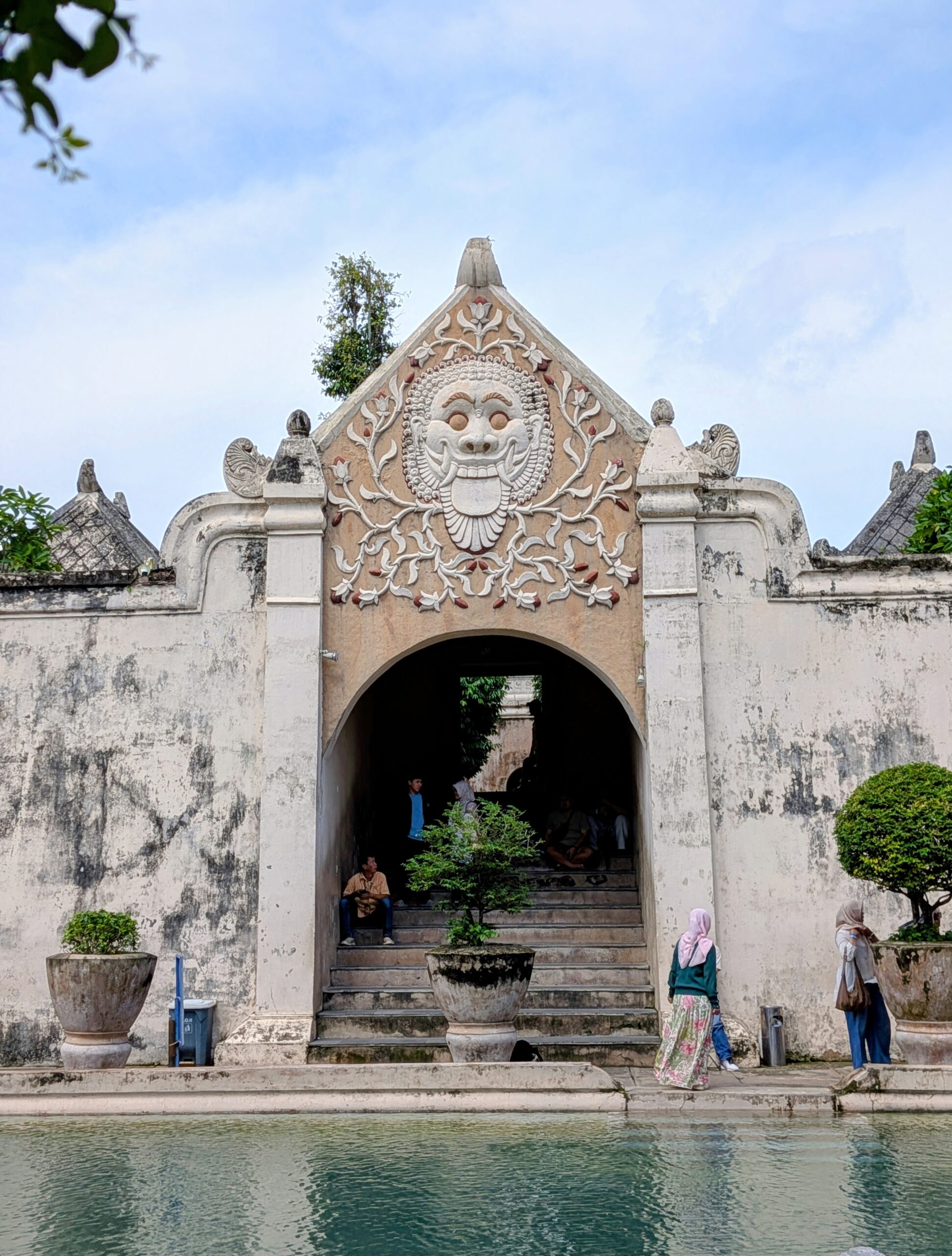
Back in the city and rested, we made our way to Taman Sari — the Water Castle — one of Yogyakarta’s most enchanting historical sites.
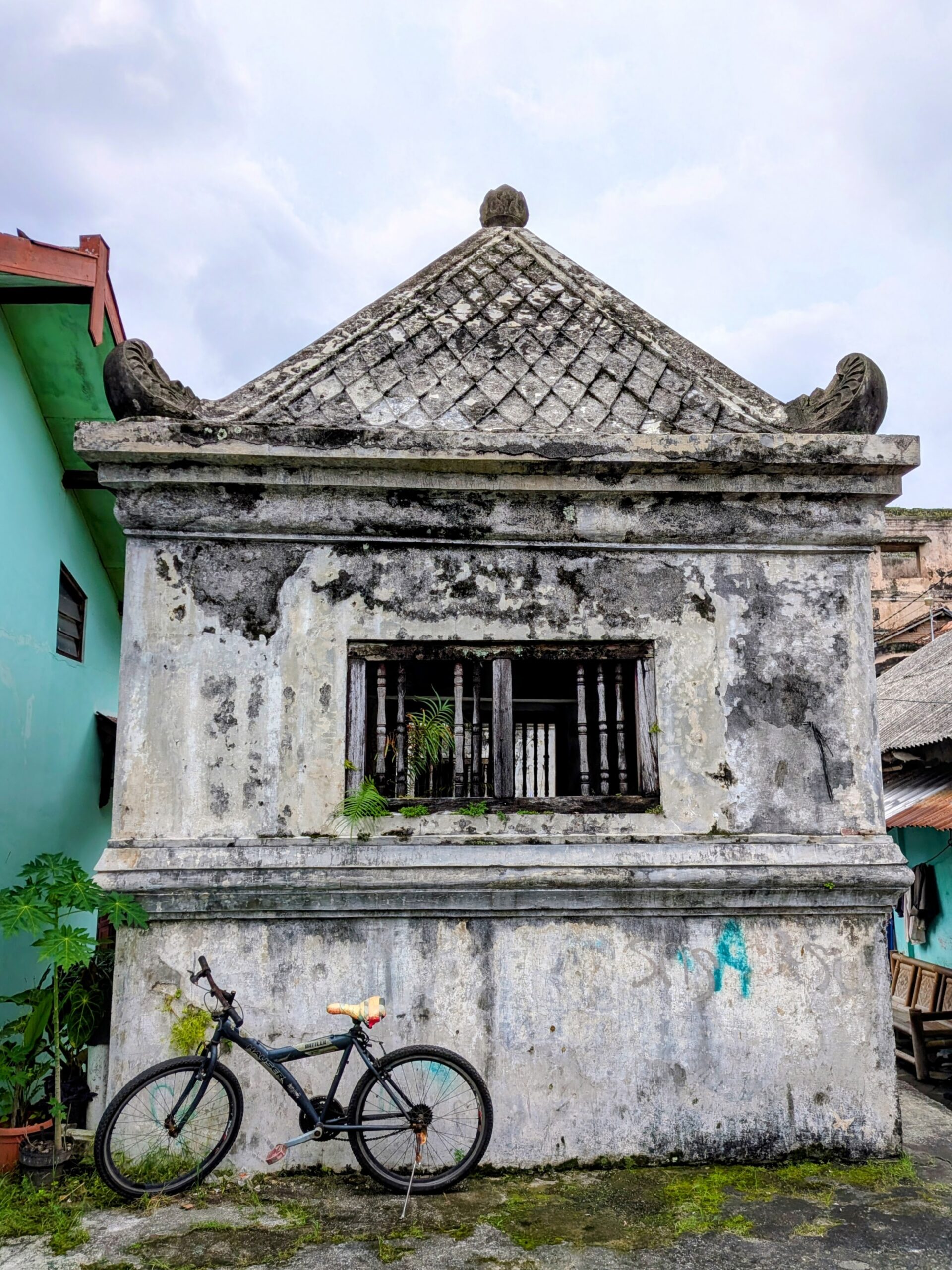
Taman Sari was built in 1758 under Sultan Hamengkubuwono I, the first sultan of the Yogyakarta Sultanate, as a royal garden and pleasure complex. The name comes from the Javanese words for “beautiful garden” — taman meaning garden, sari meaning beautiful or flower. The complex was designed as a private retreat where the sultan and his family could rest, meditate, and shelter in times of danger, and it featured an elaborate hydraulic system that could flood the surrounding grounds, leaving the tall structures rising from the water like an island fortress. Around it, a whole neighborhood called Kampung Taman has grown up within the old walls, and wandering into those lanes becomes its own experience.
The Market, the Alleys, and the Birds
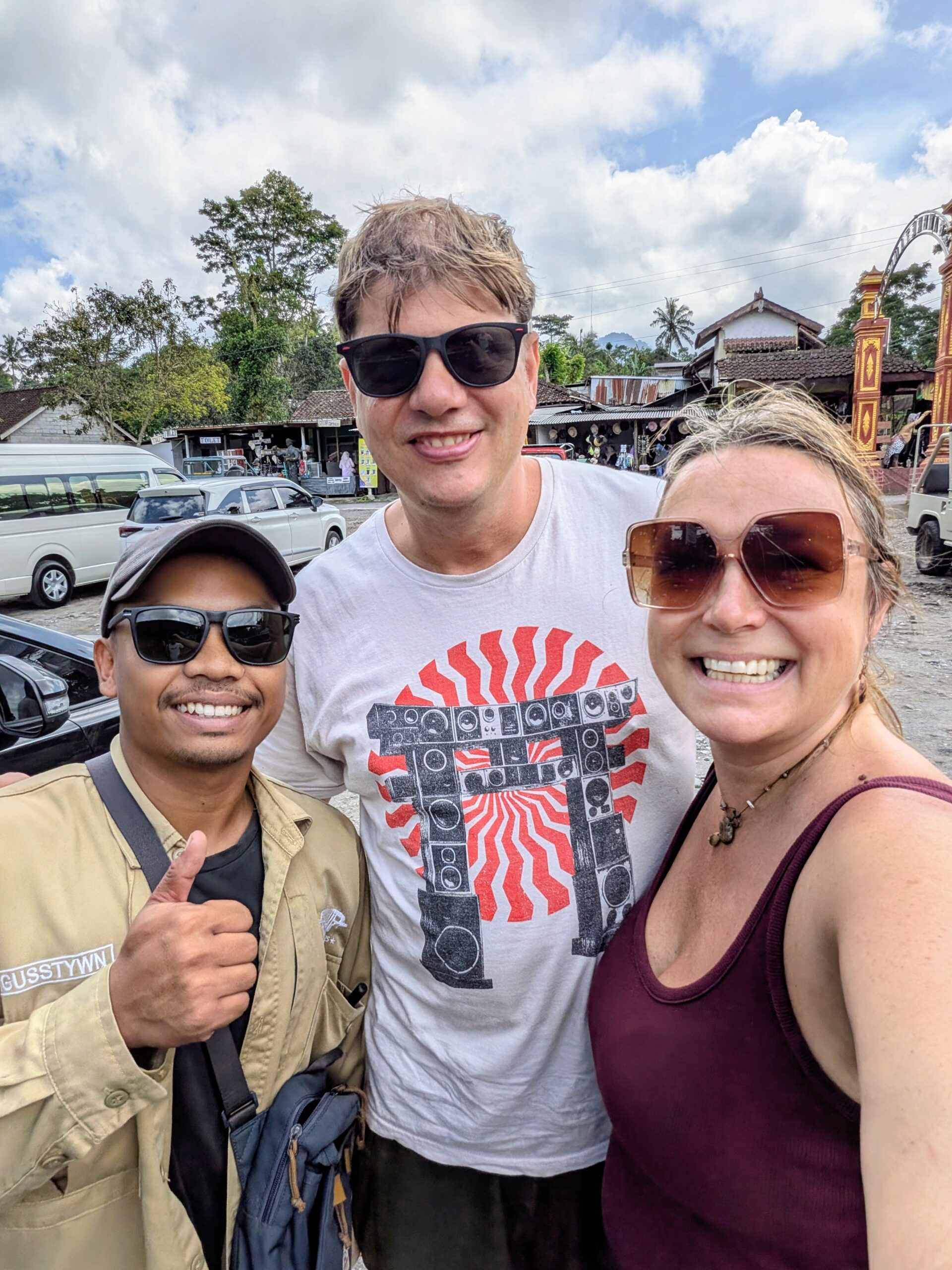
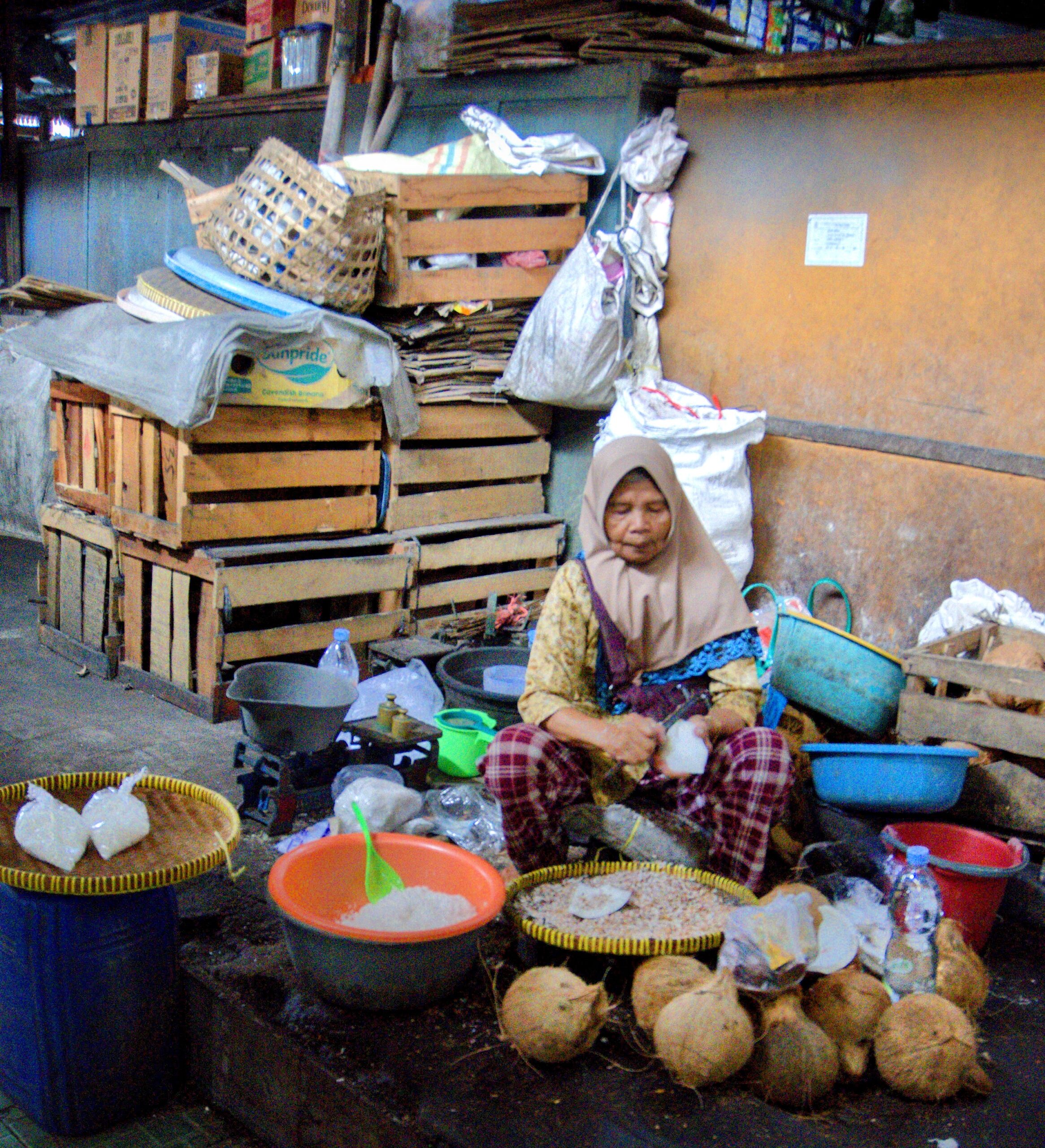
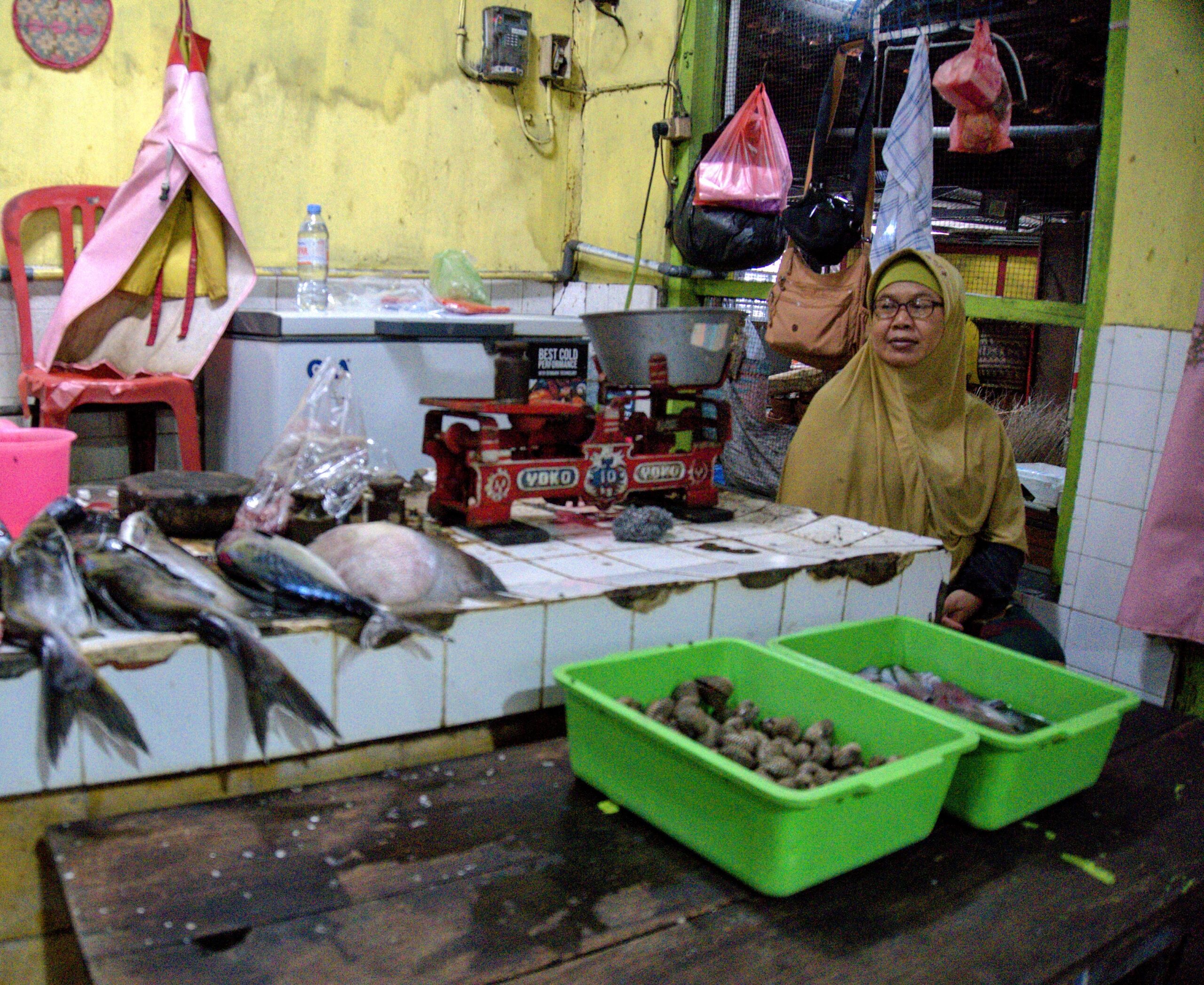
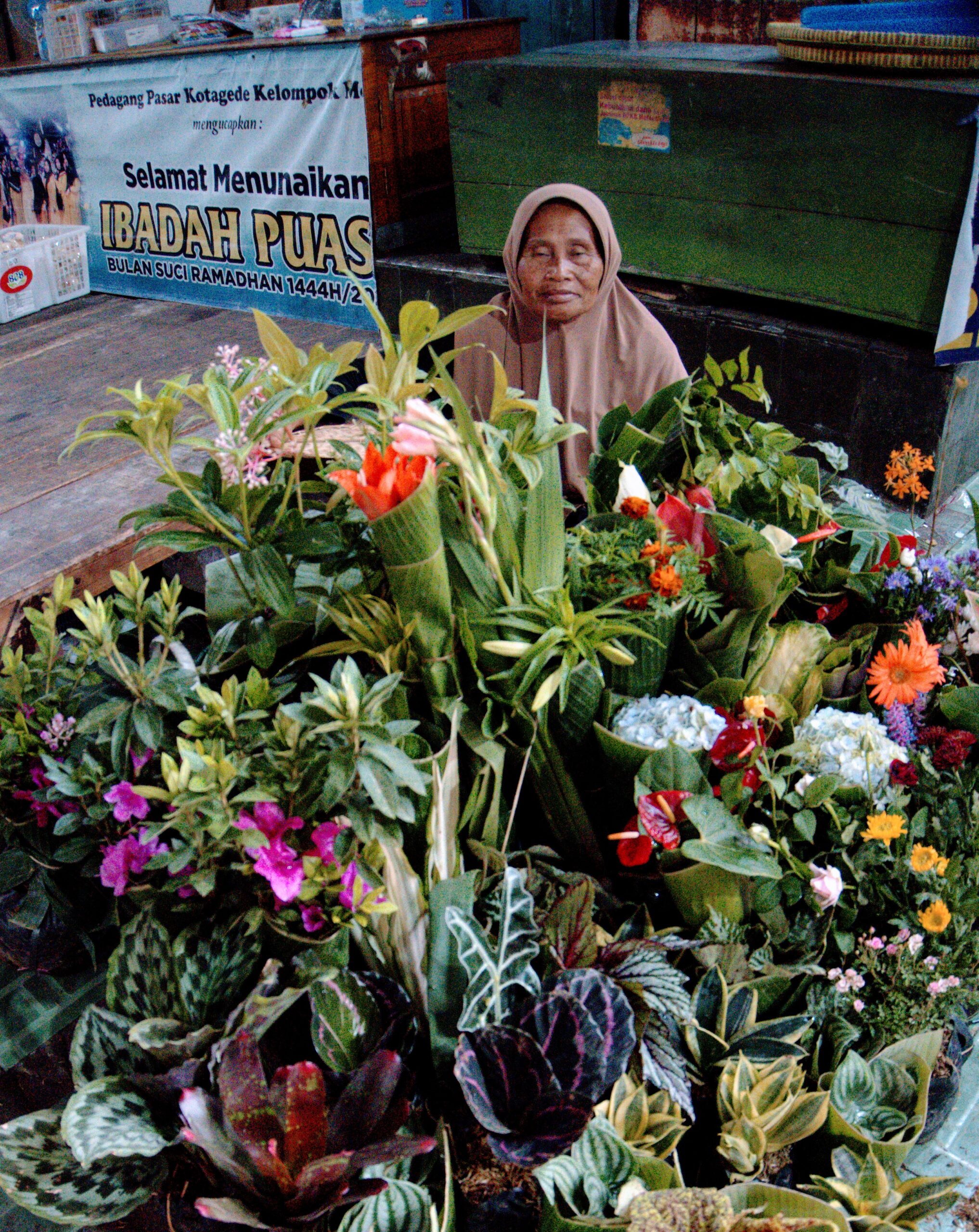
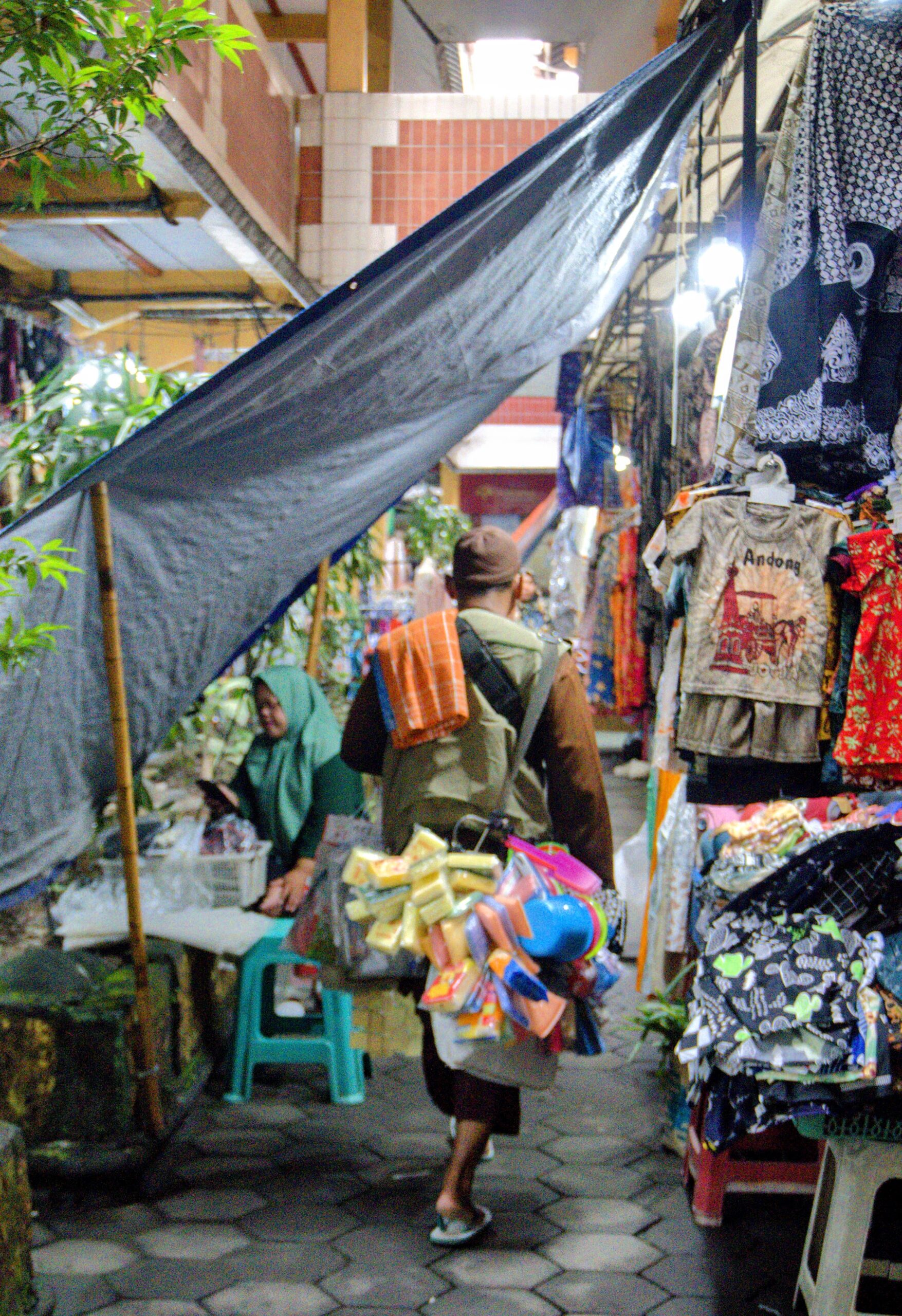
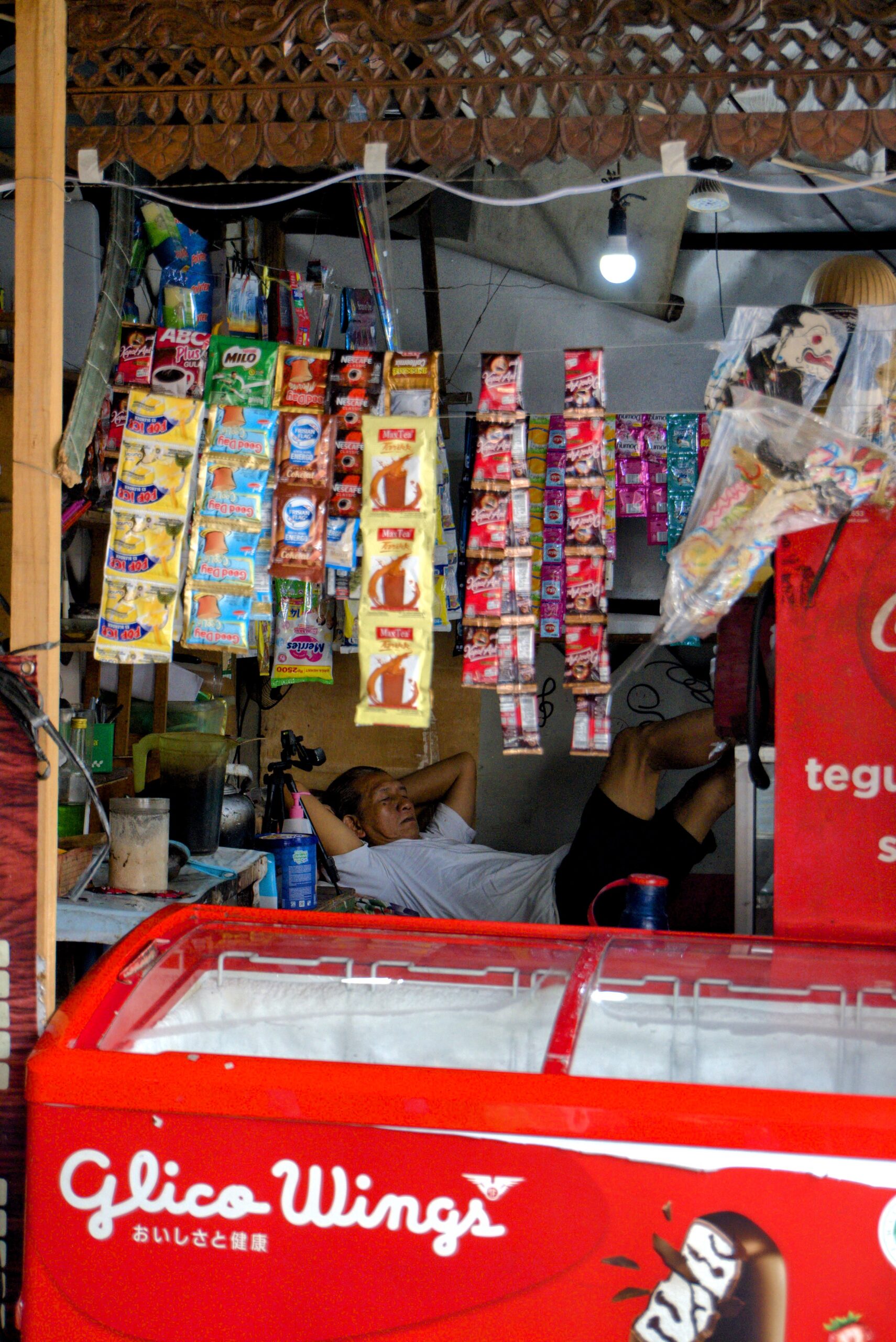
The next morning we started at the Kotagede Traditional Market. By this point we had learned a few Indonesian greetings, and walking through the stalls calling out Selamat pagi — good morning — to the vendors, most of them local women, was one of the warmest and most immediate connections of the whole trip. The response came back instantly: Pagi! Pagi! As the only westerners in the market, we were received with genuine warmth and delight — the Indonesian people throughout the entire trip have been exactly this: open, smiling, generous with their welcome.
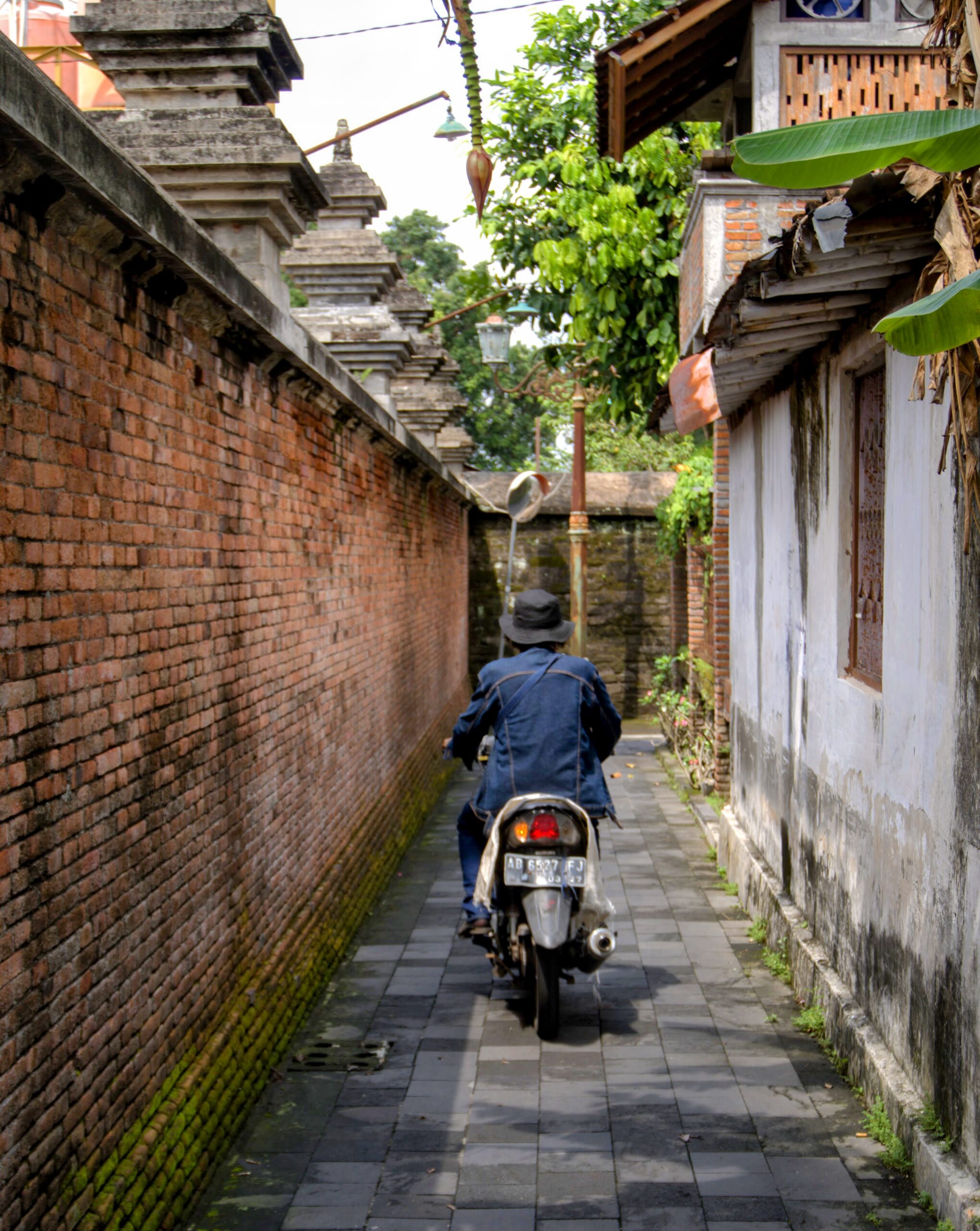
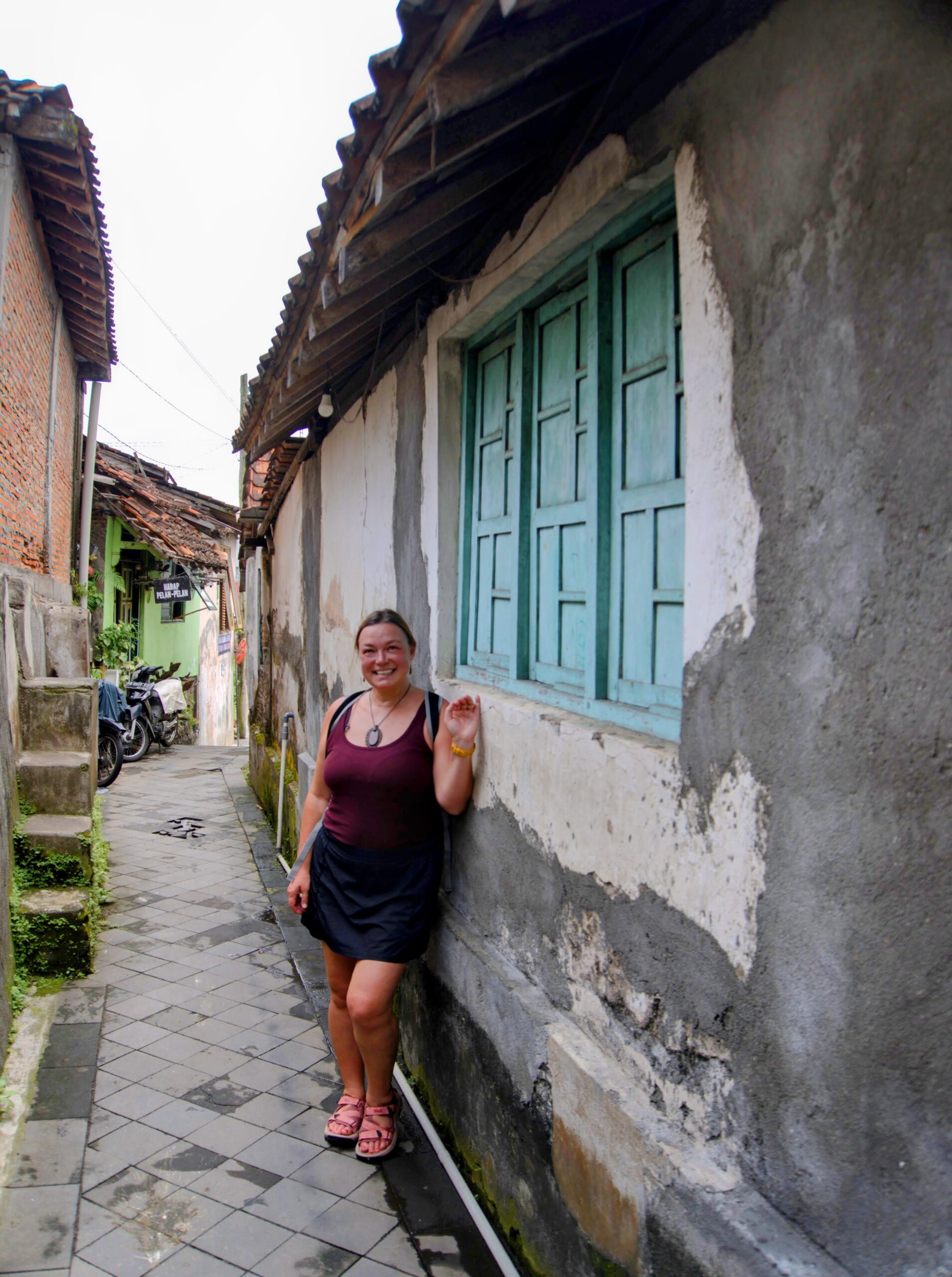
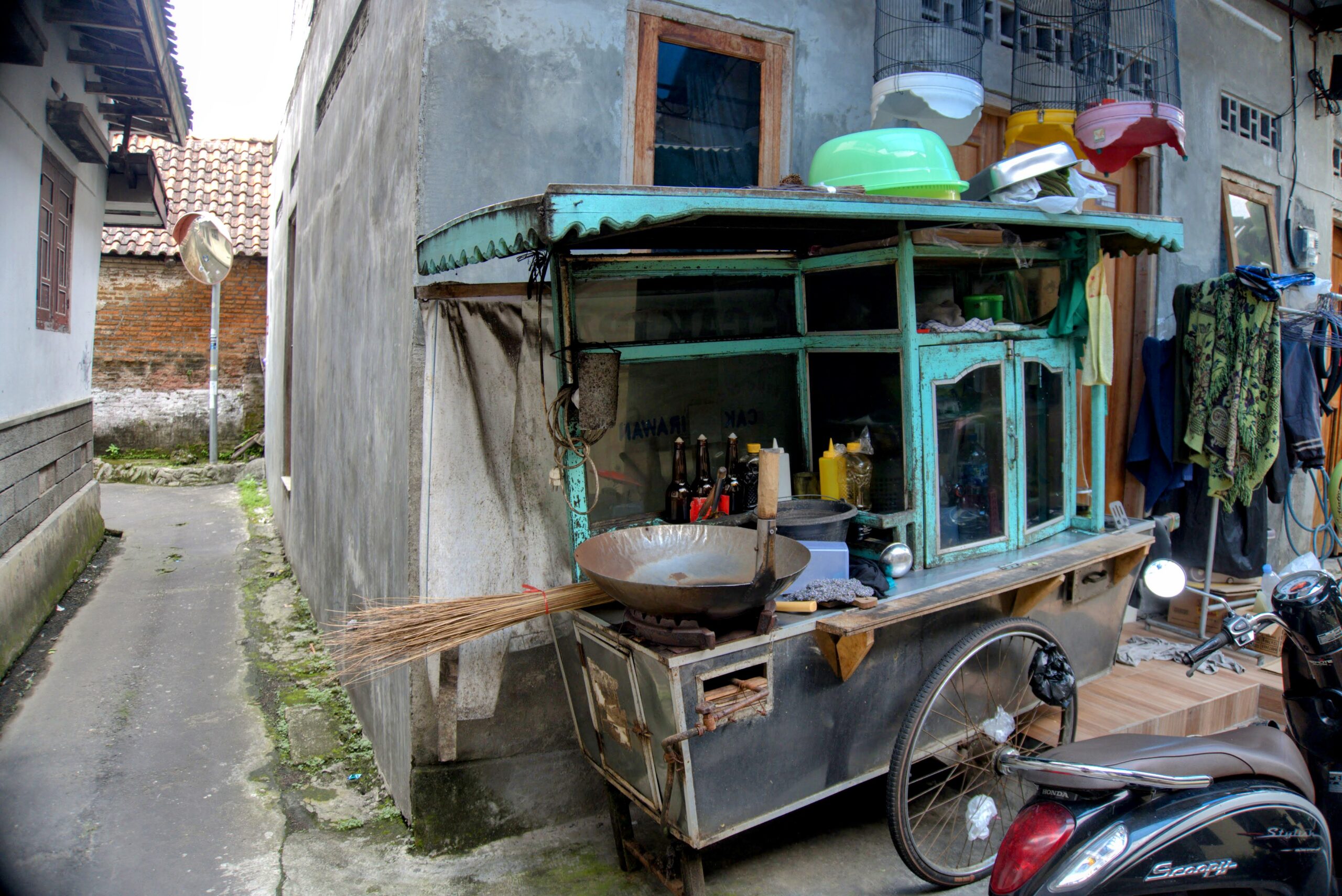
After the market we got happily lost in the surrounding alleys, wandering into the neighborhood life around it. The calls to prayer drifted over the rooftops — by this point a sound we had grown deeply accustomed to and found unexpectedly soothing, a rhythm of the day rather than an interruption of it. Motorbikes threaded through lanes barely wide enough for them. People greeted us as we passed.
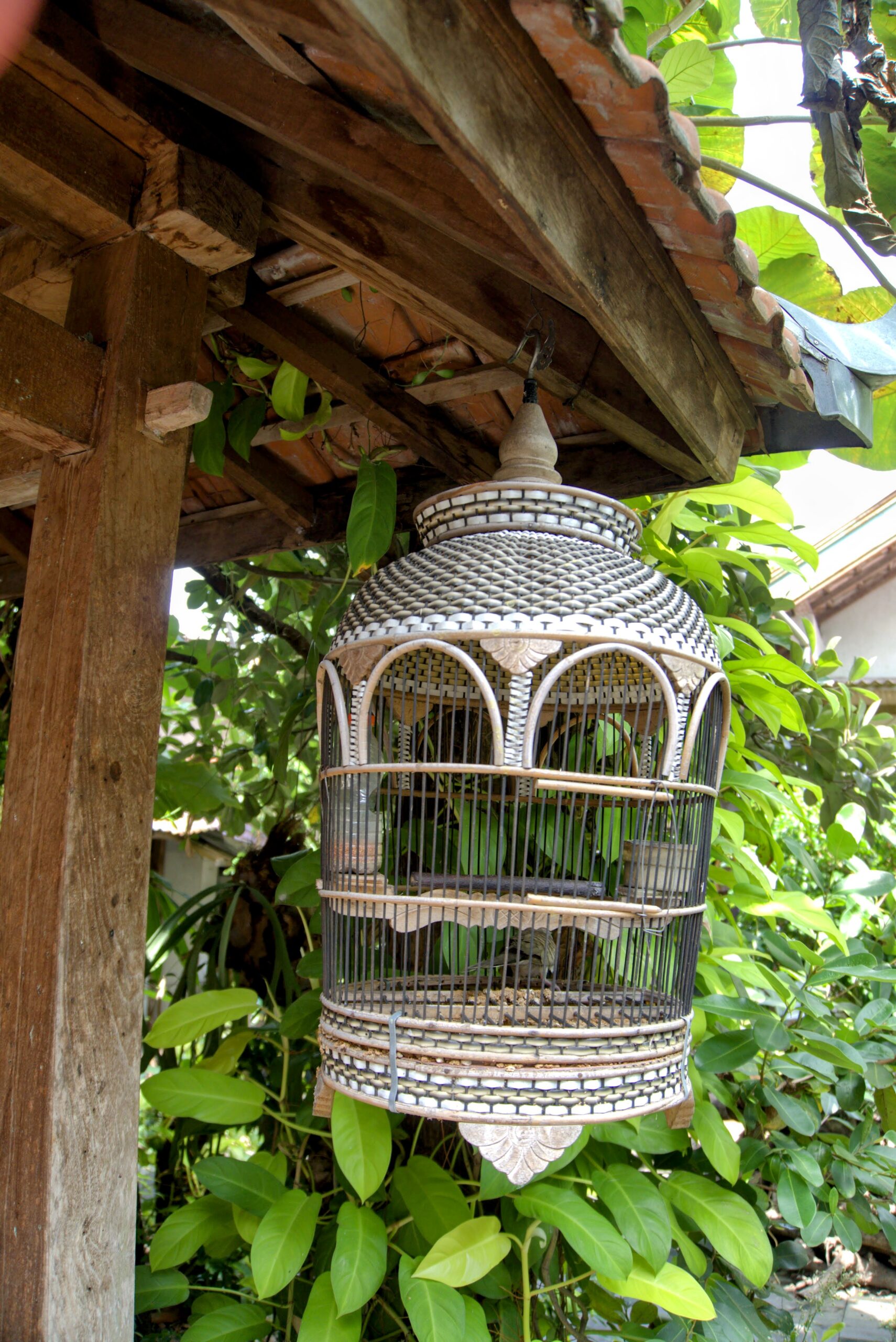
One thing you notice everywhere in Yogyakarta is the bird cages. They hang outside homes and shops throughout the city, often suspended high on poles or from eaves, and they are part of a tradition that runs deep in Javanese culture. The songbirds represent status, prosperity, and a kind of cultivated sensitivity — the idea that a man who can appreciate the beauty of birdsong has achieved something worthwhile in life.
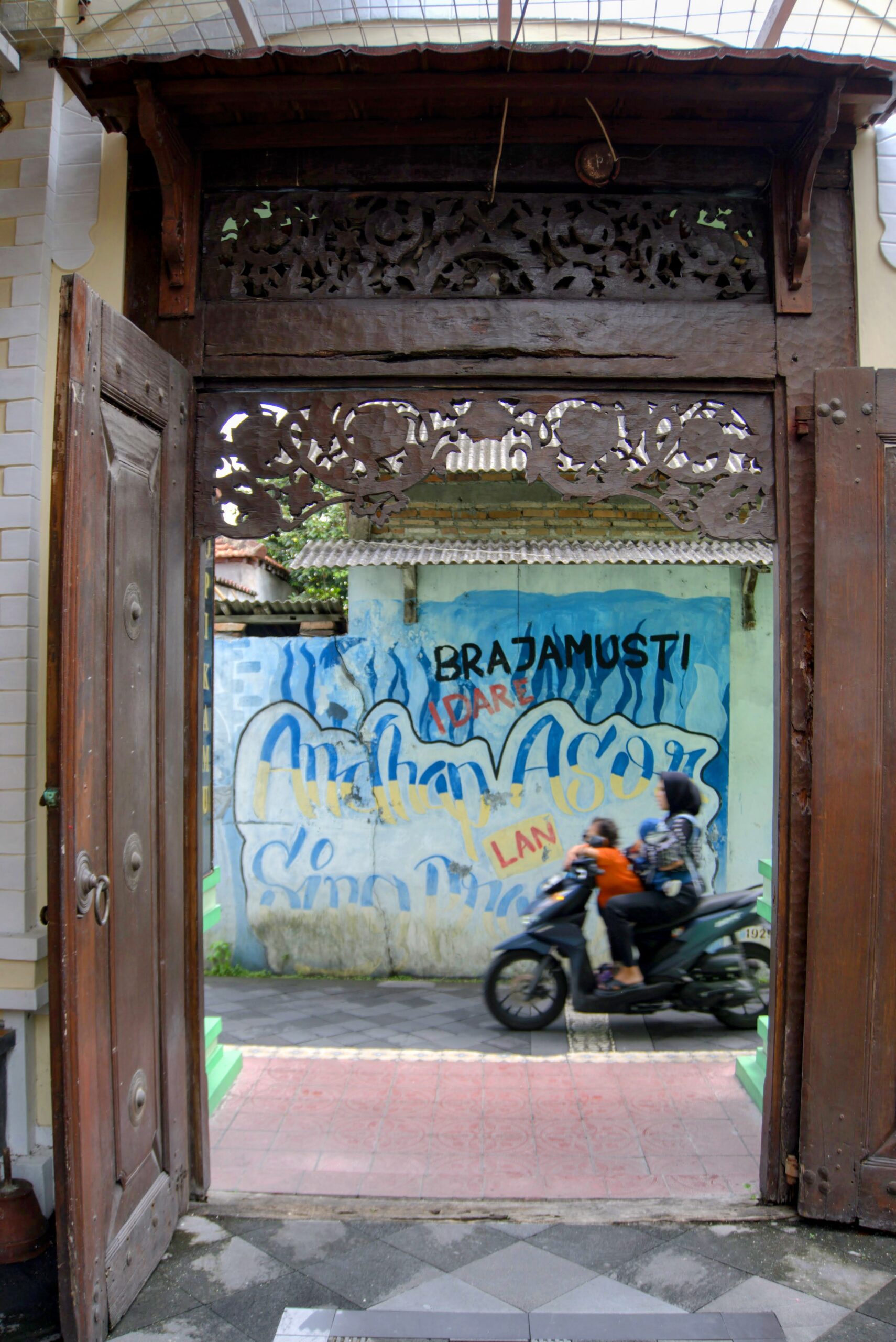
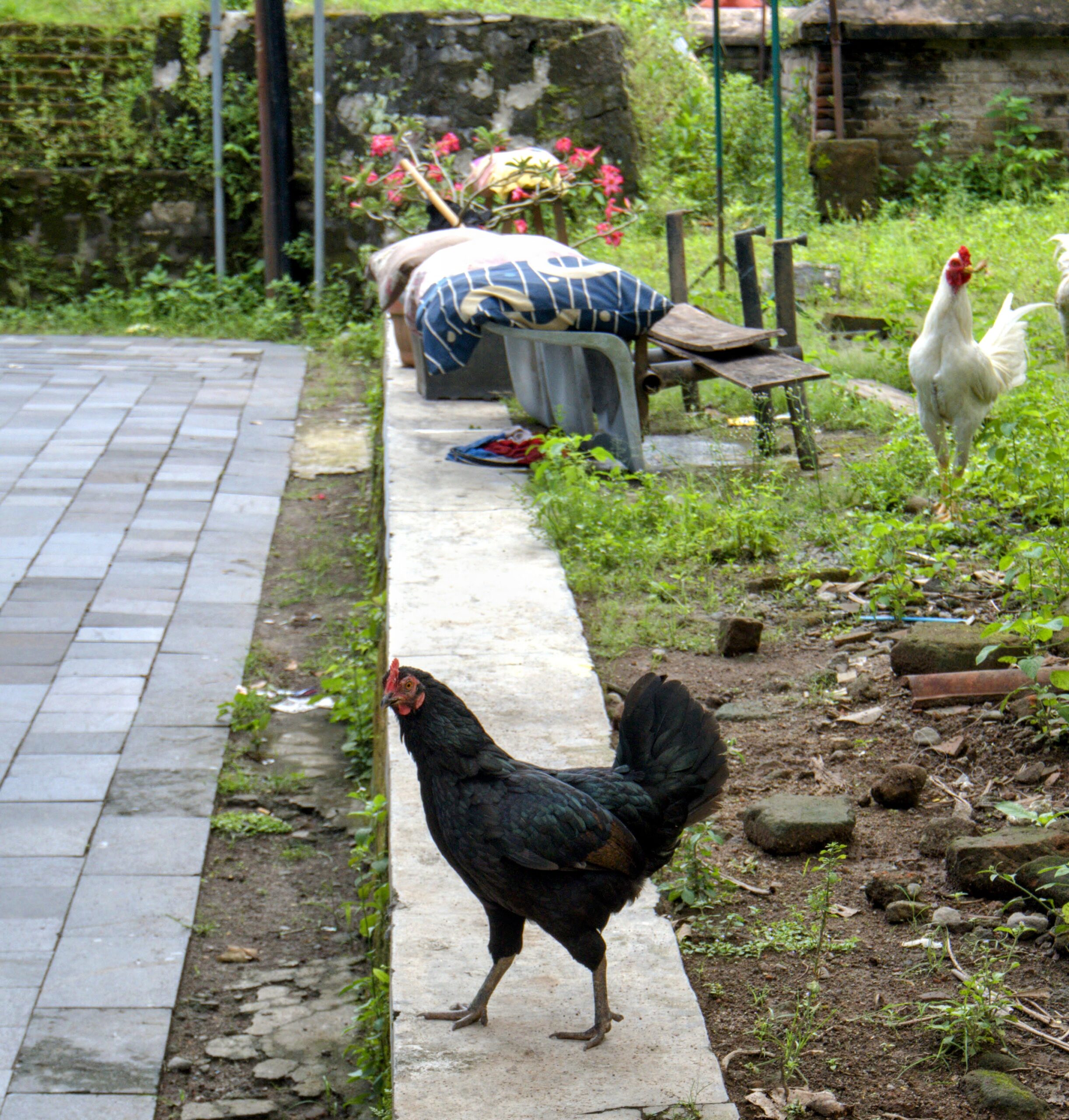
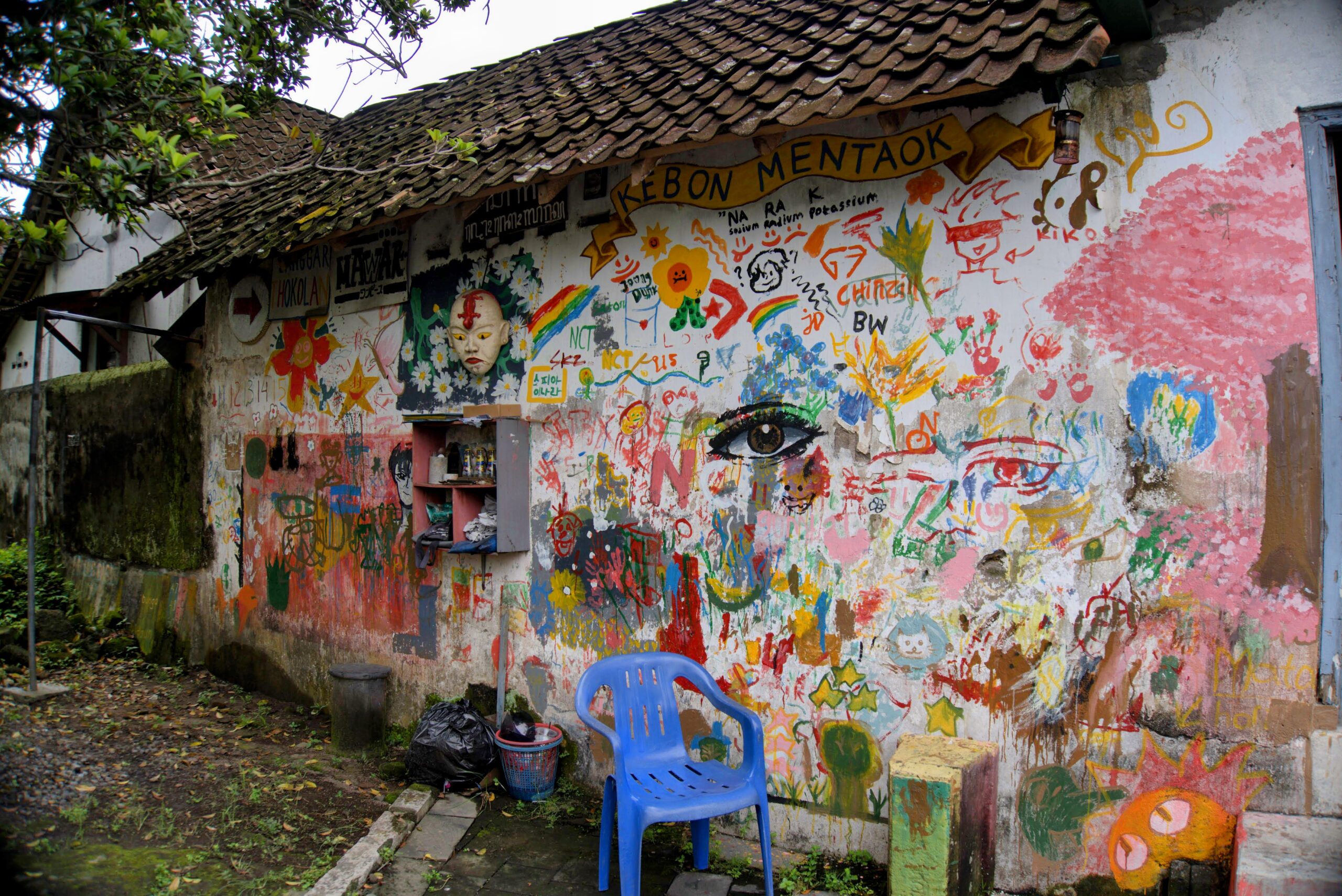
Roosters and chickens roamed freely around the alleys, often with small chicks trailing behind them. Street art and murals splashed color across the walls everywhere we looked — Yogyakarta has a vibrant public art culture and the evidence of it is on nearly every surface.
The Drag Cabaret at Hamzah Batik
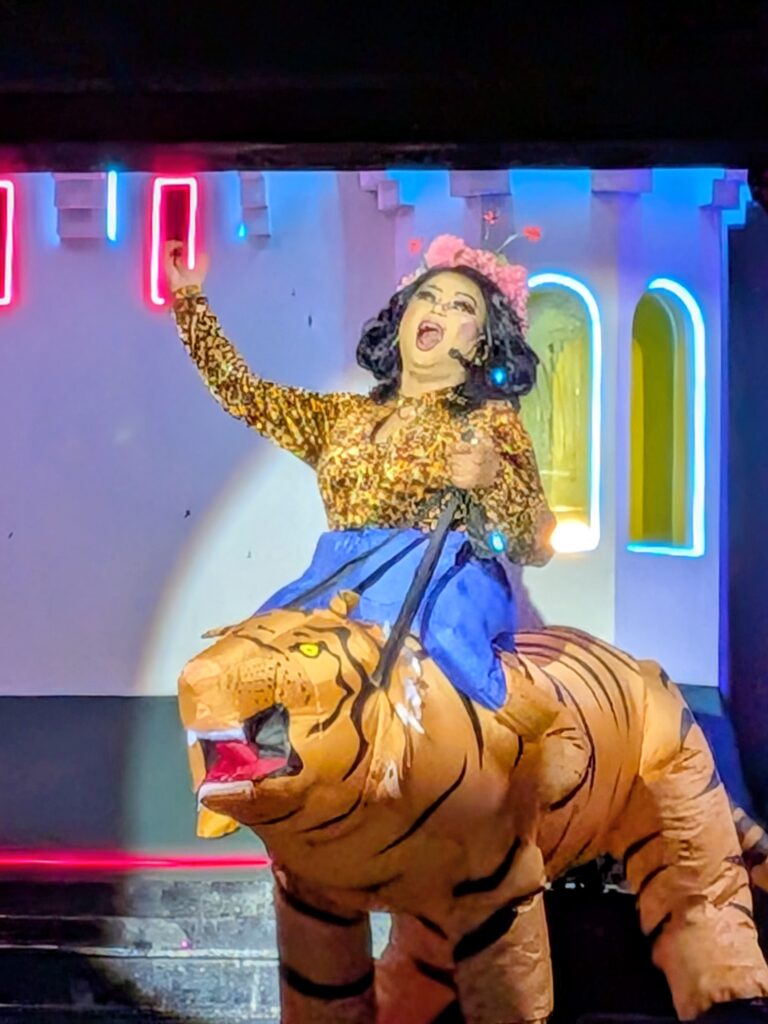
That evening we went to the Drag Cabaret — held on the third floor of Hamzah Batik, one of the most famous batik shops in Yogyakarta, in a traditional building where the audience sits Indonesian-style on mats on the floor. The performance was one of the most professionally choreographed cabaret shows I have ever seen — precise, spectacular, joyful, and filled with an energy that lit up the whole room.
There is an interesting and genuinely moving dimension to this. Indonesia has the largest Muslim population of any country in the world. It is also a country where performances like this exist, and have existed, within the cultural fabric of Javanese life — an expression of a complexity and tolerance that the country holds in ways that don’t always make it into the global narrative.
Prambanan: Temples at Twilight
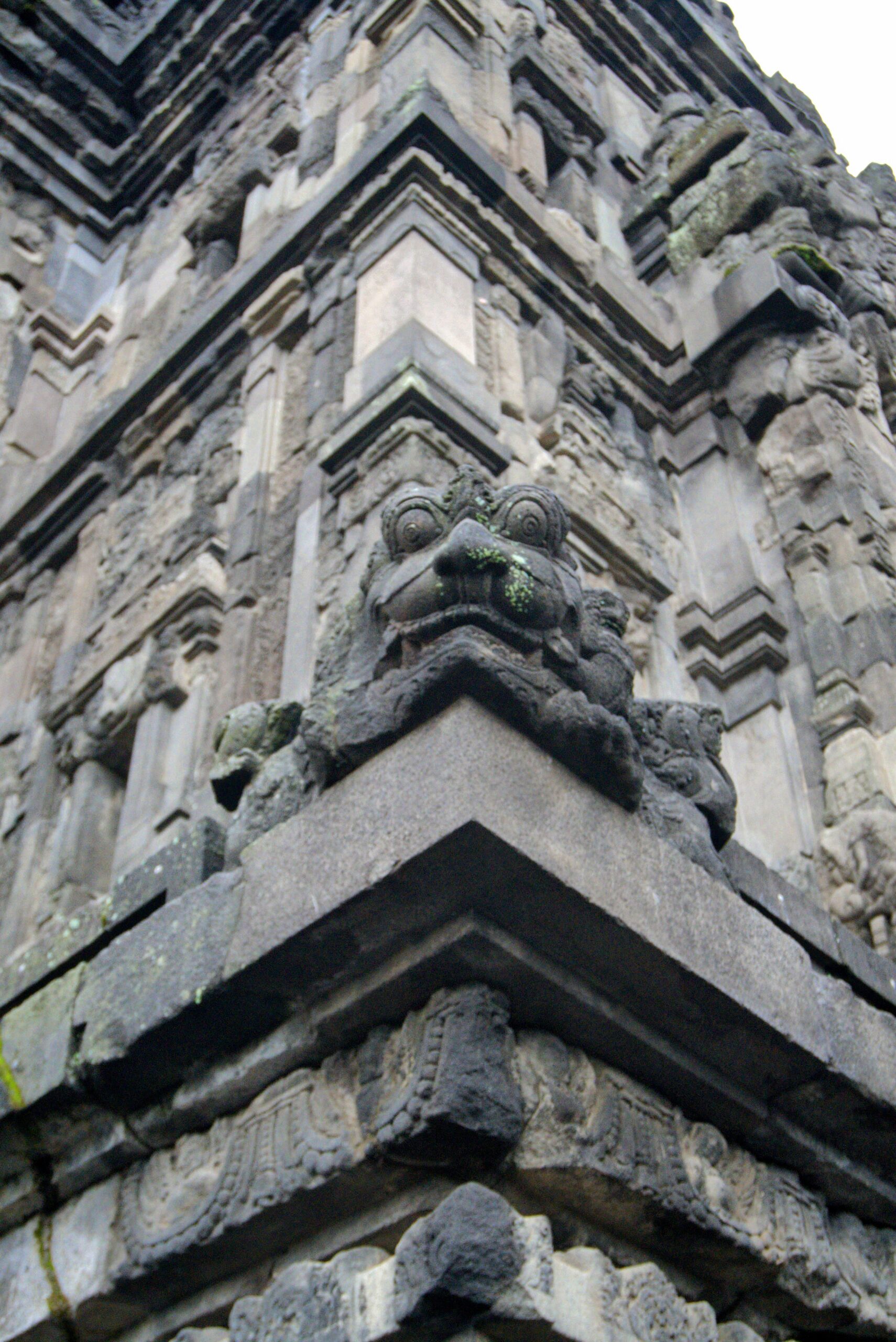
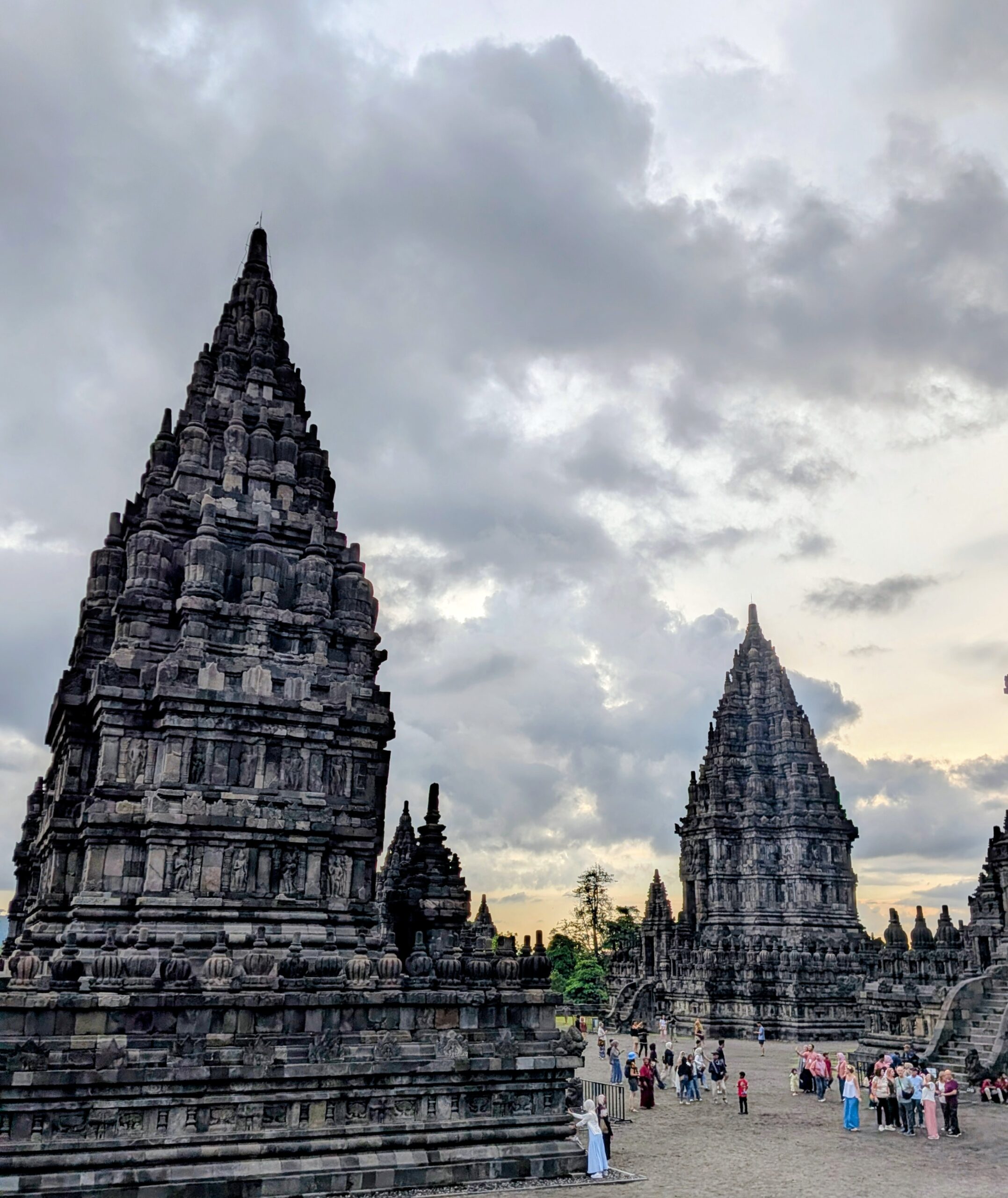
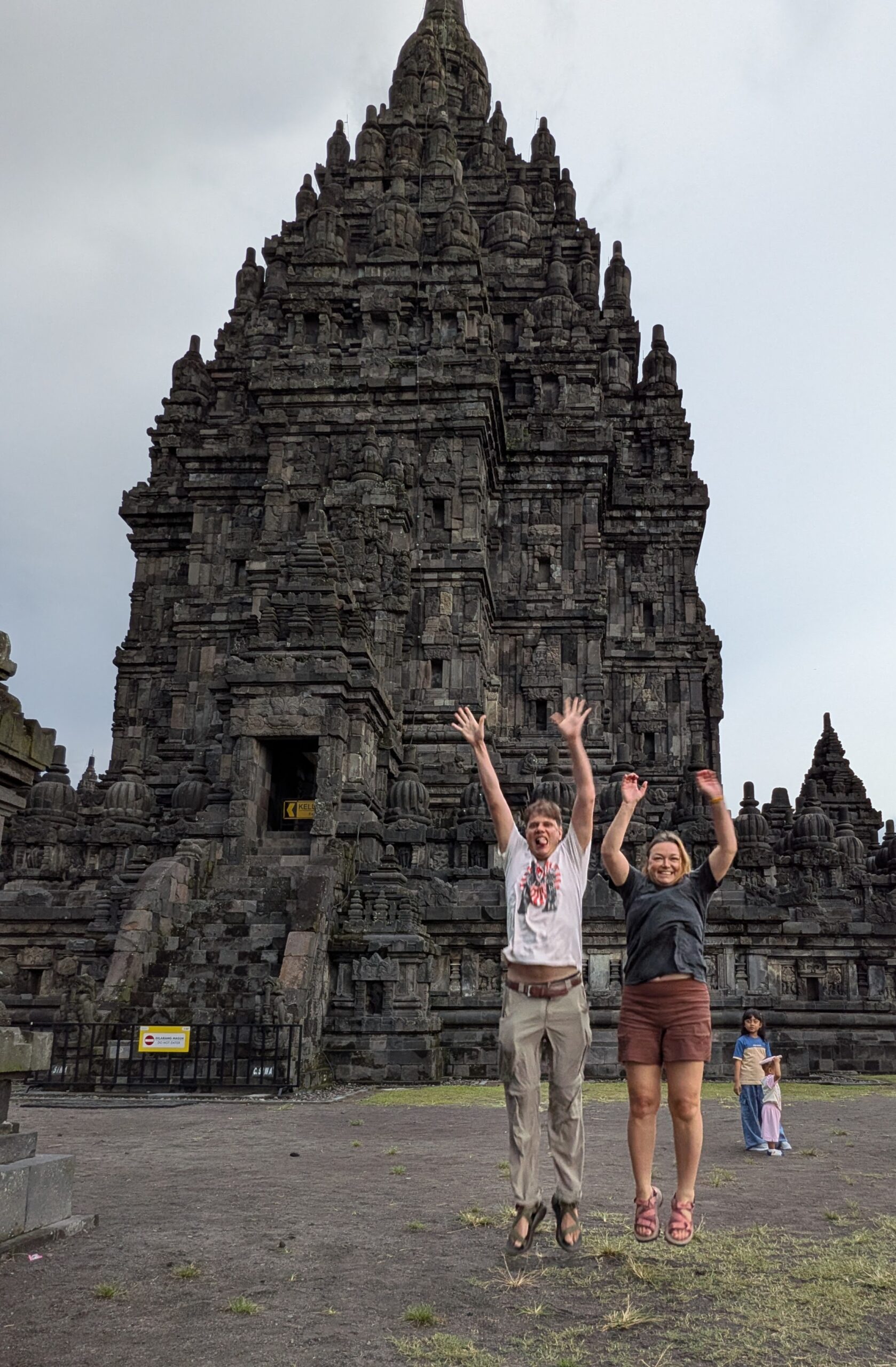
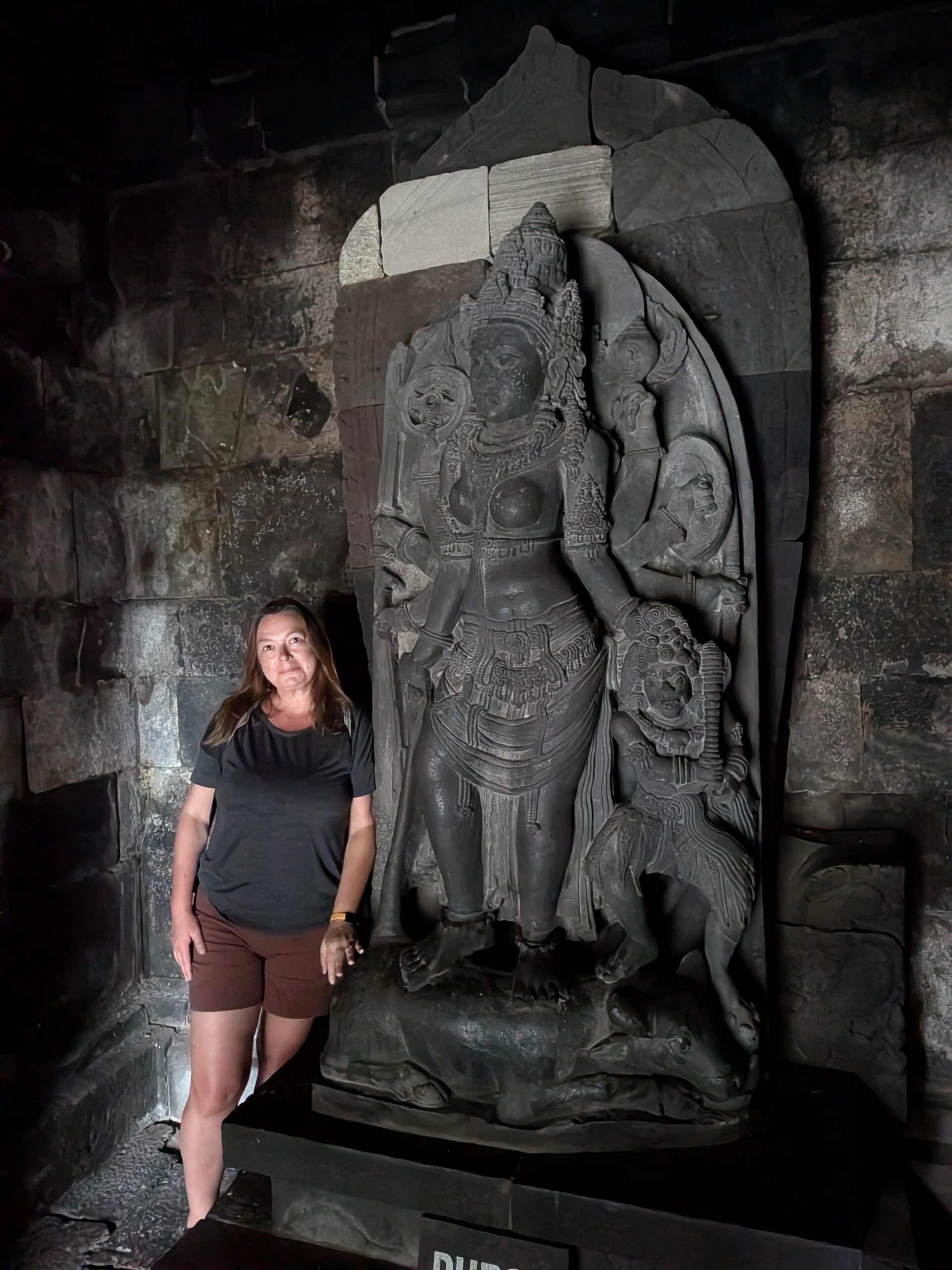
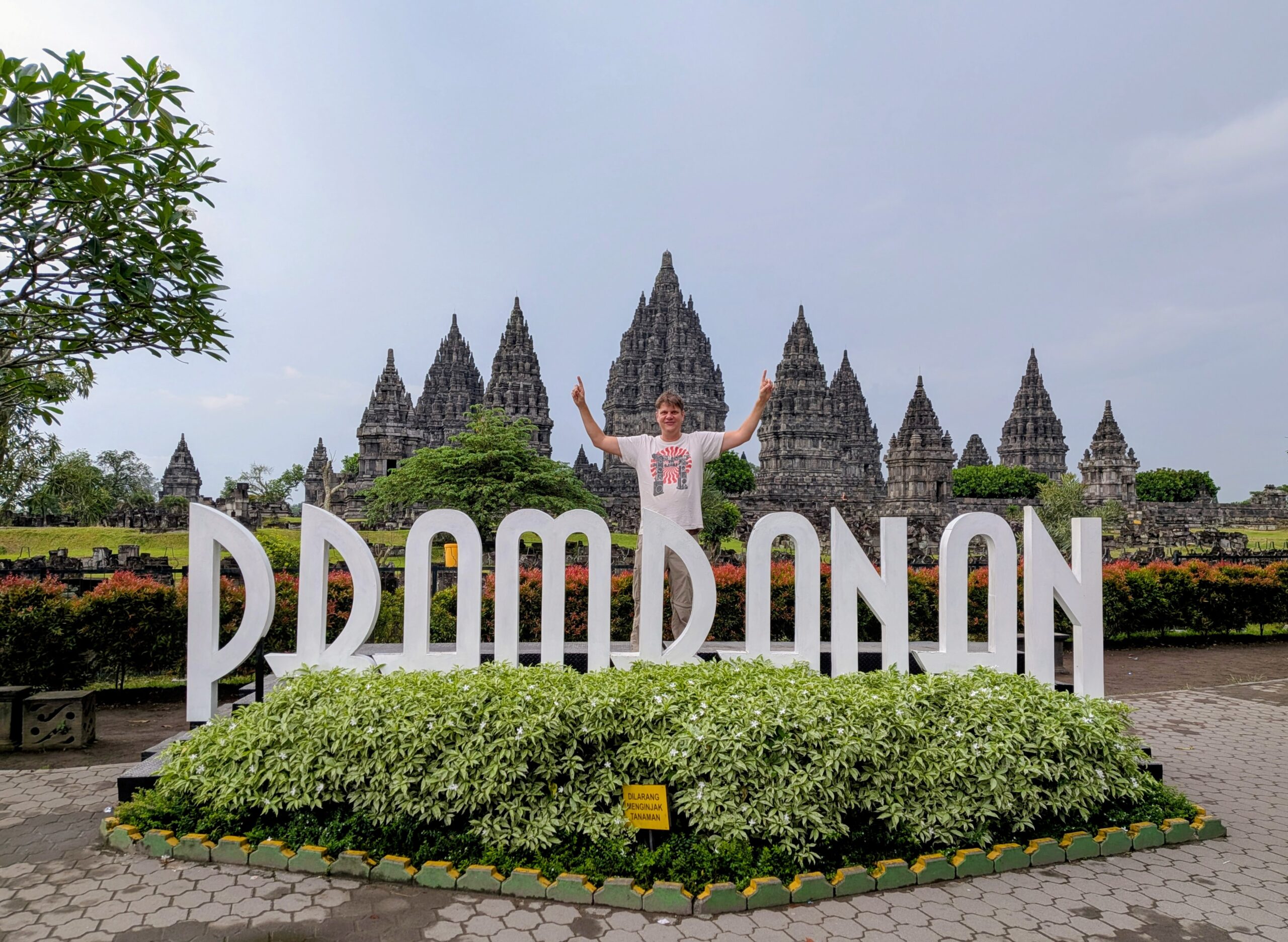
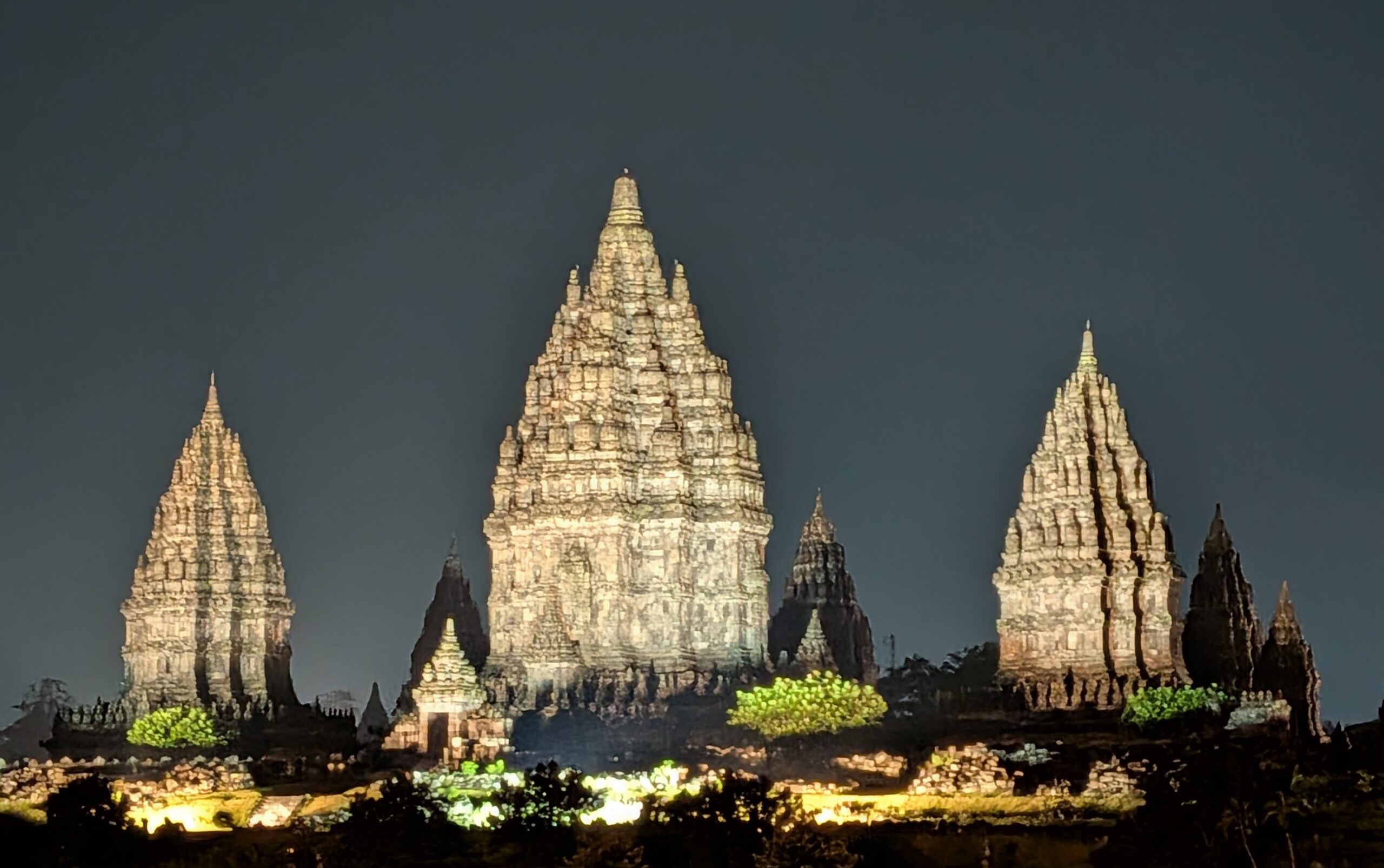
Our next big temple excursion brought us to Prambanan — a 9th-century Hindu temple compound and one of the largest in Southeast Asia, a UNESCO World Heritage Site that rises in dramatic spires from the plains of Central Java. Where Borobudur is Buddhist and meditative in feeling, Prambanan is Hindu and vertical — a cluster of towering pointed temples dedicated to the Trimurti, the three principal deities of Brahma, Vishnu, and Shiva. The central Shiva temple soars nearly 50 meters high and is intricately carved with scenes from the Ramayana epic that wrap around the entire complex.
We visited at sunset — another cloudy evening, so the dramatic sky we hoped for didn’t materialize — but what surprised and delighted us was being able to go inside the temples themselves. Hidden within each of the main shrines are statues of the gods, tucked into chambers that feel genuinely sacred and quiet even with other visitors around.
Mount Merapi: The Volcano That Gives and Takes
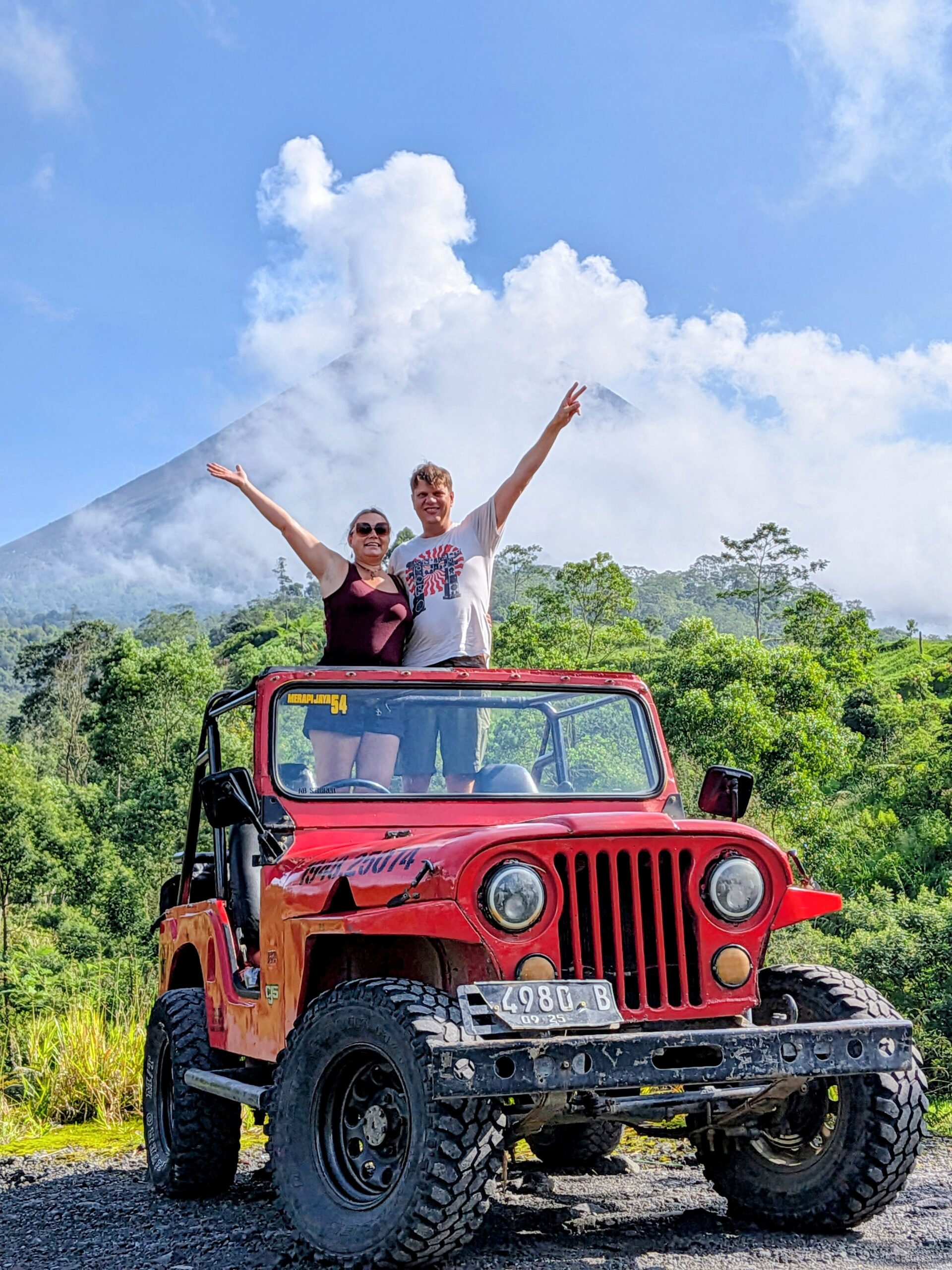
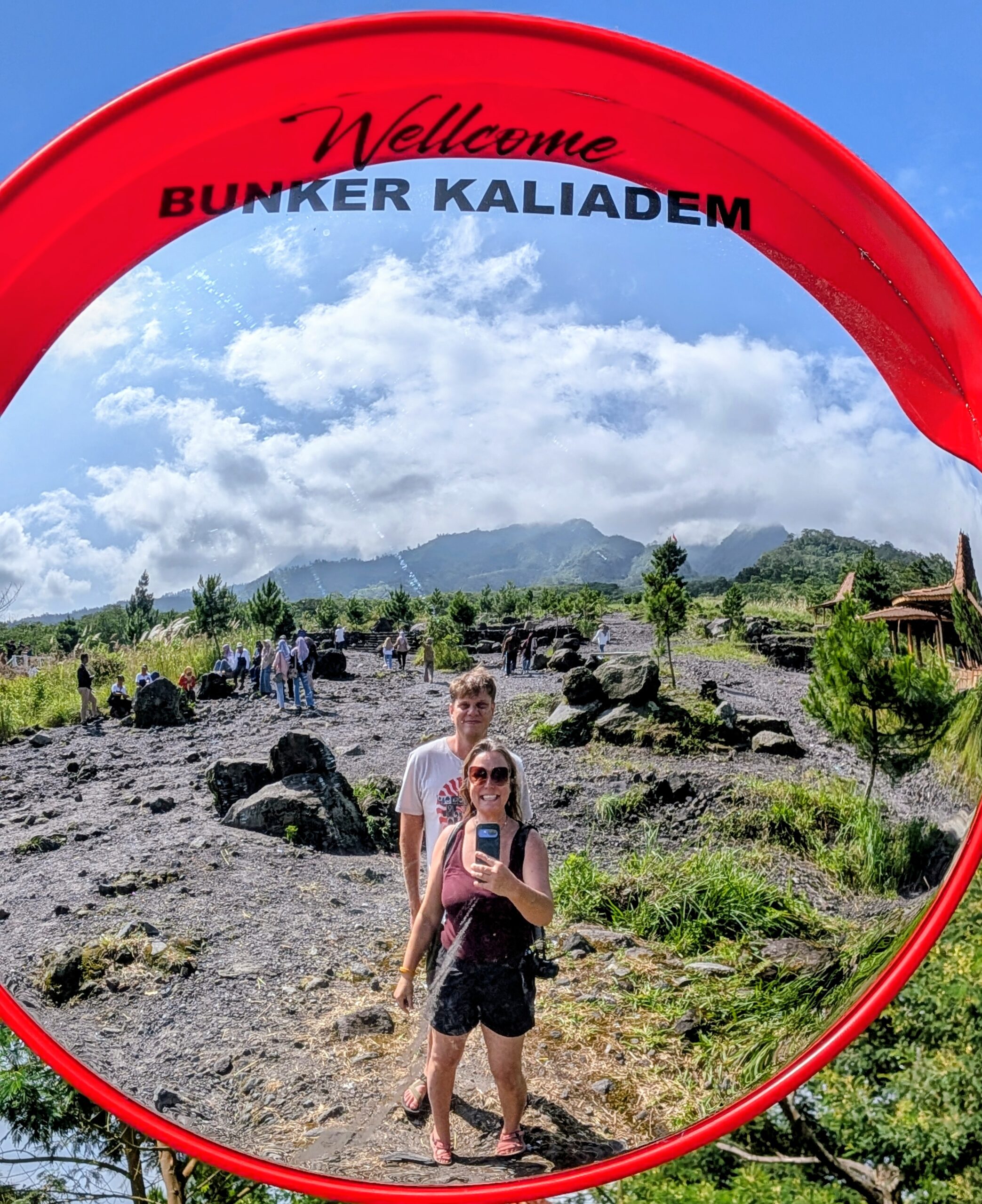
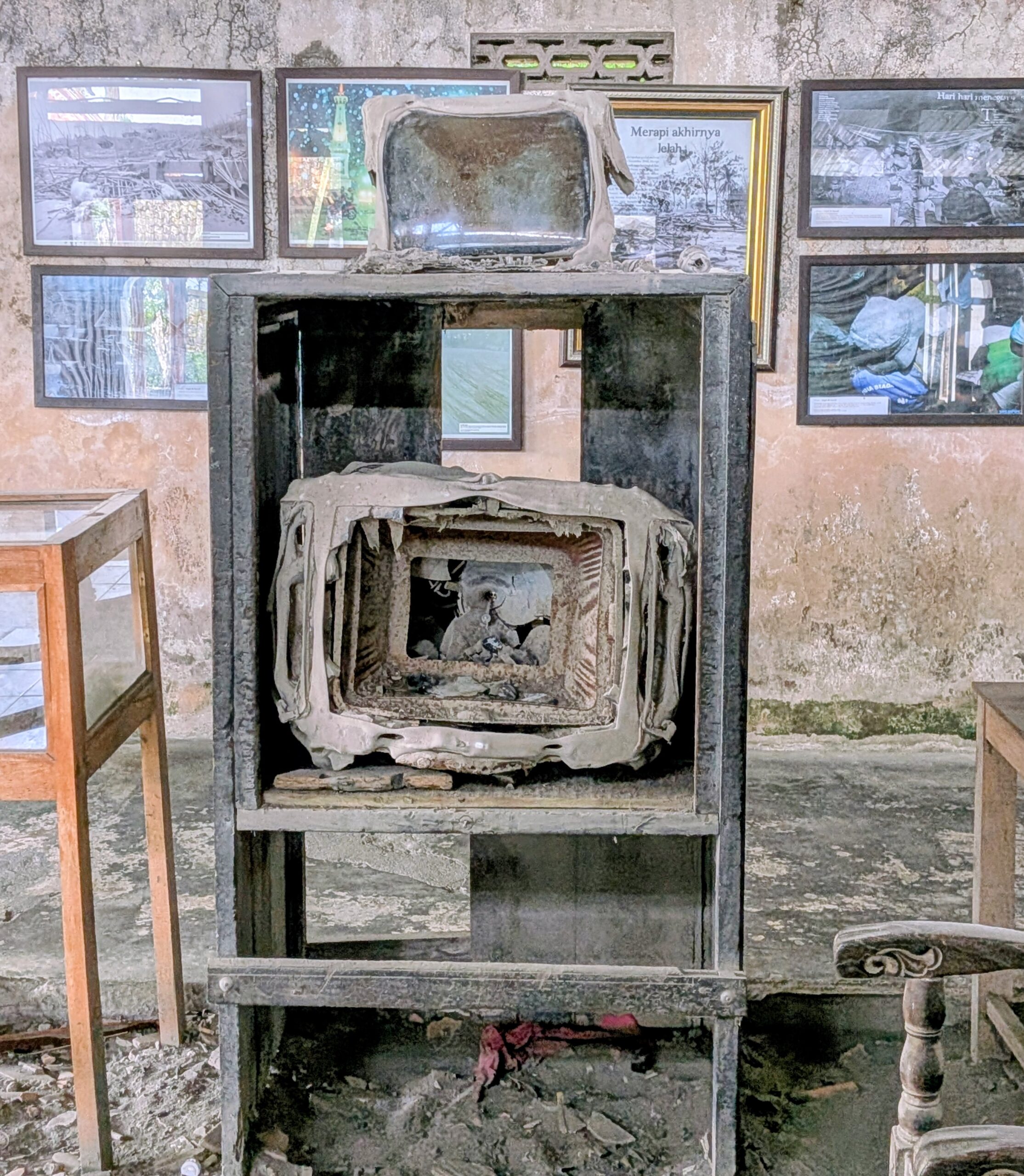
Our last full excursion was a Merapi Jeep Tour — bouncing around the slopes of one of the world’s most active volcanoes on an open jeep, hoping the clouds would lift enough to see it. They didn’t. Merapi stayed wrapped in cloud for the whole tour, the summit invisible. But the tour itself was worth doing — the landscape around the volcano tells the story of its eruptions in vivid ways, with remnants of past destruction visible in the terrain and the guides explaining the cycle of devastation and renewal that defines life on these slopes. Volcanic soil is extraordinarily fertile. Communities rebuild, plant, and grow. And then, eventually, the mountain reminds them who is in charge.
It is a relationship with the land I find difficult to fully understand from the outside — choosing to live in the shadow of something capable of that kind of destruction. But the people here have been doing it for generations, and there is something profound about that commitment to a place.
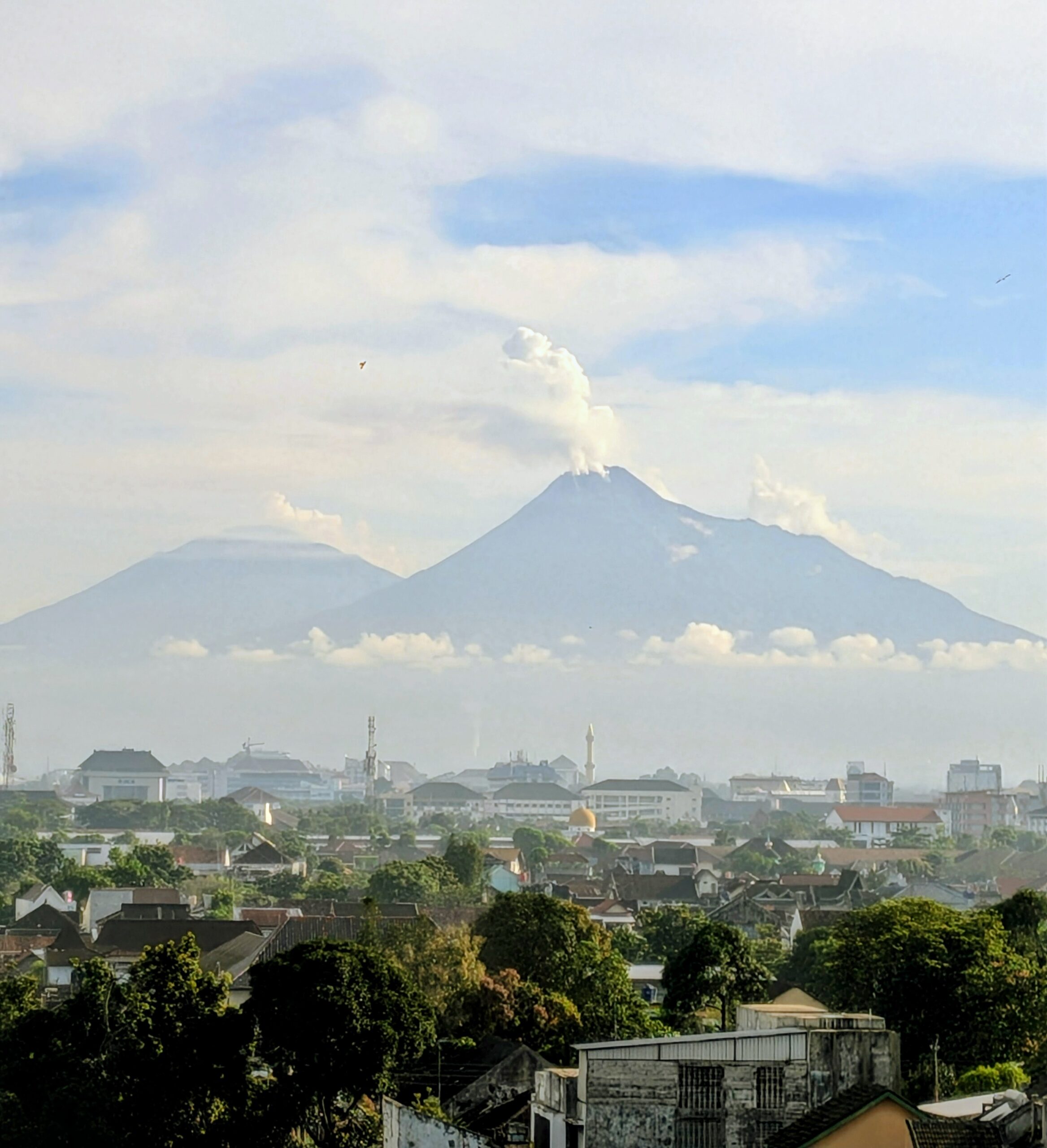
On our last morning in Yogyakarta, having changed hotels, we opened the blinds and there it was — Merapi, finally visible, smoke drifting from the summit against a clear sky. It had been there all along, waiting to show itself on its own terms. We stood at the window for a long time.
Yogyakarta turned out to be the perfect entry point into Indonesia — dense with history, alive with culture, and full of people who made us feel genuinely welcome at every turn. Next stop: Malang.